There is something wonderfully satisfying about dropping a bomb, running for your life, and then watching half a maze disappear in a glorious chain reaction. It is one of those simple ideas that never really needed much explaining, which is probably why maze-based bomber games have remained so enduring. Kaboomania understands that appeal completely, but rather than simply recreating a familiar formula and calling it a day, it takes the spirit of 16-bit arcade gaming and gives it a surprisingly substantial modern home.
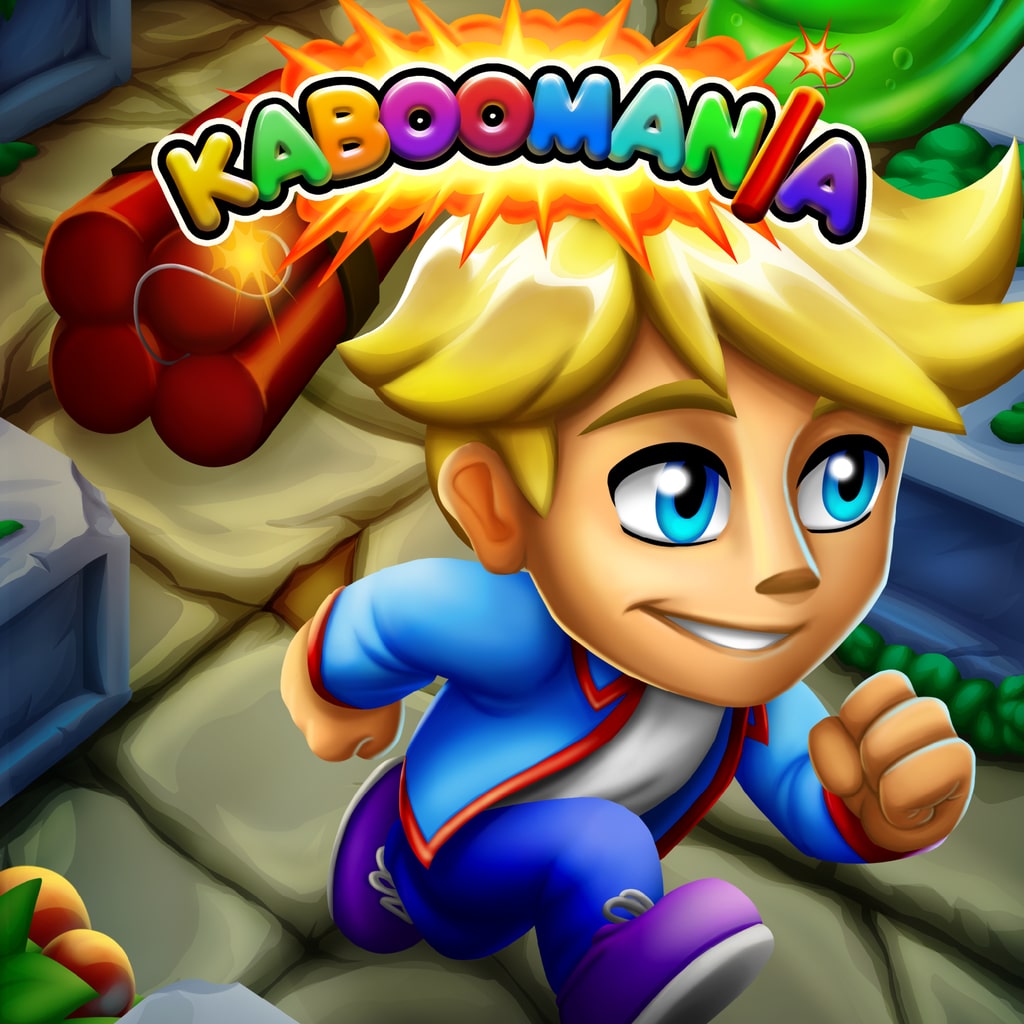
Originally conceived during the Amiga 1200 era, Kaboomania feels like a game that has been waiting patiently for its moment to return. Its chunky pixel art, colourful environments, and straightforward controls immediately evoke a different era of gaming, when a new game could be understood within seconds and mastery came from repetition. Yet there is more going on here than pure nostalgia. Beneath those 128-colour visuals lies a huge campaign, a varied collection of enemies, an impressive selection of power-ups, and enough explosive mayhem to keep even the most committed retro enthusiast occupied.
Back to the Maze
The premise is deliciously simple. You enter a maze, place bombs, destroy blocks, defeat enemies and collect whatever useful goodies happen to be hiding behind the rubble. The trick, naturally, is to be nowhere near the explosion when it happens. It sounds easy until you have several bombs chaining together, enemies closing in from different directions and a route that looked safe a few seconds ago suddenly becoming a very bad place to stand.
This is where Kaboomania gets its rhythm right. There is a lovely sense of cause and effect to almost everything you do, with bomb placement creating a chain of decisions that can play out several seconds later. Destroying a wall might reveal a power-up, but it might also open a path for an enemy. Clearing a section of the map can make movement easier, yet removing too much cover can leave you exposed. The best moments come when you stop thinking about individual explosions and start thinking several moves ahead.
That design gives the game more personality than its basic premise might suggest. You are not simply throwing bombs around and hoping for the best. You are learning the shape of each arena, studying enemy behaviour and gradually developing an instinct for when to attack and when to run. It is old-school arcade design in the best possible sense.
A Campaign That Just Keeps Going
One of the most astonishing things about Kaboomania is the sheer volume of content on offer. Five themed worlds and a staggering 1,000 levels make this considerably more than a quick retro distraction. You could spend a very long time working through everything the campaign has to offer, particularly if you are the sort of player who wants to explore every corner and uncover every collectible.
The scale does raise an interesting question, though. With 1,000 levels, variety becomes enormously important because quantity alone cannot carry a game this far. Thankfully, Kaboomania makes a genuine effort to introduce different enemies, environments, hazards and power-ups as you progress. The result is an experience that feels more like a long-running arcade adventure than a collection of identical mazes.
The five worlds also help give the campaign a sense of progression. Each new environment brings a change of scenery and another reason to keep moving forward. It does not attempt to deliver a cinematic narrative between stages, because that would probably undermine what makes the game appealing in the first place. Instead, the progression is about mastering the mechanics, discovering new surprises and seeing what the next batch of levels has in store for you.
The Joy of Things Going Wrong
Kaboomania is at its best when your carefully considered plan collapses spectacularly. You might set up what looks like a perfect chain reaction, only to realise you have trapped yourself behind a destructible wall. Another time, you may lure an enemy into exactly the position you want, trigger the explosion, and then discover that the blast has opened a completely different route for something else to attack you.
These moments are funny because the game rarely feels like it is simply cheating. The rules are clear, and when you make a mistake, there is usually a reason for it. That is essential for this kind of game. If bomb explosions were unpredictable or enemy movement felt random for the sake of difficulty, the entire experience would quickly become frustrating.
Instead, Kaboomania rewards learning. You begin to understand how far explosions travel, how enemies behave, and how long you have to escape. Eventually, you stop panicking when the screen fills with danger and start seeing opportunities within the chaos. That transformation from nervous beginner to confident bomber is one of the game’s most rewarding aspects.
Power Ups and Explosive Escalation
Power-ups are another important part of the experience, helping ensure progression is not simply about becoming better at avoiding explosions. Collecting new abilities can dramatically change how you approach a level, opening up more aggressive strategies and allowing you to clear larger areas more efficiently.
There is a nice balance to how these upgrades interact with the basic mechanics. Bombs remain the foundation of everything, but the power-ups give you additional options rather than completely replacing the core gameplay. The best runs are often about combining these tools effectively, creating bigger chains and opening up areas that initially seemed inaccessible.
It also helps that the destruction itself feels satisfying. There is a tactile pleasure in watching a carefully constructed section of the maze disappear, particularly when several explosions connect. Kaboomania understands that sometimes the best reward is simply making a very large part of the screen go boom.
Old School Looks, Modern Feel
Visually, Kaboomania wears its Amiga heritage proudly. The 128-colour AGA-inspired pixel art gives it a distinctive look that feels authentic without being hard on the eye on a modern display. Everything is colourful, chunky and immediately legible, which is particularly important when the screen becomes busy with enemies, explosions and collectible items.
There is also something refreshing about the lack of visual clutter. Modern games often throw enormous amounts of detail onto the screen, but Kaboomania knows that clarity matters more than realism. You need to be able to see where your character is standing, where the enemies are and where the next explosion is going to travel. The pixel art does exactly that.
The soundtrack is perhaps the most obvious piece of retro credibility. Having legendary composer Chris Huelsbeck involved is a considerable coup, and his work gives the game an audio identity that fits beautifully with the visual presentation. The music captures that unmistakable feeling of sitting in front of an old home computer or arcade machine, except this time the sound is crisp enough to avoid feeling like a museum exhibit.
Bring Your Friends
While the lengthy single-player campaign provides plenty of reason to stick around, the four-player couch battle mode is where Kaboomania can become altogether more chaotic. There is nothing quite like putting several people in a confined arena and giving everyone access to explosives. Friendships can become surprisingly fragile when someone accidentally traps you behind their bomb and then walks away as though nothing happened.
The local multiplayer also feels like a natural extension of the game’s design. Kaboomania does not need complicated competitive rules because the core mechanics already provide everything necessary for entertaining matches. Players have to read the arena, predict what their opponents are going to do, and decide whether to play cautiously or go for an aggressive attack.
It is the kind of mode that can turn a quiet evening into considerably louder entertainment. The simplicity of the controls means newcomers can pick it up quickly, while experienced players can begin experimenting with more elaborate strategies. That combination is exactly what good couch multiplayer should deliver.
A Retro Game With Plenty of Life Left
The inclusion of a password system is another charming touch. It is completely unnecessary in an age of automatic saves, but that is precisely why it works. Kaboomania is unembarrassed by its history, and these little details make it feel like a genuine celebration of the games that inspired it rather than a modern title awkwardly pretending to be old.
The important thing is that the retro touches do not appear to come at the expense of playability. Controls feel responsive, bomb placement is precise, and the underlying rules are easy to understand. It retains the personality of an older game without forcing modern players to endure every awkward design decision of the period. That is probably the best compliment I can give it. Kaboomania feels nostalgic without feeling stuck in the past.
Final Thoughts
Kaboomania is a joyous little explosion of retro gaming nostalgia that understands exactly why these games worked in the first place. Its simple controls and maze-based combat are immediately accessible, but the combination of enemy behaviour, power-ups, increasingly complex layouts and chain reactions gives the gameplay enough depth to keep you experimenting. Add 1,000 levels, five worlds and four-player couch battles to the mix, and there is an impressive amount of entertainment here.
It is not a game that needs to reinvent the genre. In fact, its greatest strength is how confidently it embraces the fundamentals. Every bomb is a decision, every corridor is a potential trap, and every successful chain reaction delivers that tiny burst of satisfaction that has made this style of game so enduring.
The Chris Huelsbeck soundtrack is the icing on the cake, while the authentic pixel art gives Kaboomania an identity that feels genuinely rooted in its Amiga heritage. There will inevitably be moments when the sheer number of levels makes the experience feel repetitive, but the variety of enemies, environments and mechanics does a good job of keeping the campaign moving.
More importantly, Kaboomania has soul. It feels like somebody genuinely loves this era of gaming and wanted to create something that could have existed back then, while still being enjoyable to play today. Whether you are returning to maze bombers after decades away or discovering the formula for the first time, there is a lot of explosive fun waiting here.