Ink & Paper: DoodleCut is a physics-driven puzzle game that builds its entire identity around a deceptively simple idea: draw lines, cut objects, and guide elements toward a solution. Rooted in the long tradition of sketch-based puzzle design, the game blends creativity, logic, and experimentation into a relaxed but mentally engaging experience. Rather than overwhelming players with complex systems or strict rules, DoodleCut focuses on playful problem-solving, allowing imagination and trial-and-error to be just as important as precision.
The result is a game that feels approachable on the surface yet quietly demanding beneath it. Ink & Paper: DoodleCut understands that the joy of puzzle games often comes from discovery—testing ideas, watching them fail or succeed, and gradually developing an intuitive understanding of the game’s physics. It is a title that rewards curiosity and patience more than speed or optimisation.
Core Gameplay Mechanics
At its core, Ink & Paper: DoodleCut revolves around drawing and cutting. Players are presented with a puzzle scenario and a blank canvas layered over interactive objects. By drawing lines or shapes, players can slice through materials, redirect falling elements, or create physical barriers that alter how the environment behaves.
The controls are deliberately simple. Drawing feels natural and responsive, and the game does a good job of translating player intent into on-screen action. This immediacy is crucial, as the game encourages frequent experimentation. Rarely is the first solution the correct one, and the act of refining an idea is central to the experience.
Physics play a major role in how puzzles resolve. Gravity, momentum, and object interaction must all be considered, especially in later levels where multiple moving parts interact simultaneously. While the physics are not hyper-realistic, they are consistent, which allows players to build trust in how the game behaves.
Puzzle Design and Creativity
Puzzle design is where Ink & Paper: DoodleCut truly shines. Early levels introduce mechanics gently, teaching players how cutting affects different materials and how drawn lines interact with objects. These opening stages serve as a playground, encouraging creativity without pressure.
As the game progresses, puzzles become more layered and demanding. Players are asked to manage timing, anticipate chain reactions, and consider how multiple cuts might interact. Importantly, the game rarely enforces a single solution. Many puzzles can be solved in multiple ways, rewarding creativity and personal expression.
This openness is one of the game’s greatest strengths. Instead of feeling like a rigid test of logic, DoodleCut feels like a sandbox of ideas. Even failed attempts are informative, often revealing new approaches or insights that bring players closer to a solution.
Progression and Difficulty Curve
The difficulty curve in Ink & Paper: DoodleCut is well-judged. Challenges escalate gradually, introducing new elements and constraints at a steady pace. When difficulty increases, it does so by layering mechanics rather than introducing entirely new rules, ensuring that players are always building on established knowledge.
There are moments where later puzzles can feel demanding, particularly when timing and precision become more important. However, the game’s forgiving structure—allowing players to reset quickly and experiment freely—prevents frustration from setting in.
The absence of strict penalties for failure reinforces the game’s experimental spirit. DoodleCut is less about getting things right on the first attempt and more about learning through interaction.
Visual Presentation
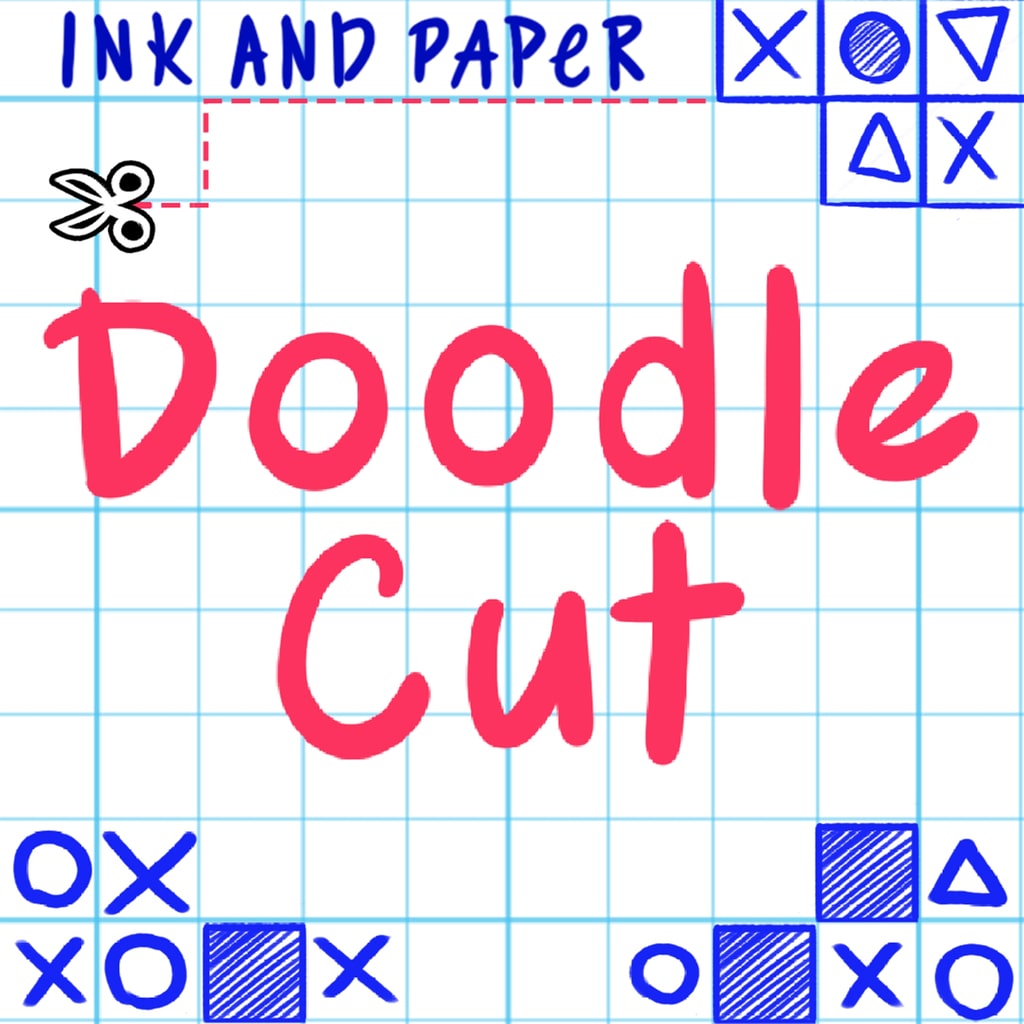
Visually, Ink & Paper: DoodleCut embraces a hand-drawn, sketchbook-inspired aesthetic. Lines look like pencil or ink strokes, backgrounds resemble textured paper, and animations feel deliberately simple. This visual style reinforces the game’s creative theme and helps it stand out from more polished, digital-looking puzzle titles.
The minimalist presentation also aids clarity. Objects are easy to distinguish, and interactive elements are visually readable at a glance. While the visuals are not flashy, they are cohesive and purposeful, supporting gameplay rather than distracting from it.
Animations are smooth and responsive, particularly during cuts and physics interactions. Watching objects react to drawn lines is consistently satisfying, reinforcing the tactile pleasure of the game’s core mechanics.
Audio and Atmosphere
Audio design in DoodleCut is understated but effective. The soundtrack is gentle and unobtrusive, designed to sit comfortably in the background while players focus on problem-solving. Music loops are subtle enough to support extended play sessions without becoming repetitive or distracting.
Sound effects provide essential feedback. The sound of a cut, objects colliding, or puzzles resolving offers clear confirmation of player actions. These cues are soft and pleasing, aligning with the game’s relaxed tone.
The overall atmosphere is calm and inviting. Ink & Paper: DoodleCut encourages thoughtful engagement rather than urgency, making it well suited for players who enjoy solving puzzles at their own pace.
Accessibility and Player Experience
Ink & Paper: DoodleCut is highly accessible in concept. The core mechanic—drawing lines to solve puzzles—is intuitive and easy to grasp. Tutorials are minimal but effective, allowing players to learn through interaction rather than instruction.
The lack of time pressure and fail states makes the game welcoming to a wide audience, including younger players and those new to puzzle games. At the same time, the later puzzles offer enough complexity to keep experienced players engaged.
Accessibility options are relatively limited, but the game’s inherent simplicity and forgiving structure help offset this. The biggest barrier for some players may be the reliance on spatial reasoning and physics intuition, which can take time to develop.
Replayability and Longevity
Replayability in Ink & Paper: DoodleCut is moderate. While most puzzles have multiple solutions, once completed, there is limited incentive to return unless players wish to experiment with alternative approaches. However, the joy of creativity and problem-solving may naturally draw some players back to earlier levels.
The game’s strength lies in its curated progression rather than endless content. It delivers a complete, satisfying experience without overstaying its welcome.
Ink & Paper: DoodleCut works particularly well in short sessions, making it easy to dip in and out without losing momentum.
Strengths and Weaknesses
Strengths
- Creative, physics-driven puzzle design
- Encourages experimentation and multiple solutions
- Charming hand-drawn visual style
- Relaxed pacing with no punitive mechanics
- Accessible and intuitive core controls
Weaknesses
- Limited long-term replay incentives
- Some later puzzles require precise timing
- Minimal narrative or thematic depth
Final Verdict
Ink & Paper: DoodleCut is a thoughtful, creative puzzle game that succeeds by trusting the player’s curiosity. Its sketch-based mechanics, consistent physics, and open-ended puzzle design create an experience that feels playful yet intellectually rewarding. While it does not aim for narrative depth or high-stakes challenge, it delivers a steady stream of satisfying “aha” moments that make problem-solving feel joyful rather than stressful.
For fans of physics puzzles, drawing-based mechanics, and relaxed, creativity-driven gameplay, Ink & Paper: DoodleCut is a strong and engaging offering that understands the simple pleasure of turning an idea into a solution.