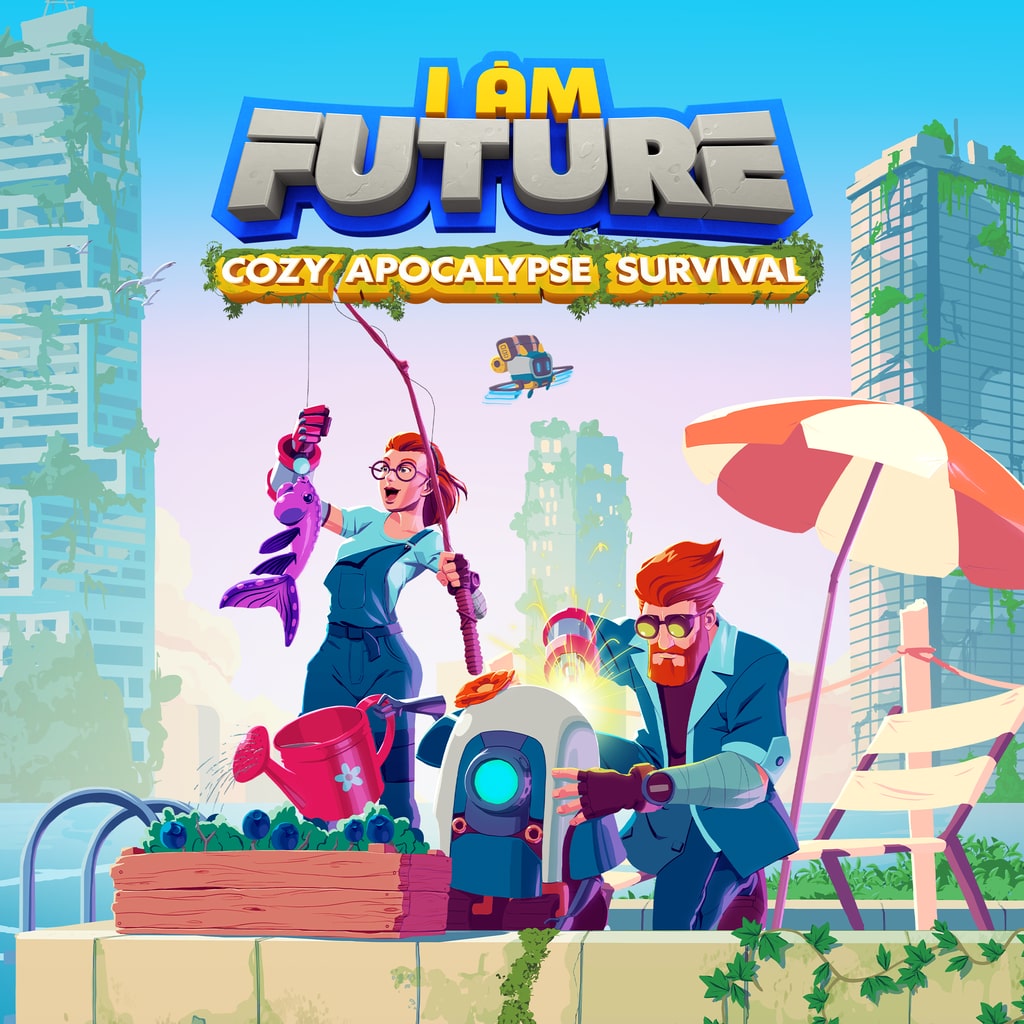
I Am Future: Cozy Apocalypse Survival is a game that wears its heart on its sleeve. It combines the thematic tension of apocalyptic survival with an aesthetic and gameplay tone that leans distinctly toward warmth, creativity, and long-term comfort rather than grind-heavy desperation. At first glance, the title’s juxtaposition of “cozy” with “apocalypse” might seem contradictory; after several hours with the game, it emerges as intentional—a blend of survival mechanics with personalised space-building and narrative hooks that prioritise well-being over relentless threat.
This hybrid identity, however, is both the game’s greatest strength and its clearest risk. I Am Future never abandons survival fundamentals—resource management, threat mitigation, environmental adaptation—but it places equal emphasis on crafting, community, and a quiet narrative rhythm that encourages reflection as much as reaction. Whether this tonal equilibrium succeeds depends largely on player expectations: those seeking high-stakes survival horror will find the experience gentle, while players who enjoy slow-burn survival with creative room to grow will find much to savour.
Over the course of this review, we’ll explore how I Am Future balances survival systems with comfort-driven design, where its systems thrive or stumble, and whether it ultimately delivers a cohesive apocalyptic survival that feels as inviting as it is engaging.
Premise and Setting — A Future Broken, A World to Rebuild
The apocalypse in I Am Future is less about mindless chaos and more about environment transformation. Some undefined cataclysm has altered ecosystems, destabilised infrastructure, and scattered remnants of humanity. You awaken, alone, in a world that feels eerily quiet but not hostile by default. Ancient ruins peek through overgrowth, forests hum with strange new life, and the remnants of civilisation hint at stories left untold.
Narrative delivery is subtle. There are no long cutscenes or dramatic monologues; instead, context unfolds through archived notes, environmental clues, and occasional character encounters that enrich without overwhelming. This is a game that trusts its players to absorb the world at their own pace.
Where other survival titles emphasise discovering what went wrong in gritty, forensic detail, I Am Future is more interested in what you will do next. The plot rarely intrudes but consistently motivates—encouraging exploration, fostering curiosity, and rewarding discovery rather than demanding urgency.
Core Gameplay — Survival Without a Stranglehold
At its core, I Am Future utilises a familiar survival loop: forage for resources, build shelter, manage needs (hunger, hydration, energy), craft tools, and defend against environmental hazards. These systems are not groundbreaking on their own, but the way they are scaffolded and presented elevates them beyond mere checklist mechanics.
Resource Management
Materials are abundant—not chaotic, but plentiful enough that improvisation feels possible. Gathering wood, stone, fibrous plants, and other essentials requires exploration and occasionally risk, but scarcity is never the dominant stressor. Instead, resource management becomes a thoughtful rhythm: collect, refine, transform, repeat, all while making choices about what to prioritise in a given session.
Players can also establish farms, passive collectors, and renewable resource loops that shift the gameplay from reactive gathering to proactive stewardship. This evolution from survivalist scavenger to strategic planner is one of the game’s most satisfying arcs.
Crafting and Building
Crafting in I Am Future is both intuitive and deep. The crafting tree unfolds gradually, revealing recipes that feel meaningful rather than overwhelming. Tools, shelter upgrades, furniture, decorative elements, and quality-of-life enhancements are all accessible, and they interact with one another in layered ways.
Base building occupies a central place in the experience. Rather than simply erecting walls and placing chests, players create a living space that reflects strategy and personality. Structures have utility: workbenches speed up production, shelters improve rest quality, and crafted decorations can influence ambient bonuses such as morale or environmental resistance.
This emphasis on a cozy apocalypse—a world where survival is only half the story—is where I Am Future feels most distinctive. Home spaces aren’t just protective shells; they are creative canvases.
Threats and Danger
Threats exist, but they are measured. Wildlife can be unpredictable, environmental shifts can complicate travel, and certain regions require careful preparation before entry. Combat is deliberate rather than visceral, and while danger is never absent, it is rarely overwhelming.
This design choice aligns with the game’s overarching tone: survival is a challenge to be respected, not a relentless stress machine. Players can flirt with risk, prepare thoroughly, or explore cautiously, and all approaches feel valid within the game’s ecosystem.
Exploration — A World That Rewards Curiosity
Exploration in I Am Future is where the game’s design philosophy shines. The world feels modular—segmented into biomes, ruins, forgotten towns, and natural expanses that each tell visual stories. Every location has environmental context: a collapsed bridge might block a path but hint at nearby resources; a ruined lab might contain rare crafting schematics.
Navigation is supported by readable cartography and a subtle waypoint system that avoids intrusive guidance. Players are encouraged to mark their own paths, return to sites that feel significant, and revisit familiar ground with improved capabilities. This fosters a sense of territorial familiarity rather than aimless wandering.
Exploration yields more than materials: it reveals lore fragments, unlocks side missions, and introduces NPCs whose stories intersect with your own. These narrative touches are brief but effective, providing emotional texture without overwhelming the survival core.
Presentation — Calm, Appealing, Unforced
Visually, I Am Future adopts a gentle aesthetic that underscores its tone. Environments are rendered with soft lighting, natural colour palettes, and environmental detail that feels organic rather than stylised. The world is seldom terrifying, but it is consistently evocative—like a memory half forgotten, slowly regained through play.
Character and creature models are clear and readable, and animations are smooth without being spectacular. While the game does not chase cutting-edge graphics, its presentation supports depth and clarity, ensuring that players always know what they are interacting with.
Audio design plays a similarly supportive role. Ambient tracks are subtle and atmospheric, reinforcing environment without crowding concentration. Sound cues for crafting, gathering, and movement are crisp, contributing to the world’s tactile feel. The audio palette leans into serenity more than tension, again reflecting the game’s overarching philosophy.
Progression and Pacing — Steady, Not Rushed
Unlike survival games that drive players toward endgame milestones with artificial timers or escalating peril, I Am Future progresses in measured steps. Experience is gained through exploration, crafting, discovery, and mission completion. Level increases feel meaningful, with incremental access to skills, tools, or consumables that genuinely enhance capability.
Pacing is one of the game’s defining strengths. Players are never rushed; they are encouraged to engage deeply with any facet of the game—crafting, exploration, settlement building, or narrative encounters—without harsh penalties for detours. This creates a sense of personal agency and ownership over the play experience.
That said, pacing can occasionally feel too gentle. Players craving mounting urgency or high-stakes conflict may find the rhythm too placid. This is less a flaw than a design choice fully aligned with the “cozy” ethos.
Accessibility — Friendly to Many, Demanding to Some
I Am Future is broadly accessible. Controls are intuitive, tutorials are thoughtful, and systems are introduced incrementally. Newcomers to survival games will find guidance without overload, while genre veterans will appreciate the depth available beneath the surface.
Difficulty options are present but not extensive. Players can adjust threat frequency and resource availability, which helps tailor the experience. However, there is no deep ecosystem of challenge modifiers often found in hardcore survival titles. This reinforces the title’s welcoming stance but may disappoint players seeking intense, unforgiving survival loops.
Verdict
I Am Future: Cozy Apocalypse Survival is a thoughtful, well-crafted survival title that blends earnest worldbuilding with accessible mechanics and a warm, creative tone. Its strength lies not in reinventing survival systems, but in recontextualising them—turning scarcity into stewardship, threat into opportunity, and solitude into purpose.
For players who enjoy survival titles tempered by comfort, story, and creative expression, I Am Future sits comfortably near the top of its category. For those seeking relentless tension or dramatic combat, its peaceful pacing may feel too deliberate. But in choosing serenity over stress, it forges an identity uniquely its own.