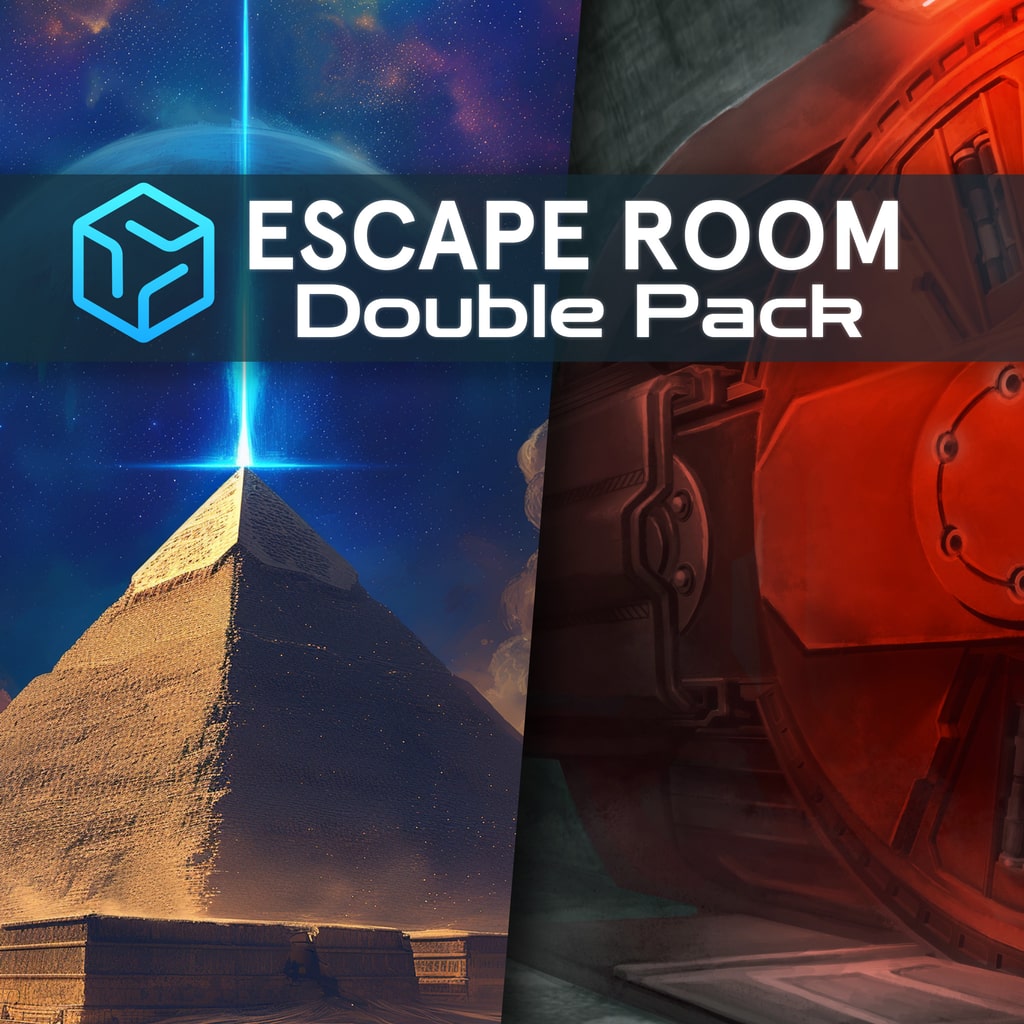
The Escape Room Double Pack brings together two distinct but thematically linked puzzle experiences under a single bundle, offering players a concentrated dose of time-pressured problem solving and environmental deduction. Featuring 60 Minutes to Extinction: Escape Room and Pyramids and Aliens: Escape Room, this collection targets fans of logical challenges, observation-driven gameplay, and the uniquely cerebral tension that escape room games thrive on.
While both titles share core design philosophies—limited environments, interconnected puzzles, and an emphasis on player intelligence—they approach their themes and pacing in notably different ways. One leans heavily into urgency and restraint, while the other embraces mystery, exploration, and sci-fi intrigue. Together, they form a complementary pairing that highlights the strengths of the escape room genre, even if neither title attempts to radically expand its boundaries.
A tale of two scenarios
The strength of the Escape Room Double Pack lies in contrast. Rather than offering two near-identical puzzle experiences with different coats of paint, the bundle provides two scenarios that feel structurally and tonally distinct.
60 Minutes to Extinction: Escape Room is built entirely around pressure. From the moment you begin, a strict countdown timer frames every decision. The narrative setup—preventing an extinction-level event—is direct and uncompromising, and the design reinforces that urgency at every turn. There is little room for distraction or experimentation; success depends on efficient observation, careful logic, and the ability to remain composed as time slips away.
By comparison, Pyramids and Aliens: Escape Room adopts a more exploratory tone. While still grounded in puzzle-solving, it allows players greater freedom to investigate their surroundings at a more measured pace. The fusion of ancient pyramid mythology with extraterrestrial elements gives it a more fantastical flavour, and its puzzles are framed less around immediate catastrophe and more around uncovering hidden truths.
This contrast works in the bundle’s favour. Players can switch between the high-stress precision of one game and the slower, curiosity-driven nature of the other, preventing fatigue and reinforcing the sense that each title has its own identity.
Puzzle design and logic
Across both games, puzzle design is rooted in classic escape room principles. Clues are embedded in the environment, solutions are logical rather than arbitrary, and progress depends on attention to detail rather than reflexes. There is a clear expectation that players will think carefully, make mental or written notes, and connect information across multiple rooms or interactions.
In 60 Minutes to Extinction, puzzles are tightly interwoven, with solutions often feeding directly into subsequent challenges. The time constraint amplifies the difficulty, turning even straightforward logic problems into tense decision points. The game rarely gives explicit hints, trusting players to piece together information independently. This design choice reinforces immersion but can be unforgiving for those unfamiliar with escape room conventions.
Pyramids and Aliens takes a slightly more forgiving approach. Puzzles are still demanding, but the lack of an oppressive timer allows for more deliberate reasoning. The game leans more heavily on pattern recognition, environmental storytelling, and thematic symbolism. While some puzzles are more abstract, they are generally well signposted, rewarding players who take the time to fully explore and understand their surroundings.
In both cases, solutions feel earned rather than guessed. When progress stalls, it is usually because a detail has been overlooked, not because the logic is flawed. This sense of fairness is crucial and is consistently upheld across the bundle.
Atmosphere and presentation
Presentation in the Escape Room Double Pack is functional rather than flashy, but it serves the gameplay well. 60 Minutes to Extinction uses a utilitarian, almost sterile visual style that reinforces its high-stakes scenario. The environments feel intentionally constrained, heightening the sense of claustrophobia and pressure. Sound design is subtle but effective, with ambient effects and alert tones constantly reminding players of the ticking clock.
Pyramids and Aliens, meanwhile, benefits from a more visually varied setting. Ancient stonework, hidden chambers, and alien technology create a sense of mystery that encourages exploration. The atmosphere here is less about stress and more about intrigue, supported by quieter audio cues and a stronger emphasis on environmental detail.
Neither game pushes technical boundaries, but both understand how to use their presentation to support their respective themes. Importantly, visual clarity is prioritised over spectacle, ensuring that clues are readable and interactions are intuitive—an essential consideration for puzzle-focused experiences.
Controls and interaction
Interaction across both games is straightforward and largely frictionless. Objects can be examined, manipulated, and used in logical ways, with minimal interface clutter. Movement and camera controls are responsive enough to avoid frustration, particularly important in 60 Minutes to Extinction, where wasted seconds can mean failure.
That said, interaction is intentionally limited. Players are guided toward intended solutions, with little room for creative experimentation outside the puzzle framework. While this reinforces the authenticity of the escape room format, it also means that the environments can feel more like elaborate puzzle boxes than fully realised spaces.
Replayability and value
As with most escape room games, replayability is limited by design. Once puzzles are solved, the primary challenge is gone. However, 60 Minutes to Extinction offers some replay value through optimisation, encouraging players to complete the scenario more efficiently or with fewer mistakes. Speed-running and mastery of the puzzle sequence become secondary goals.
Pyramids and Aliens relies less on replay and more on delivering a satisfying one-time experience. While it can be revisited, its appeal lies mainly in discovery rather than refinement.
As a bundle, however, the Double Pack offers solid overall value. Experiencing two complete scenarios back-to-back provides variety and depth that a single escape room game might lack. The differing tones help maintain engagement, making the bundle feel more substantial than the sum of its parts.
Final verdict
The Escape Room Double Pack is a thoughtfully assembled collection that showcases two different approaches to digital escape room design. 60 Minutes to Extinction: Escape Room excels at creating tension and urgency through strict time pressure and tightly linked puzzles, while Pyramids and Aliens: Escape Room offers a more atmospheric, exploratory experience rooted in mystery and discovery.
Neither game reinvents the genre, and both are limited in scope by their very nature. However, their strong puzzle design, clear thematic identities, and respect for player intelligence make them rewarding experiences for fans of logical challenges. As a bundle, they complement each other well, offering contrast and balance that enhances the overall package.
For players who enjoy escape room games and are looking for a focused, mentally engaging experience, the Escape Room Double Pack delivers exactly what it promises.