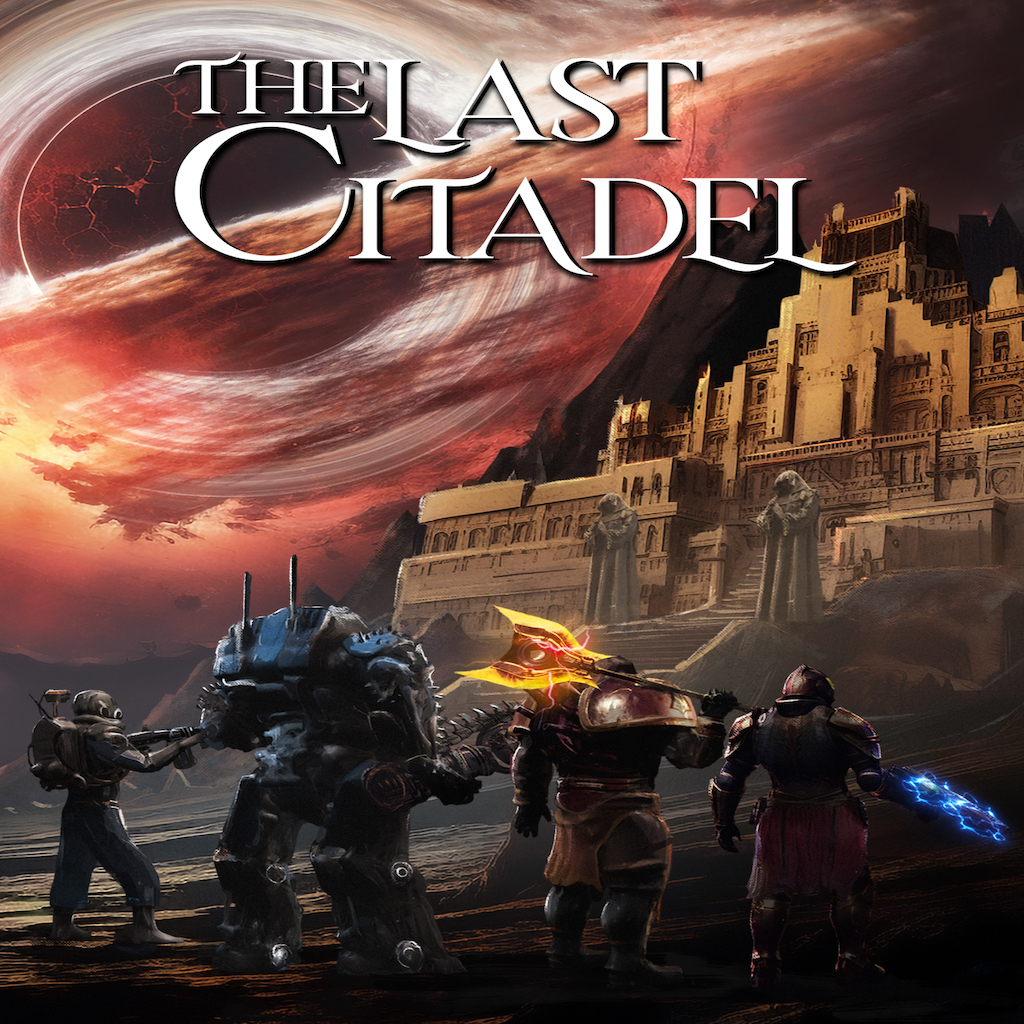
Roguelike shooters have become increasingly crowded over the last decade, but few attempt to merge cooperative MMO-style role dynamics with procedural action design. The Last Citadel, developed and published by Honest Demon and released in full 1.0 on February 16, 2026, boldly attempts exactly that — and mostly succeeds.
Set within a colossal fortress suspended at the edge of a black hole, the game blends Victorian steampunk aesthetics with cosmic science fiction, creating what the developers describe as a “Steam-Sci-Fi” world. It’s an unusual setting that immediately distinguishes the game visually, but the real surprise lies in how deeply its mechanics commit to cooperative play.
Where many roguelikes feel designed for solo mastery with optional multiplayer tacked on, The Last Citadel is fundamentally built around teamwork, coordination, and risk management. Even alone, you feel like part of a larger expedition — an expendable employee sent into a reality-warping structure that doesn’t want you to leave alive.
Setting & Atmosphere — A Fortress at the Edge of Reality
The Citadel itself is the game’s greatest character.
Floating dangerously close to a black hole’s event horizon, the environment constantly shifts in ways that affect both gameplay and mood. Rooms twist between gravity orientations, corridors stretch unnaturally, and time itself occasionally fractures.
The steampunk-meets-cosmic aesthetic works remarkably well:
- Brass machinery fused with alien geometry
- Steam vents erupting beside gravitational anomalies
- Victorian engineering struggling against cosmic forces
Rather than feeling decorative, the setting informs mechanics directly. Gravity wells pull enemies and loot toward their centers, time dilation alters combat pacing, and spatial distortions force players to rethink positioning constantly.
Few roguelikes integrate theme and gameplay this cohesively.
Core Gameplay Loop — Loot, Risk, Escape
At its heart, The Last Citadel revolves around a simple but compelling loop:
- Enter the Citadel.
- Fight through procedurally generated rooms.
- Collect artifacts and upgrades.
- Decide whether to push deeper or extract safely.
Unlike traditional roguelikes focused solely on finishing runs, success here often means knowing when to leave.
A looming Temporal Collapse mechanic ensures greed carries real consequences. Stay too long, and the Citadel erases your progress entirely.
This creates meaningful tension. Every decision becomes strategic:
- Push forward for legendary loot?
- Or extract and secure your gains?
The constant risk assessment gives runs emotional stakes beyond simple survival.
Cooperative Design — True Team Roles
The game shines brightest in multiplayer.
While solo play is viable, higher difficulties transform encounters into something closer to raid-style cooperation. Players naturally fall into roles resembling MMO archetypes:
- Tank characters absorbing damage and controlling enemies.
- Healers/Support maintaining team survival.
- DPS players focusing on damage optimization.
Enemy encounters and boss mechanics actively encourage coordination rather than individual heroics.
Guardian fights especially demand teamwork:
- Coordinated positioning
- Ability timing
- Shared awareness of environmental hazards
This approach makes victories feel earned collectively rather than individually — a rare achievement for roguelike shooters.
Combat & Loadout Customization
Before each run, players build a loadout consisting of:
- A suit (defining base stats and passive traits)
- A weapon archetype
- Four active abilities chosen from over 45 options
During expeditions, hundreds of modifiers dramatically alter gameplay.
A standard rifle might evolve into:
- Chain-lightning projectiles
- Healing beam weapons
- Gravity-pulling explosives
- Lifesteal energy cannons
The system encourages experimentation and synergy. Builds rarely feel fixed; adaptation is key as new modifiers appear mid-run.
Combat itself is fast and responsive, emphasizing movement and awareness over raw aiming precision.
Black Hole Mechanics — Gameplay Innovation
What truly elevates The Last Citadel is how environmental physics shape encounters.
Examples include:
- Inverted gravity rooms requiring aerial combat awareness.
- Time-slowing anomalies affecting player movement differently than enemies.
- Gravity wells that redirect bullets and dropped loot.
These mechanics prevent combat from becoming repetitive. Even familiar enemy types behave differently depending on room conditions.
Learning how to exploit environmental physics becomes as important as mastering weapons.
Procedural Design & Boss Encounters
Procedural generation ensures varied layouts, but the game avoids the common roguelike pitfall of randomness replacing skill.
Key encounters revolve around Guardians — boss fights designed as mechanical puzzles rather than simple damage checks.
Each Guardian features:
- Clear telegraphs
- Learnable attack patterns
- Environmental interactions
Mastery comes from recognition and adaptation rather than grinding stronger gear.
Repeated runs gradually shift from chaotic survival to confident execution — a hallmark of strong roguelike design.
Visual Presentation
The art direction stands out immediately.
The “Steam-Kinetic” aesthetic mixes:
- Ornate brass technology
- Cosmic lighting effects
- Surreal architecture bending toward the black hole
Particle effects during combat remain readable despite visual complexity — a crucial success for cooperative gameplay clarity.
Character customization adds personality without sacrificing silhouette readability, helping teammates identify roles quickly during chaotic fights.
Sound Design & Music
Audio plays a major role in establishing tension.
Mechanical clanks and steam bursts blend with low cosmic drones, creating a constant sense of unease. Combat music escalates dynamically during boss encounters, reinforcing intensity without overwhelming communication between players.
Sound cues also function mechanically, warning players of incoming attacks or environmental shifts.
Progression & Replayability
Meta-progression rewards continued play through:
- New suits and abilities
- Permanent unlocks
- Expanded build options
Runs remain short enough to encourage experimentation, while deeper difficulty tiers add longevity for dedicated groups.
The loot-and-leave structure ensures even partial successes feel meaningful.
Early Technical Performance
The 1.0 launch version runs smoothly across most PC setups and performs well on Steam Deck. Online connectivity is stable, with minimal matchmaking friction during testing.
Some minor issues persist:
- Occasional visual clutter during intense co-op encounters
- Limited onboarding explanation for advanced systems
However, these rarely disrupt gameplay significantly.
Pros & Cons
Pros
- ✔ Excellent cooperative-focused roguelike design
- ✔ Creative black hole physics affecting gameplay
- ✔ Deep loadout customization and build variety
- ✔ Strong art direction and atmospheric worldbuilding
- ✔ Risk-vs-reward extraction loop feels meaningful
Cons
- ✘ Solo play feels less dynamic than co-op
- ✘ Tutorials could better explain advanced mechanics
- ✘ Visual chaos occasionally impacts readability
Final Verdict
The Last Citadel succeeds because it understands what makes cooperative games memorable: shared problem-solving under pressure. Rather than simply allowing multiplayer, it designs every system — combat, progression, and environmental hazards — around collaboration.
Its fusion of roguelike structure with MMO-style roles feels genuinely fresh, while the black hole setting elevates both atmosphere and gameplay innovation. Even after dozens of runs, environmental surprises and build experimentation keep the experience engaging.
Not every system is fully refined yet, and solo players may find the experience less compelling than coordinated teams. But as a cooperative action roguelike, The Last Citadel stands out as one of the more inventive entries in the genre this year.
It’s chaotic, strategic, and strangely elegant — a game about pushing deeper into the unknown knowing full well the Citadel may erase you before you escape.