The opening line captures your attention immediately: “Engraved in my mind are images that would make any man tremble.” It’s a bold statement that sets the tone for what’s to come, and The Occultist embraces that confidence right from the start. This is a game that knows precisely the kind of horror it aims to evoke—slow, oppressive, and deeply psychological—wrapped in a mystery that reveals itself gradually, one unsettling step at a time.
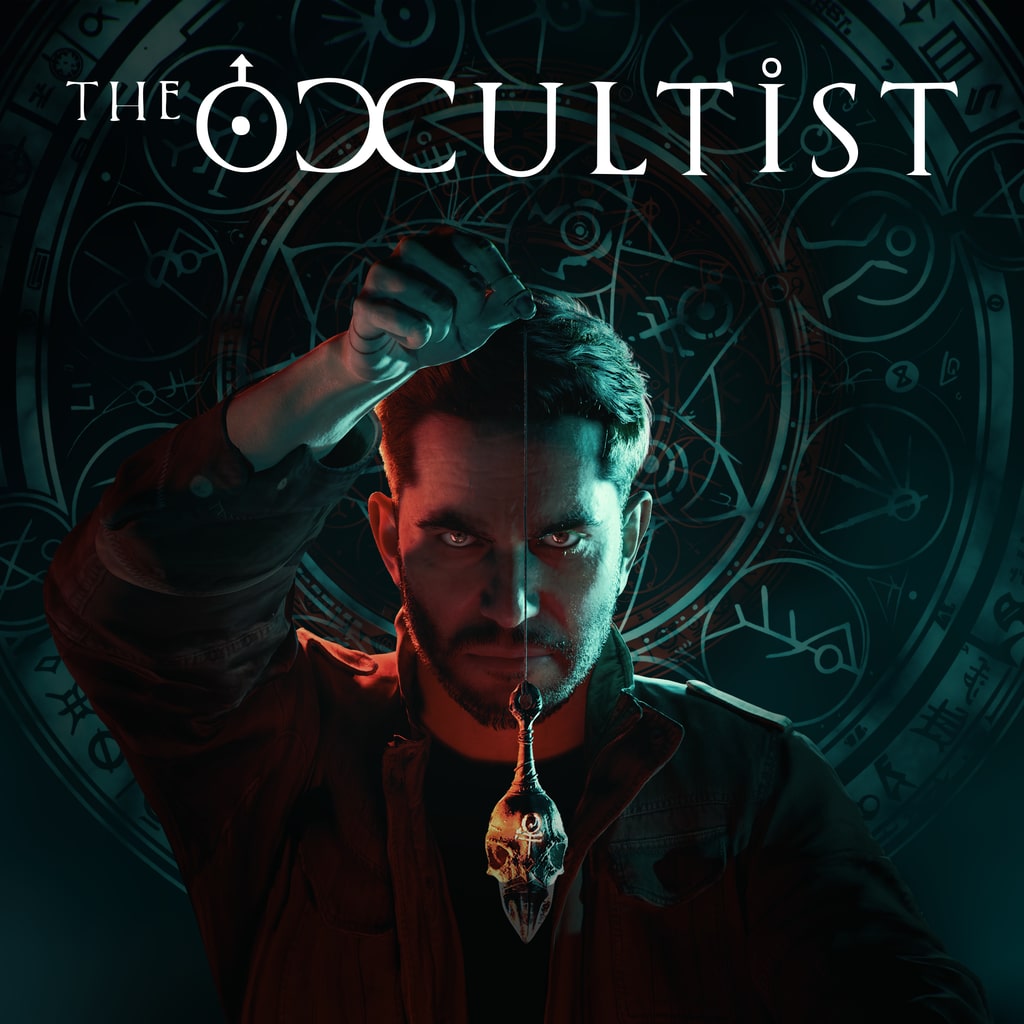
You step into the shoes of Alan Rebels, a paranormal investigator with a past that haunts him, a purpose that drives him, and a peculiar tool at his side: a mystic pendulum that seems to bend the very fabric of reality. His journey takes him to Godstone, an abandoned British island cloaked in fog and haunted by the remnants of a long-dead cult. At first glance, it might seem like a setup ripe for clichés, but The Occultist approaches this familiar scenario with a careful restraint that keeps it feeling fresh and genuinely unsettling.
A Place That Doesn’t Want You There
Godstone stands out as the true highlight here. From the moment you set foot on the island, an unsettling feeling takes hold — a sense that something is fundamentally off, hard to put into words but impossible to ignore. Streets curve back into themselves, creating a labyrinthine maze. Buildings appear deserted, yet somehow alive with silent memories, not entirely empty. There’s always a nagging feeling that eyes are watching, just beyond the edge of perception.
Unlike more overt horror games that rely on loud shocks and sudden scares, The Occultist adopts a slower, more deliberate pace. It fosters fear through emptiness as much as presence. Quiet moments of exploration stretch out, broken only by brief, unsettling glimpses of something unnatural lurking just out of sight. A door unexpectedly creaks open where there was silence before. A shadow seems to linger just long enough to send a chill down your spine. It’s a subtle kind of horror — one that seeps in quietly instead of rushing through the door with a bang.
The Pendulum: More Than a Gimmick
At the heart of the experience is Alan’s pendulum, and credit to the game for making it much more than just a narrative prop. Mechanically, it’s your main tool for engaging with the world around you. With it, you can move objects, uncover hidden elements, influence certain aspects of the environment, and occasionally shift reality in subtle yet meaningful ways. Its four abilities are introduced gradually, ensuring you never feel overwhelmed but remain curious about what each function might do next.
This is where The Occultist truly finds its voice. The pendulum turns ordinary puzzle-solving into something more tactile and instinctive. Instead of simply searching for keys or flipping switches, you interact with the environment in manners that feel slightly unnatural, almost intrusive. There’s a quiet thrill in that. It’s not just about solving puzzles. It’s about meddling with forces you don’t fully understand, and that sense of mystery adds a lingering depth to the experience.
Stealth Over Strength
Combat, or rather the lack of it, plays a significant role in shaping the game’s pacing. Alan isn’t a fighter, and the game doesn’t try to pretend otherwise. When you come face-to-face with hostile entities, your options are limited — you can hide, sneak around, or run. This design choice actually benefits the overall experience more often than not. Encounters become tense because you genuinely feel vulnerable, knowing there’s no safety net, no last-minute weapon to turn the tide. If you’re caught, panic sinks in quickly, heightening the sense of real danger and making every moment feel all the more desperate.
However, stealth can be a double-edged sword. Some sequences are brilliantly nerve-wracking, requiring you to carefully observe enemy patterns and plan your movements with precision. Other moments feel a bit stiff, with AI behaviour that becomes predictable after a while. It never completely ruins the experience, but it does occasionally pull you out of the immersion the game so diligently tries to create.
A Story That Lingers
At its core, The Occultist is a story about legacy, obsession, and the heavy burden of the past. Alan’s quest to find his father threads its way through the game, but it’s the history of Godstone that really gives the experience depth. The island’s history is revealed gradually through environmental storytelling, scattered documents, and the faint echoes of those who once called it home. The cult that lived on Godstone before it was abandoned in 1950 isn’t just a detail in the background; it’s woven into every part of the island, from its architecture to the lingering supernatural scars that mark it.
What truly stands out about the game is how it avoids over-explaining everything. It places its trust in you to connect the dots and sit with the unknown. Not every question finds an answer, and not all mysteries are wrapped up neatly. For a game that delves into the occult, this sense of ambiguity feels not only fitting but essential, giving the experience a quiet, haunting depth that stays with you.
Puzzles That Respect Your Intelligence
Puzzle design strikes a satisfying balance. Early challenges gently introduce you to the mechanics, allowing you to get your bearings without frustration. As you progress, later sections truly test your wits and demand genuine thought. Some puzzles are straightforward, relying on careful observation, while others draw you deeper into the game’s occult themes, asking you to interpret symbols, recognize patterns, or apply knowledge you’ve gathered along the way.
Thankfully, the game rarely feels unfair. The solutions are always within reach if you’re paying close enough attention. When you finally crack a particularly tricky puzzle, it feels like a real achievement—rather than something handed to you on a plate. This small detail makes a big difference, helping you stay immersed in the world and its mysteries.
Sound and Silence
The soundtrack, composed by Pepe Herrero, truly stands out. Its subtlety is remarkable; it often sinks into the background, yet it knows precisely when to emerge. During tense moments, low, unsettling tones seep in, creating a sense of unease, while quieter sections let the ambient sounds of the island take center stage. Those ambient sounds do most of the heavy lifting, with footsteps echoing in an almost unnatural way, distant noises hinting at unseen movements, and the wind itself seeming to carry whispers. This carefully crafted soundscape adds a layer of depth and immersion, elevating the game’s slow-burning horror and drawing players deeper into its haunting atmosphere.
Where It Falters
Despite its many strengths, The Occultist isn’t without flaws. The pacing sometimes feels uneven, especially in the middle sections where exploration and stealth start to blend together. Some areas seem a bit overextended, stretching the tension thin and risking fatigue.
There are moments when the game’s ambition exceeds what it can deliver. The visuals are undeniably impressive, yet occasional technical hiccups and minor animation inconsistencies can pull you out of the experience. None of these issues are enough to ruin the game, but they do hold it back from truly ranking among the very best in the genre.
Verdict
The Occultist offers a confident and atmospheric horror experience that truly understands the power of restraint. It doesn’t depend on cheap scares or relentless action but instead crafts a world that feels deeply unsettling, encouraging you to explore it at your own rhythm. The pendulum mechanic gives it a distinctive identity, while the story provides a compelling backbone. The setting of Godstone lingers long after the credits fade, leaving a lasting impression.
Although it occasionally falters with pacing and stealth execution, when it hits its stride, the game delivers a kind of horror that stays with you. Quiet, patient, and unsettling—just as it should be, resonating with a haunting quality that lingers in your mind.