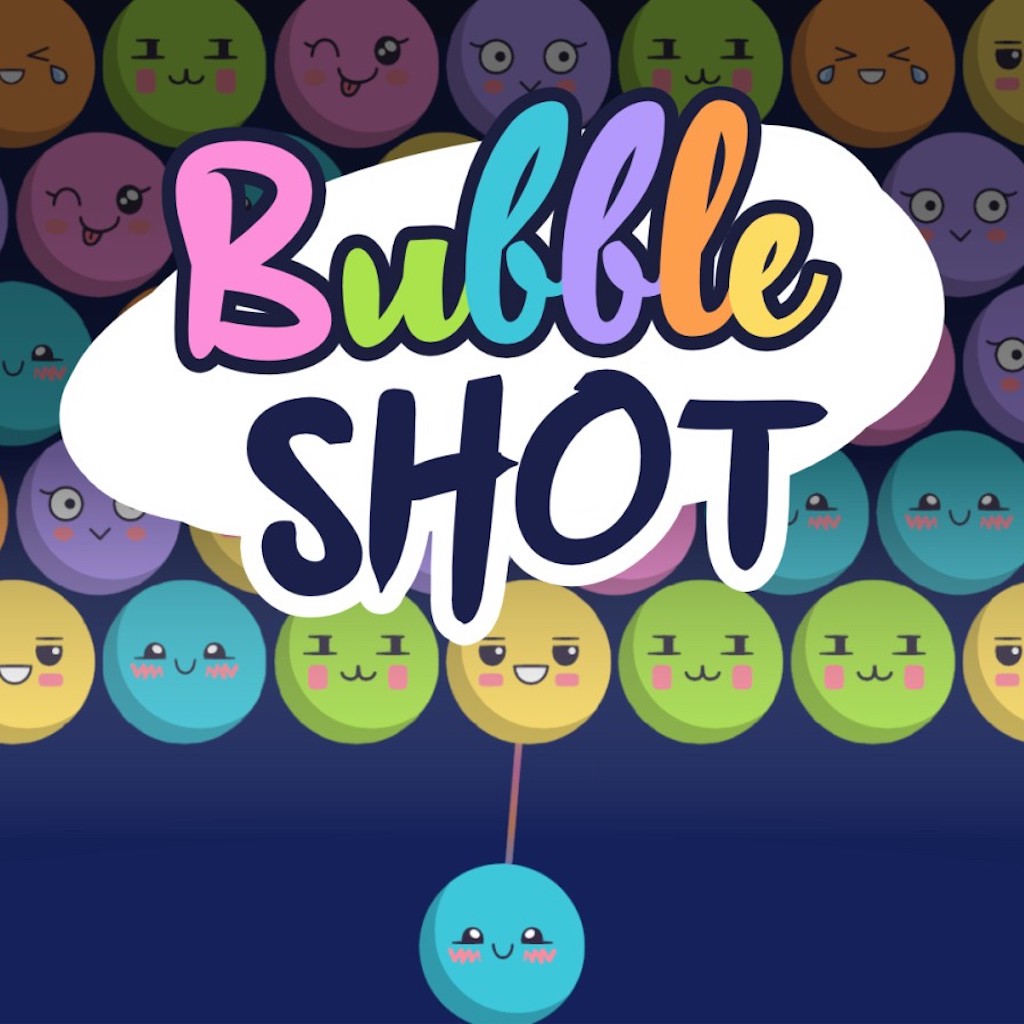
The Nintendo Switch eShop has become a natural home for smaller, pick-up-and-play puzzle games — titles designed less to dominate your evenings and more to fill quiet moments between larger adventures. Bubble Shot, released February 21, 2026 by Soroka Games, fits squarely into that philosophy.
A straightforward match-three bubble shooter inspired by arcade classics, Bubble Shot doesn’t attempt to reinvent the genre. Instead, it focuses on accessibility, responsiveness, and satisfying tactile feedback. At a budget price point — often discounted heavily — the game positions itself as a comfort-food puzzler rather than a deep strategic challenge.
And surprisingly, that restraint works in its favor. While it lacks innovation, Bubble Shot succeeds by understanding exactly what players expect from a casual arcade experience — and delivering it cleanly.
Gameplay — The Comfort of Familiar Design
If you’ve ever played a bubble shooter, you already understand Bubble Shot within seconds.
From the bottom of the screen, you launch colored bubbles upward toward clusters suspended above. Matching three or more bubbles of the same color causes them to pop, clearing space and awarding points. The objective is simple: eliminate the board before the descending ceiling reaches your shooter.
The rules are intentionally minimal:
- Aim carefully.
- Match colors.
- Trigger chain reactions.
- Survive escalating pressure.
This familiarity is part of the game’s appeal. There are no complicated tutorials or layered mechanics — players can jump in immediately, making it ideal for quick handheld sessions.
Yet beneath its simplicity lies a surprisingly satisfying skill curve.
Chain Reaction Physics — Where Strategy Lives
The most rewarding moments come from mastering cluster pops.
Bubbles often hang from fragile connections, meaning removing a critical support cluster can cause entire sections of the board to collapse. Successfully predicting these chain reactions creates massive score multipliers and dramatic screen clears.
These moments transform gameplay from passive matching into spatial problem-solving:
- Should you clear small groups safely?
- Or gamble on a risky bank shot that might drop half the board?
The physics system feels consistent and readable, encouraging experimentation rather than punishing mistakes.
When everything collapses in a cascading explosion of pops and falling bubbles, the game delivers its strongest dopamine hit.
Difficulty Curve — Gentle Beginnings, Sneaky Challenge
Early levels are deliberately forgiving. A long aiming guide helps players line up shots, and layouts remain open enough to avoid early frustration.
However, later stages introduce meaningful complications:
- Moving ceilings steadily reduce available space.
- Rotating bubble formations require precise timing.
- Tighter angles demand mastery of wall bounces.
- Color congestion forces strategic planning.
The difficulty progression feels carefully tuned for casual audiences — challenging enough to maintain engagement without becoming stressful.
Importantly, failure rarely feels punishing. Restarting a level is quick, encouraging “just one more try” play sessions.
Controls — Built for Handheld Play
One of Bubble Shot’s strongest design decisions is its Switch optimization.
Controls work seamlessly across multiple play styles:
- Joy-Con analog aiming feels smooth and responsive.
- Button-based shooting provides precision.
- Touchscreen aiming in handheld mode feels natural and intuitive.
Touch controls, in particular, make the game feel perfectly suited for portable play. Dragging to aim mirrors smartphone puzzle games but benefits from the Switch’s larger screen and tactile feedback.
It’s an ideal commute or couch companion — easy to pick up for five minutes or fifty.
Visual Presentation — Bright, Clean, Functional
Visually, Bubble Shot embraces colorful minimalism.
The game avoids visual clutter, prioritizing clarity over spectacle:
- Bold bubble colors remain easy to distinguish.
- Particle effects enhance feedback without obscuring gameplay.
- Backgrounds remain simple and non-distracting.
While not technically impressive, the presentation succeeds in maintaining focus on gameplay readability — essential for a precision-based puzzle title.
Animations emphasize “juice,” the subtle visual reinforcement that makes each pop feel rewarding. Bubbles bounce slightly before bursting, accompanied by bright flashes and cascading particle trails.
It’s simple but polished.
Sound Design — The Psychology of the Pop
Puzzle games live or die by sound feedback, and Bubble Shot understands this well.
Each successful match produces crisp popping sounds paired with escalating pitch variations during chain reactions. The audio design subtly rewards skilled play, making larger combos feel more exciting.
Background music remains light and unobtrusive, looping gently without overstaying its welcome.
The overall soundscape encourages relaxation rather than intensity — fitting the game’s casual identity perfectly.
Content & Longevity
As a budget title, Bubble Shot doesn’t aim for massive content depth.
The game primarily revolves around:
- Progressive level challenges
- Score chasing
- Replay optimization
- High-score improvement
There are no elaborate progression systems or narrative hooks. Instead, replay value comes from refining skill and achieving cleaner clears.
For some players, this simplicity may limit long-term engagement. For others, it reinforces the arcade philosophy: short bursts of satisfying gameplay rather than endless grinding.
Accessibility & Family Appeal
One of the game’s biggest strengths is universal accessibility.
Its clear visuals, simple controls, and forgiving mechanics make it approachable for:
- Younger players
- Casual gamers
- Puzzle newcomers
- Older audiences seeking relaxed gameplay
There’s no pressure, no complex systems, and no aggressive monetization mechanics — increasingly rare traits in modern casual puzzle games.
Performance
Performance on Nintendo Switch is excellent.
Load times are minimal, frame rates remain stable in both docked and handheld modes, and touchscreen responsiveness feels immediate.
Given the game’s modest scope, technical execution is exactly where it should be: invisible.
Where It Falls Short
While polished, Bubble Shot struggles to stand out in a crowded genre.
It introduces few original mechanics beyond refined presentation. Players seeking innovation or deep progression systems may find the experience repetitive over longer sessions.
Additionally, the absence of multiplayer modes or daily challenges limits ongoing engagement compared to some competitors.
Still, these limitations align with its budget pricing and casual goals.
Pros & Cons
Pros
- ✔ Satisfying and responsive bubble-popping gameplay
- ✔ Excellent handheld and touchscreen controls
- ✔ Relaxing, accessible design for all skill levels
- ✔ Strong visual and audio feedback (“juice”)
- ✔ Great value at budget price
Cons
- ✘ Limited innovation within the genre
- ✘ Minimal long-term progression systems
- ✘ No multiplayer or competitive modes
Final Verdict
Bubble Shot doesn’t try to revolutionize puzzle gaming — and that’s precisely why it works. Soroka Games delivers a clean, well-crafted version of a beloved arcade formula optimized perfectly for the Nintendo Switch’s portable nature.
Its success lies in execution rather than ambition. Every mechanic feels tuned for quick enjoyment, every pop feels rewarding, and every session invites one more round without demanding commitment.
In a marketplace full of overcomplicated systems and live-service expectations, Bubble Shot feels refreshingly honest: a simple game designed to relax, entertain, and satisfy.
It may not become a genre landmark, but as a casual puzzle companion, it hits its target with precision.