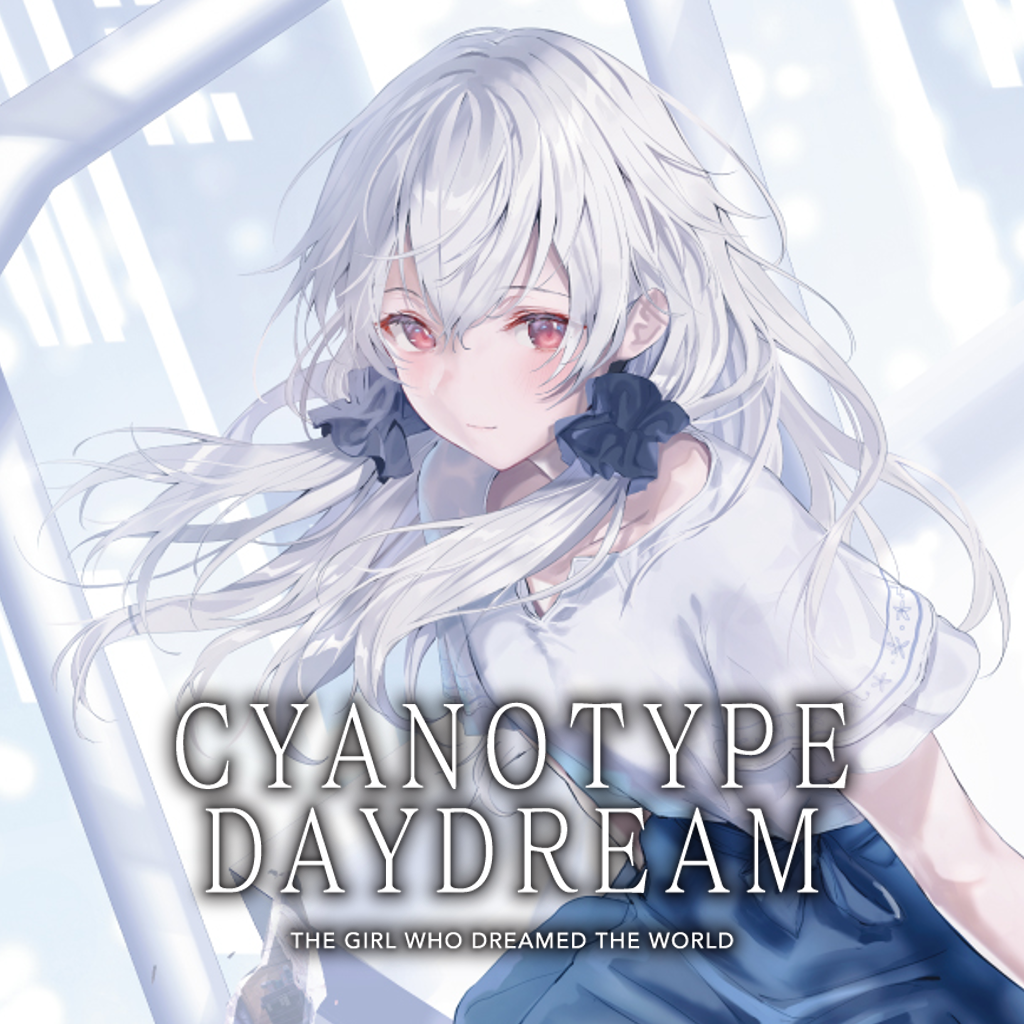
In the crowded world of visual novels, only a select few manage to earn the almost mythical reputation of “kamige”—a title that fans reserve for works considered truly exceptional. Cyanotype Daydream –The Girl Who Dreamed the World– is one of those rare titles.
Originally released internationally on PC in 2022 by Laplacian, the game gained a loyal following thanks to its unusual structure and emotionally charged storytelling. Now, with its long-awaited international Nintendo Switch release in March 2026, the game finally reaches a wider console audience.
What makes Cyanotype Daydream stand out is not just its story, but the way it tells that story. Instead of presenting a single linear romance, it unfolds through multiple disconnected narratives spanning different eras and characters—stories that initially seem unrelated but gradually interconnect into something far more ambitious.
The result is a visual novel that defies expectations, delivering a deeply layered tale about love, memory, and the stories people create to endure reality.
Three Stories That Shouldn’t Connect… But Do
At first glance, Cyanotype Daydream appears like an anthology.
The game starts by randomly assigning players to one of three different narrative “Cases.” Each storyline occurs in a totally different time period with a fresh cast of characters.
These include:
- Case 1: A 45-year-old teacher experiencing a painful midlife crisis and questioning the direction of his life.
- Case 2: A fictionalized narrative exploring the life of William Shakespeare in Elizabethan England.
- Case 3: A contemporary road trip story involving a drifting college dropout and a mysterious young woman.
At first, these narratives seem completely disconnected. The tone, setting, and characters vary greatly between each story, leaving players wondering what links them together.
However, as you delve deeper, it becomes clearer that these tales are parts of a much larger puzzle.
Themes resonate across different timelines. Dialogue references events that appear impossible. And characters start to reflect one another in surprising ways.
Eventually, the seemingly separate stories come together into a single cohesive narrative that redefines everything you have experienced.
It’s a structure that encourages patience and close observation—and when the pieces finally fall into place, the impact is truly powerful.
A Love Story Told Through Layers
Despite its intricate narrative structure, Cyanotype Daydream remains surprisingly straightforward at its core.
At its centre, the game narrates a love story.
Not merely romantic love, but also the kind of love conveyed through storytelling, sacrifice, and the yearning to create something meaningful for others.
The enigmatic girl who ties together the various narratives becomes the emotional centre of the entire experience.
Her presence resonates across timelines, affecting events in ways that seem almost mythic.
Without revealing the story’s numerous twists, the game gradually examines how stories themselves can shape reality—how individuals rewrite the past, reimagine the future, and find hope through the act of creation.
Few visual novels attempt storytelling on this scale.
Even fewer succeed in making it feel emotionally authentic.
Yet Cyanotype Daydream manages to balance its philosophical ideas with moments of intimate human connection.
A Definitive “All-Ages” Version
The version now available on Nintendo Switch is regarded by developer Laplacian as the definitive edition of the story.
While the original Japanese release included adult content, the international version completely removes these elements. Instead of merely cutting scenes, the original writer rewrote large sections of the script to better highlight the emotional and thematic heart of the narrative.
This alteration ultimately enhances the story.
By emphasising the characters’ emotional journeys rather than explicit content, the rewritten script allows the themes of love, creativity, and sacrifice to take centre stage.
For many players, this more refined version actually feels more cohesive than the original.
Visual Presentation and Atmosphere
As a visual novel, Cyanotype Daydream depends heavily on its presentation—and here it provides impressive production values.
Character illustrations are detailed and expressive, capturing subtle emotional shifts during key conversations. Background art varies greatly depending on the timeline, ranging from cosy modern interiors to dramatic recreations of Elizabethan England.
The visual design helps reinforce the sense that each storyline belongs to a different world.
The game’s soundtrack is equally strong, blending melancholic piano pieces with more dramatic orchestral tracks during crucial narrative moments.
These musical cues play a vital role in building emotional tension as the plot advances towards its eventual convergence.
The overall aesthetic evokes the feeling of flipping through a beautifully illustrated novel—one where every scene has been carefully crafted.
A Narrative That Demands Attention
Cyanotype Daydream is not a casual experience.
Its layered storytelling demands careful reading and a willingness to embrace ambiguity. Players expecting a straightforward romance may initially feel disoriented by the shifting timelines and narrative perspectives.
However, those prepared to engage with its structure will discover an experience that rewards attentiveness.
Small details—throwaway lines of dialogue, symbolic imagery, or seemingly minor character interactions—often take on new meaning later in the story.
The game trusts its audience to connect these threads themselves rather than explaining everything explicitly.
This approach fosters a sense of discovery rarely encountered in visual novels.
Switch Performance and Accessibility
The Nintendo Switch version runs smoothly in both handheld and docked modes, making it an excellent platform for a story-driven experience.
Visual novels naturally suit handheld play, and Cyanotype Daydream benefits from the Switch’s portability. Long reading sessions feel comfortable whether you’re playing on the sofa or during short breaks throughout the day.
The interface is clean and easy to navigate, with typical genre features such as:
- Auto-play dialogue
- Text backlog
- Save-anywhere functionality
These options make it easy to revisit scenes or pause the experience whenever needed.
Pros
- Deep, layered storytelling that rewards careful attention
- Unique anthology structure that converges into a powerful narrative
- Strong character writing and emotional themes
- Beautiful artwork and atmospheric soundtrack
- Definitive rewritten “all-ages” version improves narrative focus
Cons
- Slow pacing may deter players unfamiliar with visual novels
- Narrative complexity can feel confusing early on
- Limited gameplay interaction beyond reading
Final Verdict
Cyanotype Daydream –The Girl Who Dreamed the World– exemplifies the power of storytelling within the visual novel genre.
By blending multiple timelines, genres, and emotional viewpoints, developer Laplacian creates a narrative that feels both personal and vast.
The story’s exploration of love, creativity, and the essence of storytelling itself leaves a lasting impression.
Although its slow pace and dense structure may not suit all players, those prepared to engage deeply will encounter one of the most memorable narratives in the genre.
For enthusiasts of story-driven games, this Nintendo Switch release finally introduces a modern visual novel classic to a broader audience.