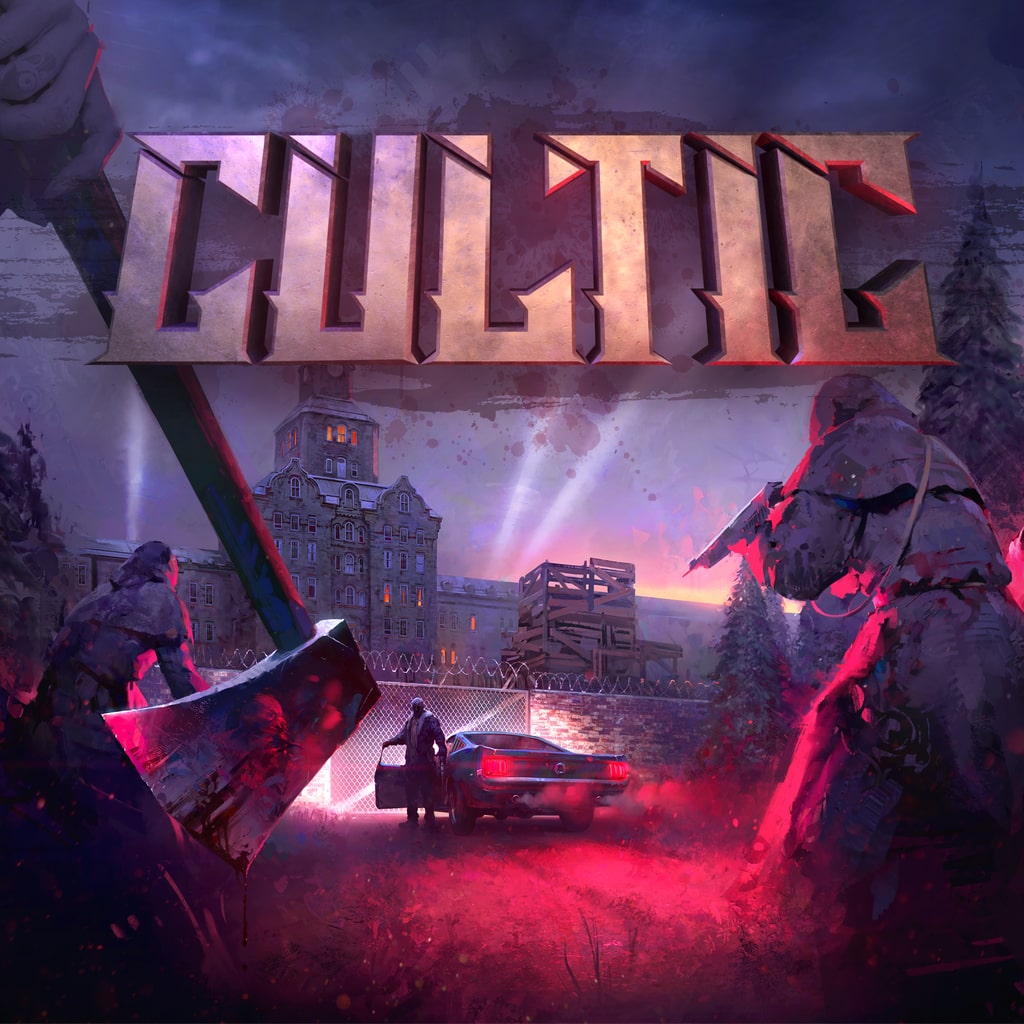
The term “boomer shooter” gets thrown around a lot these days. Every few months, another retro-inspired first-person shooter appears, complete with chunky pixels, keycards, oversized weapons, and enough explosive barrels to light up an entire county. Some are brilliant, some rely too heavily on nostalgia, and others mistake old visuals for old design. CULTIC is different. It certainly wears its influences proudly, but it never feels trapped by them.
Developed almost entirely by solo creator Jason Smith, CULTIC is the kind of game that immediately understands what made classics like Blood, Doom, and Quake so memorable. Fast movement, devastating weapons, and labyrinthine levels are all present, yet they are backed by modern technology that gives every bullet impact, every explosion, and every collapsing object a satisfying physical presence. It feels old-fashioned in appearance but remarkably contemporary in execution.
The premise is deliciously grim. You awaken in a mass grave after being left for dead by a fanatical blood cult operating in rural America during the 1960s. Death, however, turns out to be more of an inconvenience than an ending. Climbing from the dirt, you begin a relentless campaign of revenge that takes you through abandoned churches, forgotten catacombs, eerie forests, decaying hospitals, and eventually the devastated streets of New Grandewel.
The Complete Edition brings everything together in one brutal package, including Chapter One, the substantial Chapter Two expansion, the Interlude campaign, Survival Mode, and bonus content. More importantly, it tells a complete story that escalates consistently without losing sight of what makes the game so compelling. It is violent, horrifying, clever, and endlessly entertaining.
Gameplay
The first thing that stands out about CULTIC is how responsive it feels. Movement is fluid without becoming uncontrollable, allowing players to sprint, slide, dodge, and weave through enemy fire with incredible freedom. Every encounter encourages movement, but unlike some retro shooters that reward nothing but reckless aggression, CULTIC also supports patience and careful planning.
That flexibility is one of the game’s greatest strengths. Charging into a room with a shotgun and emptying both barrels into a crowd of cultists is immensely satisfying, but it is not the only viable approach. You can just as easily use cover, lure enemies into traps, throw explosives around corners, or manipulate the environment to gain an advantage. Few shooters manage to make both aggressive and tactical play feel equally rewarding.
The weapon selection complements this philosophy perfectly. Every firearm feels distinct, from dependable revolvers and bolt-action rifles to devastating shotguns and automatic weapons that shred enemies into clouds of pixelated gore. The arsenal avoids unnecessary gimmicks, focusing instead on making each weapon feel believable and powerful.
The sound design deserves enormous praise. Every gunshot carries weight, every shell casing clatters convincingly across the floor, and every explosion echoes through the environment with frightening intensity. Shooting simply feels fantastic, and in a first-person shooter, that is perhaps the highest compliment possible.
Enemy encounters are equally satisfying because cultists rarely stand still, waiting to be eliminated. They move intelligently, use cover, flank your position, and force constant repositioning. The result is combat that remains engaging from beginning to end because it always demands attention.
Horror Beyond the Bloodshed
While CULTIC delivers spectacular action, it never forgets that horror is equally important. The atmosphere constantly balances tension with violence, ensuring that moments of frantic combat are followed by quieter periods of uncertainty.
Exploration is central to this atmosphere. Levels are large, interconnected, and filled with hidden passages, optional areas, and carefully concealed secrets. Players who rush directly towards objectives will complete the campaign, but those willing to investigate every abandoned hallway and forgotten basement will uncover valuable supplies, clever Easter eggs, and additional environmental storytelling.
The locations themselves deserve recognition for their authenticity. Rather than relying on floating platforms or impossible architecture, CULTIC builds believable spaces that feel like genuine locations overtaken by unimaginable horrors. Churches, barns, police stations, and industrial buildings all have logical layouts that strengthen immersion.
There is something unsettling about walking through environments that could almost exist in reality before discovering the grotesque rituals hidden beneath them. That contrast between the familiar and the horrific gives CULTIC much of its identity.
Chapter Two Raises the Stakes
While Chapter One establishes the game’s foundation brilliantly, Chapter Two shows how much confidence the developers gained during production. The action expands into the ruined city of New Grandewel, introducing larger environments, new enemies, additional weapons, and more ambitious encounters.
The urban setting creates a different rhythm from the rural horror of the opening campaign. Streets become battlefields, ruined buildings offer vertical combat opportunities, and the surrounding destruction reinforces the sense that the cult’s influence has spread far beyond isolated farmland.
Importantly, Chapter Two never feels like more of the same. It builds naturally on what came before while continuing to surprise players with fresh situations and increasingly inventive level design. Rather than simply adding length, it adds meaningful variety.
The inclusion of the Interlude campaign also helps bridge the narrative and gives players another opportunity to experience the evolving mechanics before diving into the larger expansion.
Visuals and Presentation
At first glance, CULTIC looks like it escaped from the late 1990s. Pixelated sprites, chunky textures, and voxel-inspired visuals immediately recall classic shooters from that era. Spend more than a few minutes with the game, though, and it becomes clear that it is powered by modern technology underneath.
Dynamic lighting transforms gloomy corridors into genuinely frightening spaces. Explosions send debris flying realistically across rooms, while physics interactions allow environmental objects to respond naturally during combat. It creates a fascinating blend of old and new, where nostalgia never limits technical ambition.
The art direction is equally impressive. The deliberately gritty aesthetic perfectly suits the grim 1960s horror setting. Blood splatters, flickering lights, rusted machinery, and weathered buildings combine to create a world that feels filthy, dangerous, and strangely beautiful.
The soundtrack deserves equal recognition. It shifts effortlessly between eerie ambient tracks during exploration and aggressive industrial compositions once combat erupts. The music never overwhelms the action, instead enhancing the tension before exploding alongside the firefights.
Survival Mode and Replay Value
Beyond the main campaigns, CULTIC includes Survival Mode, which offers wave-based combat challenges that test every skill learned throughout the story. It strips away exploration and focuses entirely on surviving increasingly dangerous enemy assaults while chasing leaderboard positions.
It is surprisingly addictive because the combat mechanics are robust enough to support endless replayability. Every attempt becomes an opportunity to improve movement, experiment with weapons, and discover more efficient strategies.
Combined with multiple difficulty settings, hidden secrets scattered throughout the campaign, and different ways to approach combat encounters, CULTIC offers far more replay value than its retro appearance might initially suggest.
A Few Minor Imperfections
There are occasional moments when navigation becomes slightly confusing. Some of the larger levels can leave players wandering in search of the next objective, particularly when important pathways blend into the environment. For players who enjoy exploration, this is rarely a major issue, but others may occasionally wish for slightly clearer direction.
The high level of challenge may also surprise newcomers expecting a straightforward shooter. Ammunition management, aggressive enemy behaviour, and the need for constant movement create an experience that demands concentration. It is never unfair, but it certainly expects players to engage with every mechanic rather than simply relying on quick reflexes. Fortunately, these minor frustrations are overshadowed by the overall quality of the design.
Verdict
CULTIC is one of the finest examples of modern retro game design because it understands that nostalgia should inspire innovation rather than replace it. It captures everything that made classic first-person shooters memorable while improving on them with responsive controls, believable physics, outstanding level design, and a genuinely unsettling horror atmosphere.
Its satisfying gunplay, flexible combat systems, memorable environments, and generous amount of content make the Complete Edition an easy recommendation for anyone who enjoys action games with real substance. Whether creeping cautiously through abandoned buildings or charging headlong into a room full of cultists with a smoking shotgun, every encounter feels handcrafted and meaningful.
This is not simply a tribute to the shooters of the past. It is proof that the formula still has plenty of life left when handled with imagination, confidence, and an obvious passion for the genre.