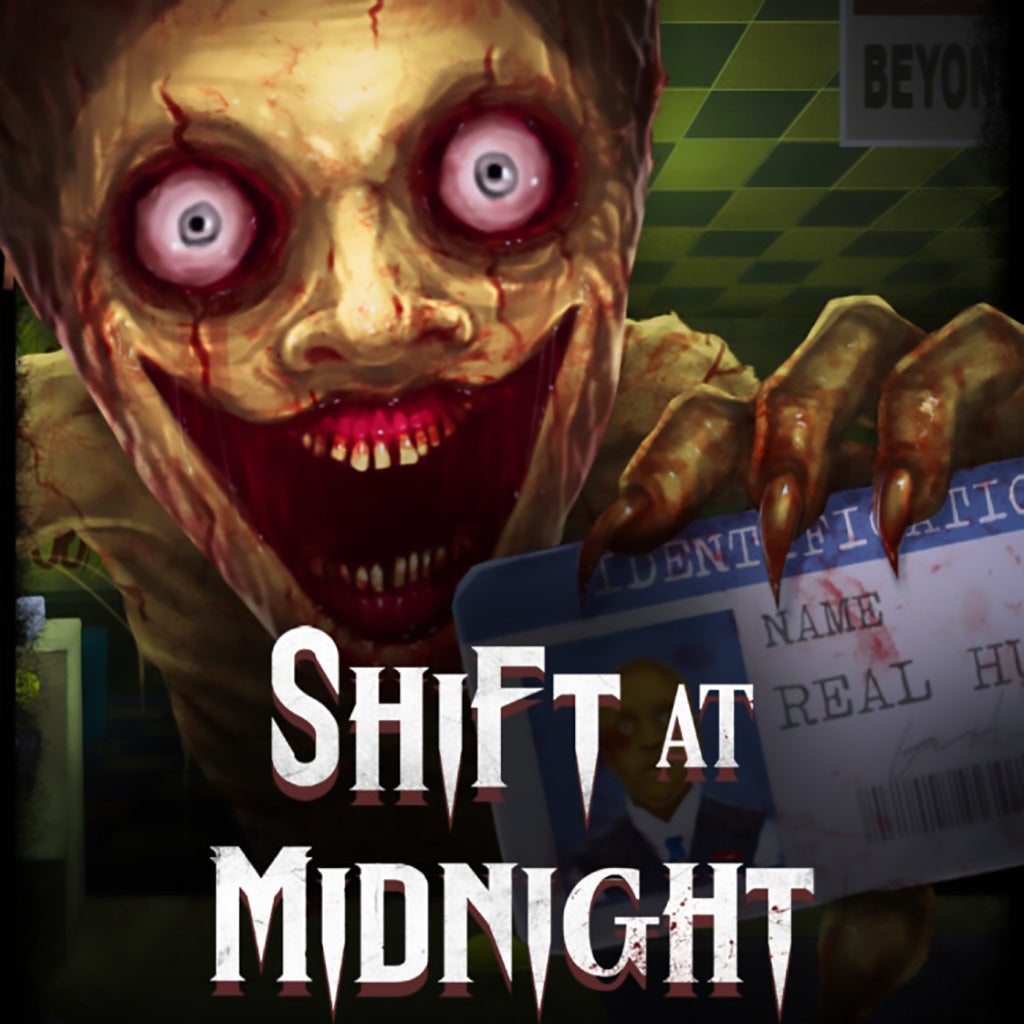
There is something inherently unsettling about working the night shift. Empty roads, fluorescent lighting, shelves that never seem to stay stocked, and the steady hum of refrigerators create an atmosphere that already feels isolated before anything supernatural enters the picture. Shift At Midnight takes that familiar setting and twists it into something wonderfully paranoid, posing a simple question that grows increasingly difficult to answer. How do you know the person standing in front of you is actually human?
Developed by Bun Muen and published by Kwalee, Shift At Midnight blends shop management, detective work, cooperative multiplayer, and survival horror into an experience that keeps you constantly second-guessing yourself. One moment you are restocking crisps and cleaning coffee spills from the floor. The next, you are interrogating a customer whose smile seems just a little too wide while your friends desperately search through computer records for inconsistencies.
It is a wonderfully unusual combination of genres that somehow works far better than it has any right to. While a few repetitive tasks and occasional pacing issues prevent it from becoming a horror classic, Shift At Midnight succeeds because it understands that tension is far more effective when players create it themselves.
Gameplay
At its heart, Shift At Midnight is a balancing act between everyday responsibility and creeping suspicion. Your primary objective is to keep the petrol station running efficiently. Shelves need filling, deliveries arrive throughout the night, customers expect prompt service, and the shop quickly becomes untidy if neglected.
Those management systems are satisfying enough on their own. There is something oddly relaxing about organising stock and keeping everything running smoothly. That calm routine is deliberately designed to lull players into lowering their guard before the real challenge begins.
Every customer who walks through the automatic doors could be a doppelganger. Serving someone is never as straightforward as simply scanning their shopping. Before allowing them to leave, you can question them, inspect identification, compare records on the store computer, and watch for unusual behaviour. Some customers answer naturally, while others hesitate, contradict themselves, or display subtle physical abnormalities that raise immediate concern.
The game never makes these investigations feel entirely straightforward. Sometimes a customer appears suspicious but is completely innocent. Other times, someone who seems perfectly normal is hiding something much darker. That uncertainty creates genuine tension because every decision carries consequences.
If you believe someone is an impostor, you can eliminate them on the spot. Naturally, shooting customers inside your convenience store creates quite a mess, so you must quickly clean the evidence before serving the next person. It is darkly humorous in a way that fits the game’s offbeat personality remarkably well.
The real panic begins if you make the wrong decision. Allow a doppelganger to leave the building, and your relatively peaceful shift transforms into full survival horror. Doors must be barricaded, traps deployed, hiding places located, and your team prepared before the creatures inevitably return to exact revenge. That dramatic shift in pace is one of the game’s strongest ideas. The gradual transition from quiet investigation to frantic survival prevents the experience from becoming repetitive and ensures every successful shift feels genuinely earned.
Working Together
Although Shift At Midnight can technically be played alone, it is clearly designed for cooperative play. Working alongside friends turns every investigation into an entertaining debate. One player might handle customer interviews while another checks identification records. Someone else keeps the shelves stocked while another watches the security cameras for suspicious movement. Before long, everyone naturally settles into their own responsibilities without much discussion.
The inclusion of proximity voice chat elevates those moments even further. Instead of hearing every teammate regardless of location, conversations occur only when players are physically close together. That simple feature creates wonderfully chaotic situations where someone suddenly shouts from another aisle that they have found something suspicious, forcing everyone else to rush across the shop before the customer disappears.
During survival sequences, proximity chat becomes even more effective. Hearing frightened voices grow quieter as teammates scatter through the building adds another layer of immersion that standard multiplayer voice systems rarely achieve. Few things are quite as entertaining as hearing a friend’s scream abruptly cut short somewhere behind a storage room wall.
Atmosphere
Shift At Midnight understands that horror often works best through anticipation rather than constant confrontation. The petrol station itself feels surprisingly believable. Bright shop lights contrast sharply with the endless darkness outside, creating an uncomfortable sense of isolation. Every customer who enters seems to have emerged from nowhere, making even ordinary interactions carry an underlying sense of unease.
The sound design deserves particular praise. The constant buzz of refrigeration units, distant rainfall, humming fluorescent lights, and occasional vehicle engines establish an authentic late-night atmosphere. When those familiar sounds are interrupted by unsettling noises or complete silence, the effect becomes genuinely unnerving.
The monster designs avoid becoming overused through careful restraint. Rather than constantly throwing creatures at players, the game makes their appearance feel like the consequence of failure. That approach keeps encounters memorable rather than routine.
Presentation
Visually, Shift At Midnight strikes a pleasing balance between realism and stylised horror. The shop environment is detailed enough to feel lived in without overwhelming players with unnecessary clutter. Product shelves, storage rooms, petrol pumps, and staff areas all contribute to the illusion of a functioning business that just happens to attract monsters after dark.
Character models are expressive enough to support the detective mechanics. Tiny facial movements, awkward postures, and strange mannerisms become valuable clues during interrogations. You begin to study body language almost subconsciously, which is exactly what the developers intended.
Performance remains stable throughout most sessions. Randomly generated shifts introduce welcome variety without noticeably affecting overall stability, ensuring replayability remains one of the game’s greatest strengths.
Randomised Nights Keep Things Fresh
Perhaps the smartest decision the developers made was refusing to let players memorise solutions. Every shift brings different customer combinations, altering investigation outcomes and randomising potential threats. That procedural structure means players cannot simply rely on memory after a few hours.
Instead, every shift demands fresh observation. Even experienced players keep questioning themselves, because familiar behaviours may no longer signal danger. The game consistently encourages critical thinking rather than pattern recognition, which significantly extends its lifespan.
The thirteen story shifts provide a solid framework, while procedural elements ensure plenty of reasons to return long after the credits roll. Multiplayer sessions become especially unpredictable because every group approaches investigations differently, often leading to hilarious disagreements over whether someone should be trusted.
Final Verdict
Shift At Midnight successfully blends several unlikely genres into something surprisingly cohesive. Shop management provides structure, detective work generates suspense, and survival horror delivers memorable moments of panic without overshadowing the quieter sections that make those scares effective.
Its cooperative focus is undoubtedly where the experience shines brightest. Solving mysteries alongside friends while desperately trying to keep a petrol station running creates stories that feel unique each session. The proximity chat system, procedural customer generation, and shifting gameplay phases all contribute to an experience that rarely unfolds the same way twice.
It is not without flaws. Some management tasks become repetitive during longer sessions, and solo players lose much of the chaotic energy that defines the multiplayer experience. Nevertheless, those shortcomings are relatively minor when weighed against the originality of the overall design.
Shift At Midnight proves that horror does not always need haunted mansions or abandoned hospitals. Sometimes all it takes is a quiet petrol station, a suspicious customer buying a sandwich at three in the morning, and the uncomfortable feeling that asking one more question might save your life.