In a genre overrun with sprawling RPGs and hyper-polished action blockbusters, Castle of Monsters: The Last Knight stakes its ground with an old-school, beat-’em-up ethos wrapped in a monster-laden setting. At its core, this is a game that harks back to a bygone era of arcade and console brawlers — where reflexes, pattern mastery, and momentum were king. Whether it’s a successful homage or a nostalgic echo depends largely on your appetite for repetition, incremental progression, and densely packed combat arenas.
What Castle of Monsters attempts to deliver is a castle-climbing gauntlet set in a world overrun by grotesque creatures and spectral adversaries. You don the mantle of the eponymous Last Knight — a hardened warrior tasked with cutting down wave after wave of monstrosities to reach the heart of a cursed keep. Some aspects hit their mark with satisfying weight and flair; others expose limitations in pacing and mechanical depth. The overall experience is engaging in bursts, though it occasionally struggles under the weight of its own design choices.
Premise and Presentation: A Dark, Gothic Canvas
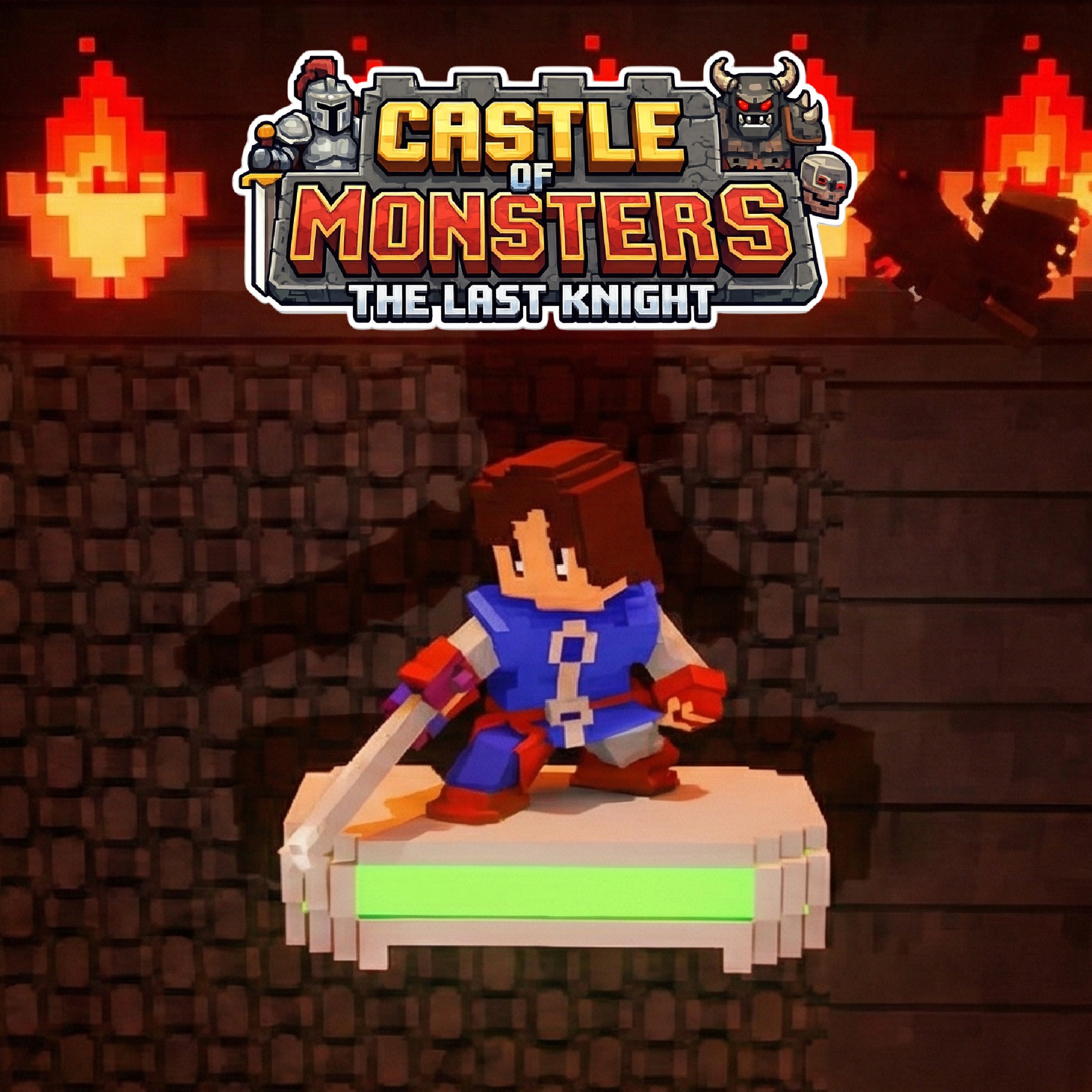
The atmosphere Castle of Monsters cultivates is unmistakably gothic. From the moment you step into the decaying grand hall of an abandoned keep, the environment evokes images of grim fantasy: gargoyle silhouettes, shattered stained glass, ominous corridors, and the distant groans of foul beasts. Visually, the game leans into dark palettes interrupted by flashes of colour — fiery spells, glinting swords, and the vivid blood splatter of combat — and the effect is immediately evocative.
Character and monster designs are exaggerated in a way that fits this stylised world. More than mere palette swaps, enemies present a variety of visual cues that help players anticipate attack styles or aggression levels. The Last Knight himself moves with purposeful animation, his sword strikes carrying convincing heft and satisfying visual feedback.
The soundtrack complements this aesthetic with low, rumbling ambience, punctuated by rising orchestral strikes as battles intensify. While the musical identity isn’t particularly memorable, it supports the mood consistently and keeps the tone grounded.
Core Combat Loop: Instant Action, Enduring Patterns
At its heart, Castle of Monsters is about combat flow — chaining light strikes, timing heavier blows for increased damage, and weaving in special attacks or defensive maneuvers when needed. Combat unfolds in distinct arenas within the castle, each arena populated by waves of enemies that arrive in escalating difficulty.
Here’s where the game’s strengths become most apparent:
Responsive Controls:
Movement, attacks, jumps, and special abilities all respond crisply. The Last Knight feels tactile in hand, and once you internalise the timing windows for blocking or evasion, combat becomes intrinsically satisfying.
Enemy Variety:
Foes come in many forms: swift skirmishers that circle and evade, hulking brutes that telegraph powerful but slow attacks, swarms of weaker enemies that demand area control, and spellcasters that harry from range. Learning enemy rhythms and attack patterns is essential, and there’s genuine pleasure in overcoming a previously problematic foe once you’ve discovered their tell.
Chain Combos and Special Moves:
The game rewards mastery of its combo system. Quick successive hits fill a meter that can be spent on powerful special attacks — often with area-clear effects that are satisfying both visually and in gameplay impact. These mechanics elevate combat beyond basic button-mashing, as you’re encouraged to think about rhythm, spacing, and risk vs reward.
Progression and Upgrades: Incremental Yet Limited
One area where Castle of Monsters attempts to deepen its systems is progression. As you defeat enemies and complete combat arenas, you earn experience and unlock resources used to upgrade your character’s stats, attack repertoire, and defensive options.
Progression includes:
- Stat Increases (health, damage, defence)
- New Combat Skills
- Improved Armour and Weapon Traits
These elements add a degree of RPG flavour, nudging players to adapt their builds based on playstyle. However, the depth of customization is modest. While early upgrades feel meaningful — offering clear boosts to survivability or combat fluidity — later options feel incremental rather than transformative. There are no radical build diversions; you won’t suddenly find yourself tanking through hordes with unorthodox power sets or completely altering your playstyle by choice of skills.
For players who enjoy seeing steady numerical improvements, this system delivers. But for those seeking complex character builds with divergent strategic identities, it may feel underwhelming.
Level Design and Pacing: Peaks and Plateaus
The structure of Castle of Monsters leans into semi-open rooms and segmented arenas built around combat encounters. Progression flows from one gauntlet of encounters to the next, with short transitions in between.
This framework produces both highs and lows:
Highs:
When arena design and enemy variety align, combat feels exhilarating. Large arenas with multiple threat vectors — elite enemies supported by swarms — require constant situational awareness and often produce intense, satisfying skirmishes. The reward loop of clearing a difficult arena and seeing your score tally up feels consistently gratifying.
Lows:
Repetition can creep in. Some arenas feel structurally similar, with waves reset on slightly different enemy mixes. The absence of more diverse environmental challenges — traps, interactive elements, or significant platform navigation — means the game’s combat system is largely doing all the heavy lifting. After several hours, that can tire even the most ardent button-masher.
User Interface and Accessibility
The interface is functional, if not particularly stylish. Menus are laid out clearly, with intuitive navigation through skill trees, inventory, and settings. Health bars, stamina indicators, and special ability meters are all distinct and readable even during high-intensity combat.
Accessibility options, however, are limited. Difficulty settings exist, but there are few tailored adjustments for players with sensory or motor challenges. A richer suite of accessibility features — camera shake toggles, remappable controls beyond default presets, or custom difficulty sliders — would broaden the game’s appeal.
Performance and Polish
On PC, Castle of Monsters runs smoothly for the most part. Frame rates maintain stability during crowded encounters, and loading times between arenas are brief. Occasional hit-detection quirks occur in tight spaces, but these are rare and tend not to disrupt momentum significantly.
Visual effects — motion trails, impact flashes, and particle effects — are satisfying without overwhelming clarity, and the animation blend between movement and attack states is solid.
Replay Value and Longevity
Once the main progression arc is complete, Castle of Monsters offers moderate replay value. Difficulty modifiers and arena replays challenge you to refine timing and optimise builds, but the absence of branching story paths or substantive narrative twists means the incentive to replay is rooted primarily in mastering combat rather than uncovering new content.
For players who enjoy deepening mastery of a game system rather than discovering narrative variations, this delivers. Others may find long-term engagement limited.
Final Verdict: A Worthy Brawler With Room to Grow
Castle of Monsters: The Last Knight is a solid, well-executed action-combat title with satisfying mechanics and a compelling core loop. Its strengths lie in responsive controls, thoughtful enemy design, and the tactile pleasure of chaining combos. While progression and mode variety fall shy of genre standouts, the game remains a rewarding experience for players drawn to classical action combat and arcade-style encounters.
It is a game that understands its audience: those who enjoy incremental mastery, well-paced fights, and a touch of gothic atmosphere. For those players, Castle of Monsters delivers consistent thrills and satisfying progress. Its shortcomings — occasional repetitiveness and a limited customization depth — don’t diminish the core fun but leave room for expansion in future sequels or updates.