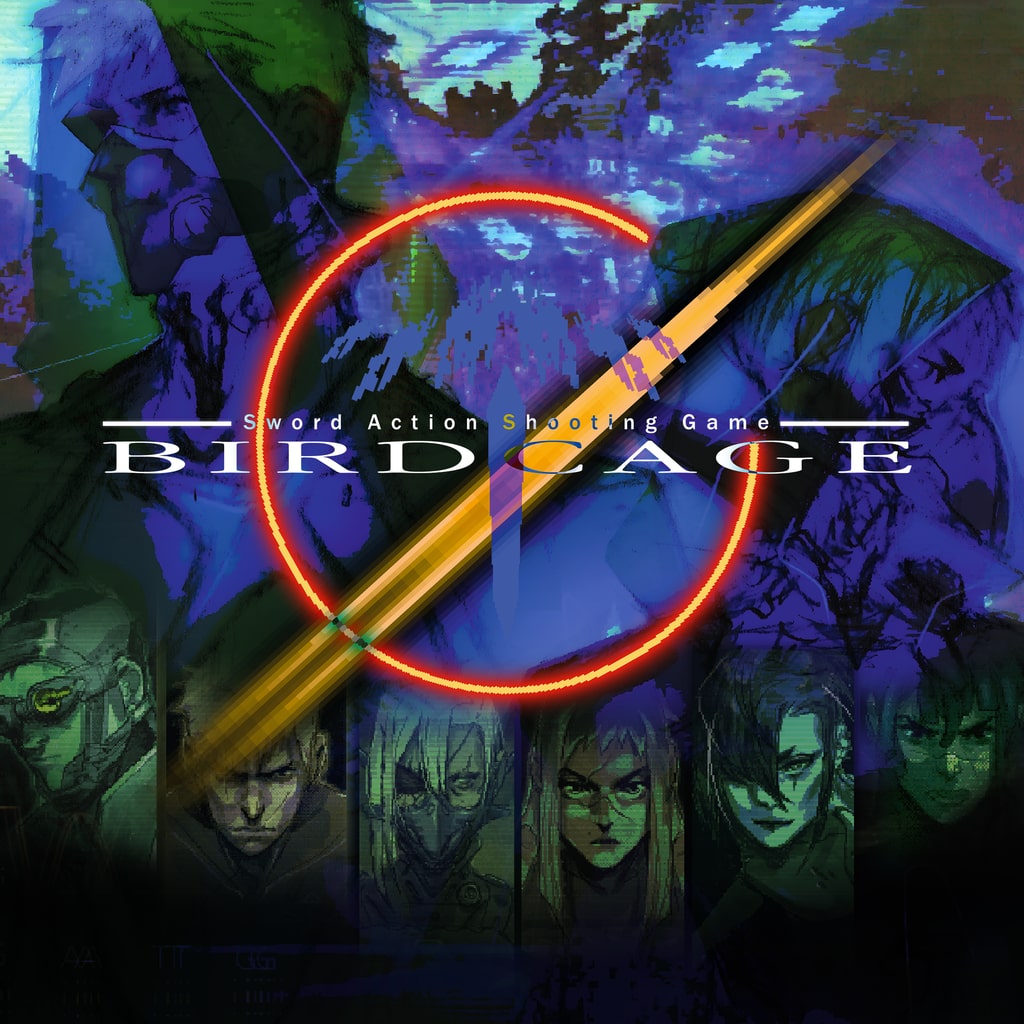
There is something wonderfully old-school about a game that throws you straight into a wall of bullets and essentially says, “Right then, try not to die.” BIRDCAGE knows exactly what sort of game it wants to be, and from the moment the screen fills with enemies, projectiles and explosions, there is little doubt that this is an arcade shooter wearing its influences proudly on its sleeve. Yet beneath the retro presentation and relentless action lies a surprisingly thoughtful science fiction story about humanity, memories and the desperate attempt to break free from something that has kept you trapped.
This is a vertical-scrolling shoot ’em up in the classic sense, but BIRDCAGE isn’t content to simply recycle the same old formula. Six stages stand between you and freedom, each packed with enemy formations, increasingly ridiculous bullet patterns and bosses who seem to have taken personal offence at your existence. The difference is that you aren’t simply moving left and right while holding down the fire button. Positioning, weapon choice, timing and aggression all play an important role, and the closer you get to the edge of disaster, the more powerful you can become.
Six Stages Of Beautiful Chaos
The basic premise is beautifully simple. Survive six stages of escalating bullet hell, destroy everything you can, and try to keep your score climbing while avoiding the seemingly endless stream of projectiles heading your way. Anyone familiar with arcade shmups will understand the appeal immediately, but BIRDCAGE has enough ideas of its own to keep the experience from feeling like a nostalgia exercise.
Each stage becomes a test of concentration. Enemy formations arrive from all directions, attacks overlap, and the screen can quickly become an intimidating sea of movement. The trick is to learn to read the chaos rather than panic when it erupts, because there is usually a route through the madness if you are prepared to look for it.
That is where the game starts to become genuinely addictive. Your first attempt might be little more than an exercise in survival, but the next run is different because you now know where certain enemies appear, where the dangerous patterns begin, and when to save your abilities. Suddenly you’re not simply playing the level. You’re learning it.
Shooting Is Only Half The Fun
The weapon system gives BIRDCAGE a welcome tactical edge. You can switch between spread shots and more focused attacks depending on what is happening around you, and choosing the right approach can make the difference between clearing a formation efficiently and being completely overwhelmed.
Spread attacks are useful when enemies appear across the screen, allowing you to deal with multiple targets without lining up every shot perfectly. Focused attacks, meanwhile, are better suited when you need to concentrate firepower on something particularly dangerous. It sounds straightforward, but when you’re surrounded by bullets and trying to maintain a chain, making that decision quickly becomes part of the challenge.
Then there are the special abilities, where BIRDCAGE starts to show a little more personality. Homing attacks can be charged and unleashed when you need additional firepower, but the real star is Hyperblade.
When The Sword Comes Out
Yes, there is a sword. That might sound like a strange addition to a vertical shoot ’em up, but it works far better than it has any right to. The melee attack gives you a reason to get dangerously close to enemies rather than simply hanging around at the bottom of the screen, creating a much more aggressive style of play.
The sword can also help you deal with situations where conventional shooting isn’t enough. Getting close enough to use it is obviously risky, especially when the screen is already covered in projectiles, but that danger is exactly what makes it satisfying. BIRDCAGE rewards players who are willing to take calculated risks rather than constantly hiding at a safe distance.
Hyperblade takes that idea even further. Used at the right moment, it can wipe away bullets and turn what looked like an impossible situation into a brief window of opportunity. The temptation is always there to activate it immediately when things get scary, but learning when to hold your nerve and when to unleash it is a huge part of mastering the game.
Grazing Danger
There is a wonderful tension running through BIRDCAGE because getting close to danger isn’t always a bad thing. In fact, the game actively encourages you to flirt with disaster if you want to maximise your performance.
Grazing bullets and getting close to enemies can contribute to your power and score, creating that classic arcade risk-versus-reward mentality. The safe approach might keep you alive, but it isn’t necessarily going to produce the impressive score you’re chasing. If you want to climb the leaderboards, you’re eventually going to have to get comfortable with being uncomfortable.
That makes every run feel slightly different. You might have one attempt where survival is the only goal, followed by another where you decide to push harder, get closer and maintain your chains for as long as humanly possible. The difference between those two approaches is where much of the game’s replay value comes from.
Chase The Perfect Run
Score chasing is a central part of BIRDCAGE, and the game gives you plenty of reasons to keep coming back. Attack chains reward consistency, while your kill rate encourages you to keep the pressure on rather than letting enemies linger on screen.
This is where the arcade DNA becomes particularly obvious. Finishing the game is one thing, but finishing it well is something else entirely. Once you’ve learned the stages and begun to understand the attack patterns, the question shifts from “Can I survive?” to “How cleanly can I do this?”
That distinction is important because it gives BIRDCAGE longevity beyond its six stages. Six levels might sound modest on paper, but a good arcade shooter doesn’t need dozens of stages if the existing ones are designed to be replayed, mastered and perfected. There is always another score to chase and another mistake to eliminate.
A Retro World With Modern Depth
Visually, BIRDCAGE strikes a lovely balance between old and new. The pixel art sprites have that gritty, chunky quality associated with classic arcade shooters, while the 2.5D environments give the backgrounds a little more depth than you might expect.
There is a distinct late-90s sci-fi aesthetic here, with a style that feels as though an old arcade cabinet somehow wandered into a slightly grubby anime VHS collection. It isn’t trying to look modern for the sake of it, and that restraint works in its favour.
The environments provide a strong backdrop for the action, although the visual variety isn’t always as strong as it could be. As the game progresses, some of the scenery can feel less distinctive than in the early stages. Thankfully, the frantic action generally keeps your attention firmly on the foreground, where most of the important things are happening.
Turn The Music Up
The soundtrack deserves special mention because it is central to the game’s identity. The pumping retro soundtrack blends synths and breakbeat energy to create exactly the sort of music you want blasting through your speakers as you desperately try to avoid a wall of bullets.
It doesn’t simply sit in the background either. The music adds momentum to the action and helps create that wonderfully old-school arcade feeling, where the whole experience feels like one continuous adrenaline rush. There are moments when the bullets, explosions and soundtrack seem to merge into one enormous sensory assault. And that’s when BIRDCAGE feels at its best.
There Is A Story In Here
For all the shooting, BIRDCAGE has something unexpected beneath its arcade exterior. There is a genuine narrative involving humanity, memories and the mystery surrounding your imprisonment, and the story gradually gives the destruction on screen a little more context.
Memories are revisited as you progress, allowing the game to reveal more about its world without halting the action every five minutes for a lengthy exposition dump. That is exactly the right approach for a game like this. The story is there if you want to dig into it, but it never completely gets in the way of the shooting.
The result is a surprisingly engaging science-fiction backdrop. You might initially come for the bullets and bosses, but there is enough mystery surrounding the world to make you want to understand what is actually happening. For a genre that can sometimes treat narrative as little more than an excuse to move from one stage to the next, that is a welcome surprise.
The Bosses Mean Business
Of course, no respectable shmup would be complete without enormous bosses, and BIRDCAGE understands the assignment. These encounters take everything you’ve learned and turn the intensity up several notches, filling the screen with attacks while asking you to identify patterns, find openings and keep your nerve.
Boss fights are where the different mechanics really come together. Weapon selection matters, positioning matters, and knowing when to use your special abilities can make an enormous difference. A poorly timed Hyperblade activation can leave you wishing you’d saved it for the next barrage, while a well-timed one can make you feel like an absolute genius.
They are also a great reminder that BIRDCAGE isn’t simply about reflexes. Memorisation, anticipation and decision-making are equally important. The best runs aren’t necessarily produced by the player with the fastest reactions, but by the player who has learned exactly when to attack, when to move and when to take the risk.
Built For The Arcade At Heart
What makes BIRDCAGE so enjoyable is that it understands the core appeal of the shoot ’em up. It is immediate, challenging and easy to grasp, but becoming genuinely good at it requires patience.
You can pick it up and start shooting almost immediately. You don’t need to navigate a complicated skill tree or spend an hour reading tutorials. The complexity comes from the interplay between the systems, the stages and your growing understanding of how everything fits together.
That makes failure strangely enjoyable. You die, you learn something, you try again, and suddenly you get a little further. Eventually, the thing that killed you five attempts ago becomes something you barely notice, only for the game to introduce another problem and remind you that there is still plenty left to master.
Final Verdict
BIRDCAGE is a bloody good reminder of why arcade shoot ’em ups remain so compelling. It builds on the foundations of classic vertical shmups and adds enough personality to keep the formula fresh, particularly through its sword mechanics, Hyperblade attacks, score chasing and surprisingly effective science-fiction narrative.
The six stages may not sound like a huge amount of content, but this is a game built around mastery rather than simply reaching the credits. There is a huge difference between surviving a stage and mastering it, and BIRDCAGE makes that distinction feel meaningful. The more you play, the more you understand the enemy patterns, the weapon choices, the risks and the precise moments when you need to push your luck.
The presentation is also a major part of its appeal. The gritty pixel art, 2.5D environments and fantastic retro soundtrack give it a distinctive identity, while the story adds a layer of intrigue you might not expect when you first press start. It isn’t perfect, and some of the environmental variety could have been stronger, but those are relatively minor complaints when the core gameplay is this satisfying.
Most importantly, BIRDCAGE understands that surviving isn’t always the goal. Sometimes you need to get closer, take the risk, swing the sword, wipe away the bullets and chase that perfect run. When everything comes together, it feels exactly like the sort of game that could have eaten an entire pocketful of coins in an arcade back in the day.