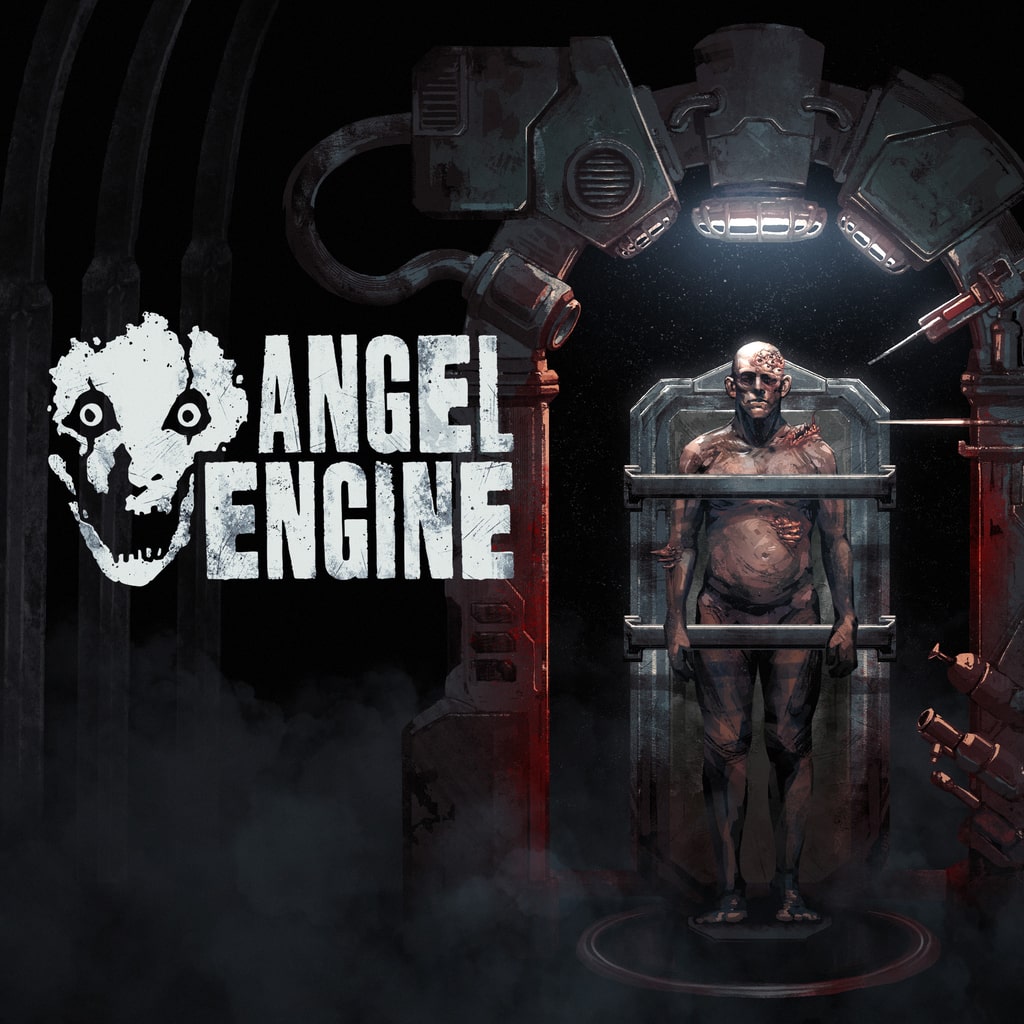
Horror games often thrive on vulnerability. They place players in situations where survival depends on conserving resources, solving puzzles, or simply making it through another terrifying encounter. Angel Engine takes that familiar sense of dread and channels it into something far more unusual. Instead of escaping monsters through abandoned corridors or hiding in dusty wardrobes, you are trapped in a surgical operating booth where every mistake could doom both your patient and yourself. It is a premise that feels deeply unsettling before the first incision is even made, and it only grows more oppressive as the hours pass.
Developed by HMS Studios and Black Lantern Collective and published by Aurakenn Games, Angel Engine expands the unsettling mythology of the Angel Engine universe by exploring one of its darkest chapters. Humanity has already lost. Nuclear fire has scarred the world beyond recognition; civilisation has collapsed into ash, and only the towering remains of Babel 2 continue to stand against complete annihilation. Deep within this decaying research facility, scientists cling to a desperate plan involving surgery, imprisoned angels, and experiments that blur the line between salvation and damnation.
You assume the role of a newly appointed surgical intern, though the title hardly reflects the job’s horrifying reality. Locked inside an isolated operating room, your responsibility is to perform increasingly disturbing procedures on comatose test subjects while keeping the facility from falling apart. Equipment fails without warning, supernatural entities lurk in the darkness, and every passing shift feels like a battle against both mechanical failure and your own sanity. It is an extraordinary premise, and Angel Engine fully commits to it from beginning to end.
Horror Through Responsibility
What makes Angel Engine so effective is that its horror rarely relies on cheap jump scares. Fear comes from responsibility. Every patient lying on the operating table depends entirely on your ability to stay calm under impossible pressure. While most horror games encourage players to flee from danger, Angel Engine demands that you remain exactly where you are, continuing delicate medical procedures while chaos unfolds around you.
The surgery itself is presented through a series of interactive medical challenges that require concentration rather than frantic button-pressing. Players stitch damaged tissue, manipulate delicate instruments, navigate intricate mechanical puzzles and administer treatments with careful timing. Individually, these tasks are straightforward, but Angel Engine never allows you to focus on one thing for long.
While operating, alarms begin to sound throughout the facility. Machinery overheats, electrical systems fail and sinister forces creep closer. Suddenly, what began as a careful surgical procedure becomes a desperate balancing act where every second matters. Do you finish treating your patient before replacing a blown fuse, or risk the equipment shutting down completely? Do you stop to investigate a strange noise, or trust that whatever caused it stays outside the operating booth? These constant interruptions create remarkable tension because there is rarely an obvious correct answer.
Controlled Chaos
Angel Engine borrows ideas from several genres without ever feeling like a simple imitation. The precision of its surgical mechanics recalls medical simulation games, while its environmental management evokes memories of survival horror classics built around multitasking and constant vigilance. Yet the game blends these inspirations into something uniquely unsettling.
Every shift becomes an exercise in prioritisation. Gauges require monitoring, life-support systems demand attention, and mysterious threats react to the slightest lapse in concentration. One overlooked warning can quickly trigger a chain reaction that spirals completely out of control.
Among the most memorable mechanics is the need to defend yourself against demonic intrusions. These encounters rely heavily on audio cues, forcing players to listen carefully while remaining focused on their ongoing procedures. Identifying the direction of approaching threats and responding with holy water before they reach you creates wonderfully nerve-racking moments that reward awareness rather than quick reflexes alone.
The game constantly asks players to divide their attention across multiple responsibilities, creating stress that feels entirely earned. You are never overwhelmed because the game cheats. You are overwhelmed because there is simply too much happening at once, and that feeling fits the narrative perfectly.
A World Built on Despair
Angel Engine’s setting deserves enormous praise for its atmosphere. The Babel 2 Scientific Research Center feels like a place where hope disappeared years ago, leaving only machinery, ritual and desperate routine. Every rusted corridor and flickering monitor reinforces the sense that humanity’s final refuge is held together by sheer determination rather than reliable engineering.
The environmental storytelling is particularly effective. Rather than relying on lengthy cinematic sequences, much of the narrative unfolds through abandoned terminals, fragmented documents and conversations with the few surviving staff members. These fragments gradually reveal the moral compromises that led humanity to this point, painting a bleak picture of people willing to sacrifice almost anything in pursuit of survival.
What makes the story particularly engaging is its refusal to present obvious heroes. Every character exists in shades of moral grey, making decisions that are understandable even when they are horrifying. The game asks difficult questions about sacrifice, faith and survival without offering comfortable answers.
Players unfamiliar with the wider Angel Engine universe can still appreciate the narrative, although those already invested in the series will undoubtedly find additional meaning hidden throughout the facility.
Beauty Hidden in Decay
Visually, Angel Engine adopts a deliberately retro aesthetic inspired by late-nineties horror games. Its low-fidelity character models and industrial environments initially appear simple, yet that simplicity becomes one of the game’s greatest strengths. Limited visual detail leaves room for the imagination to fill in the blanks, making the horrors encountered feel even more disturbing.
Lighting plays a major role throughout the experience. Dim operating rooms, illuminated by flickering machinery, create an oppressive sense of isolation, while distant shadows often seem far more threatening than whatever eventually emerges from them. The game understands that anticipation is often more frightening than revelation.
Equally impressive is the sound design. Machinery groans beneath the surface, alarms shatter moments of concentration, and distant noises constantly leave players questioning whether danger is approaching. Every mechanical hum contributes to an atmosphere in which silence becomes almost as unsettling as noise itself.
The soundtrack remains understated, allowing environmental audio to dominate most scenes. This decision strengthens immersion and ensures players remain attentive to the important sound cues that often determine survival.
A Relentless Test of Nerves
Angel Engine is not interested in providing a relaxing experience. Its relentless pacing and demanding multitasking require constant concentration, making each successful shift genuinely rewarding. There are moments when the sheer volume of responsibilities can be exhausting, particularly in later sections, when systems begin failing simultaneously.
Some players may find this intensity overwhelming, especially those expecting a slower psychological horror experience. Angel Engine rarely offers a chance to recover once things begin to escalate. Yet that relentless pressure is also what gives the game its identity. Every completed operation feels like an achievement precisely because reaching the end often seems impossible.
It is the kind of game that leaves players physically leaning towards the screen without realising it, completely absorbed in the desperate attempt to keep everything functioning for just a few moments longer.
Final Thoughts
Angel Engine is one of those rare independent horror games that feels genuinely original. Rather than relying on familiar haunted houses or predictable monster encounters, it builds terror from responsibility, routine and impossible expectations. Performing grotesque surgical procedures while maintaining failing equipment and defending against supernatural threats creates an experience unlike almost anything else currently available.
Its oppressive atmosphere, clever multitasking mechanics and fascinating post-apocalyptic setting combine to produce a horror game that lingers long after the credits roll. While its demanding pace will not suit everyone, those willing to embrace its relentless tension will discover an unforgettable journey through one of gaming’s most unsettling medical facilities.
HMS Studios and Black Lantern Collective have crafted a horror experience that refuses to let players become comfortable. Every successful operation feels like a miracle, every mistake carries genuine consequences, and every shift reinforces the feeling that humanity’s survival rests on exhausted hands that were never truly prepared for the task. Sometimes the greatest horror is not facing monsters. Sometimes it is realising the monsters are the easiest part of the job.