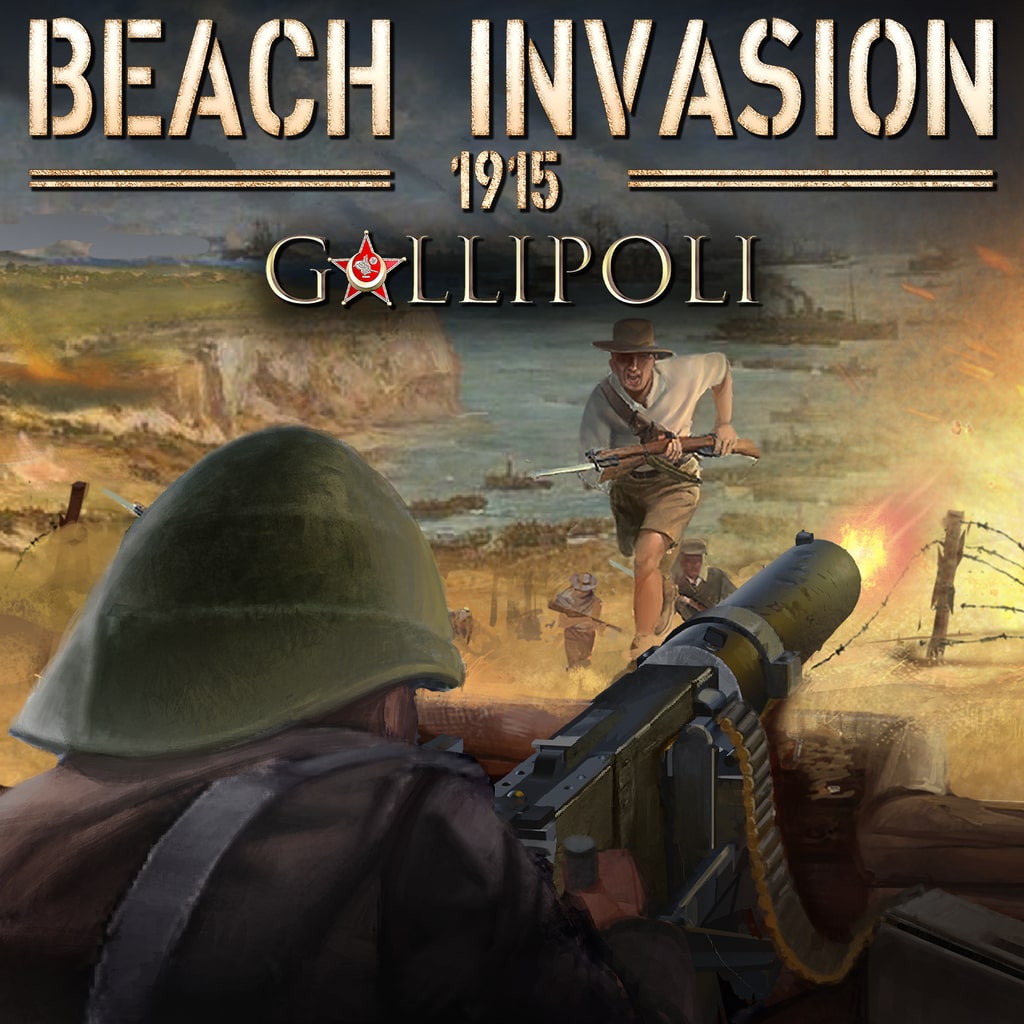
Beach Invasion 1915 – Gallipoli sets itself an unenviable task. By focusing on one of the most tragic and complex military campaigns of the First World War, it enters territory where historical sensitivity, mechanical design, and player agency must be carefully balanced. Rather than delivering bombastic warfare or heroic myth-making, the game opts for a measured, tactical approach that attempts to reflect the harsh realities of amphibious assault during the Gallipoli campaign.
The result is a game that is thoughtful in intent, uneven in execution, and ultimately defined more by its ambition than its moment-to-moment excitement.
Historical Framing and Tone
From the outset, Beach Invasion 1915 – Gallipoli adopts a sombre, respectful tone. There is no attempt to glorify the conflict or dramatise events beyond recognition. Instead, the game frames the Gallipoli landings as a desperate, costly operation marked by logistical failure, entrenched defence, and overwhelming human cost.
This tone is reflected in the presentation. Menus, briefings, and mission descriptions are restrained and factual, focusing on objectives and constraints rather than emotional storytelling. The absence of melodrama is commendable, but it also contributes to a sense of emotional distance. The game presents history, but rarely interrogates it or contextualises it beyond surface-level framing.
For players with an interest in the period, this approach will feel appropriately respectful. For others, it may come across as dry, particularly given the lack of strong narrative hooks or character perspectives.
Core Gameplay and Mechanics
At its core, Beach Invasion 1915 – Gallipoli is a tactical strategy experience built around managing infantry assaults against fortified positions. Players are tasked with coordinating landings, advancing units under fire, and attempting to secure territory in the face of overwhelming defensive advantages.
Gameplay emphasises positioning, timing, and attrition. Units are vulnerable, movement is slow, and progress is often incremental. The game deliberately avoids power fantasy; success feels fragile, and failure is frequent. This design choice aligns with the historical reality of the campaign, but it also results in a gameplay loop that can feel punishing and repetitive.
Controls and systems are functional, though not especially elegant. Orders are issued through straightforward command interfaces, and feedback is clear enough to understand outcomes, even if those outcomes are often grim. There is little in the way of mechanical complexity beyond managing advance and survival, which limits strategic depth over extended sessions.
Combat and Player Agency
Combat in Beach Invasion 1915 – Gallipoli is intentionally unspectacular. Gunfire, casualties, and stalled advances occur without flourish. There are no cinematic set pieces or dramatic reversals, only the steady grind of attempting to push forward under hostile conditions.
This restraint reinforces the game’s thematic goals but comes at a cost. Player agency can feel limited, particularly when success or failure appears heavily influenced by attrition rather than clever manoeuvring. While tactical decisions do matter, the margin for meaningful intervention is narrow, leading to moments where outcomes feel inevitable rather than earned.
This sense of futility may be historically appropriate, but it risks alienating players who expect strategy games to reward creativity and adaptability.
Visuals and Audio Design
Visually, the game adopts a utilitarian aesthetic. Environments are recognisable but sparse, with beaches, trenches, and defensive emplacements rendered plainly. Character models and animations are basic, prioritising clarity over immersion.
While nothing is overtly broken, the presentation lacks the detail needed to fully convey the scale or brutality of the conflict. Battles can feel abstract, with losses represented mechanically rather than emotionally. This abstraction supports readability but undermines impact.
Sound design is similarly restrained. Gunfire and ambient battlefield noise are present but understated. Music is minimal, often fading into the background rather than guiding emotional response. This approach avoids manipulation but also contributes to an overall sense of detachment.
Pacing and Replayability
Pacing is slow and deliberate, with missions unfolding over extended periods of cautious advancement and frequent setbacks. This measured tempo reinforces the theme of attrition but can make sessions feel monotonous, especially when repeated attempts yield similar outcomes.
Replayability is limited by the narrow scope of the game’s mechanics. While scenarios may vary slightly, the core experience remains largely unchanged. There are few alternate strategies to explore, and progression does not meaningfully alter how the game is played.
As a result, the game feels best suited to shorter, focused play sessions rather than extended engagement.
Educational Value Versus Engagement
One of Beach Invasion 1915 – Gallipoli’s most notable qualities is its educational potential. By stripping away spectacle and focusing on constraint and failure, it communicates the difficulty and tragedy of the Gallipoli campaign more effectively than many traditional war games.
However, this educational value often comes at the expense of engagement. The game explains what happened, but rarely explores why in a way that deepens understanding. Without stronger contextualisation or player-driven discovery, the experience risks feeling like an interactive diagram rather than a fully realised simulation.
Final Verdict
Beach Invasion 1915 – Gallipoli is a sober, restrained strategy game that approaches its subject matter with care and seriousness. It avoids glorification and power fantasy, instead presenting warfare as a slow, costly struggle defined by limitation and loss.
While this approach is thematically appropriate, it also limits the game’s appeal. Shallow mechanics, limited agency, and sparse presentation prevent it from fully realising its ambitions. For players interested in historical representation and deliberate pacing, the game offers a thoughtful if austere experience. For those seeking depth, variety, or emotional engagement, it may feel underdeveloped.
Ultimately, Beach Invasion 1915 – Gallipoli is more effective as a conceptual exercise than as a compelling strategy game—commendable in intent, restrained in execution, and uneven in impact.