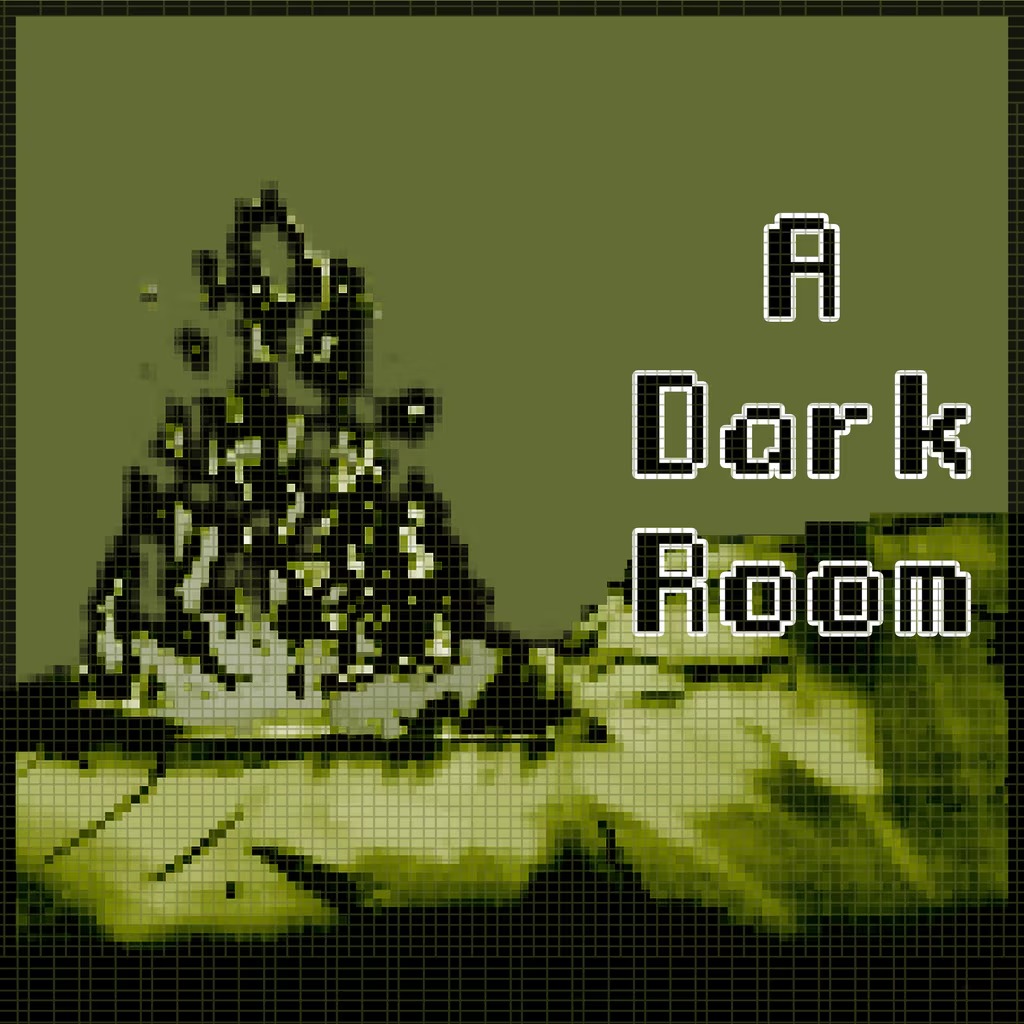
There is something wonderfully bold about making a game that barely seems to exist. In an industry obsessed with enormous worlds, photorealistic characters, sprawling cinematics and information-heavy interfaces, A Dark Room begins with almost nothing. There is a room, a fire, a handful of words and the uneasy feeling that something has gone terribly wrong. It sounds like the recipe for the dullest game imaginable, yet somehow it becomes one of the most compelling little adventures you can stumble into.
Originally created by Amir Rajan and Michael Townsend, A Dark Room is an experience that understands the power of suggestion. Rather than showing you a ruined civilisation, it lets your imagination build one. Rather than filling every corner with dialogue, it leaves gaps for you to fill. What begins as a seemingly simple exercise in keeping a fire alive gradually becomes a surprisingly deep survival adventure, management game and exploration RPG, all while maintaining its wonderfully restrained presentation.
Into the Darkness
The opening moments are deliberately sparse. You wake in darkness, confused and vulnerable, with little understanding of who you are or what has happened. There is no lavish opening cinematic explaining the catastrophe, no friendly character waiting to give you a tutorial, and no giant map inviting you to explore. Instead, you have a fire to maintain and a handful of simple tasks to perform.
That simplicity is incredibly effective because A Dark Room trusts the player to be curious. You begin by collecting wood and keeping the fire burning, gradually discovering that the warmth attracts other survivors. Before long, your lonely room has become the beginning of something resembling a settlement. The transformation happens so gradually that you barely notice how invested you have become until you’re suddenly worrying about whether your villagers have enough food, whether your resources will last, and what might be waiting beyond the safety of your camp.
There is a lovely rhythm to those early stages. You gather, build, wait, and discover, with each new option raising another question. What is outside? Who are these people? Why has the world ended? And perhaps most importantly, what exactly are you building towards?
A Surprisingly Deep Survival Loop
At its heart, A Dark Room is an incremental game, but describing it that way doesn’t do it justice. Yes, there is plenty of waiting for resources to accumulate and assigning villagers to various jobs, but the game continually expands what those resources mean. Wood becomes more than something you burn. Food becomes something that supports an expanding population. Fur, iron, coal and other materials eventually become components in a much larger machine.
Managing the settlement is satisfying because there is always another improvement within reach. You can assign workers to gather resources, hunt animals or process materials, but every decision has an opportunity cost. Putting somebody on one task means they cannot be doing another, and those seemingly insignificant choices gradually become increasingly important as your little settlement grows.
The brilliance is that the game never makes its systems feel overwhelming. New mechanics arrive when you are ready for them, and each one adds another layer without burying the experience beneath endless menus. There is a genuine sense of discovery attached to progression, because you aren’t simply unlocking bigger numbers. You are slowly learning what this strange world expects from you.
The World Beyond the Fire
The biggest surprise comes when A Dark Room finally opens its world beyond the confines of your settlement. What initially feels like a cosy little resource-management game gradually becomes something much closer to a traditional RPG. You gain access to a map and can send expeditions into the wilderness, taking supplies and equipment with you as you venture into the unknown.
This shift is handled superbly. The world is still represented through minimalist symbols and text, yet somehow that makes it feel larger rather than smaller. A few characters on a map can represent a forest, a ruined settlement, a mysterious structure or a place filled with danger. Your imagination does much of the heavy lifting, and the result can be surprisingly atmospheric.
Exploration also introduces genuine risk. Supplies are limited, equipment matters, and encounters can quickly turn a promising expedition into a desperate fight for survival. You might find valuable resources or uncover another piece of the world’s mysterious history, but there is always the possibility that you have ventured too far from safety.
That tension gives exploration a wonderful sense of purpose. You aren’t simply wandering around because the game wants you to see everything. You are venturing into the unknown because there is something you need, something you want to understand, or simply because curiosity has got the better of you.
Fighting for Survival
Combat is another area where A Dark Room achieves more with less. There is no spectacular animation, no elaborate character model, and no cinematic camera movement. Instead, battles are presented through a clean interface in which your decisions and resource management matter far more than presentation.
You equip your expedition members with weapons and armour, then make tactical decisions during encounters. Different enemies require different approaches, and the need to manage health and abilities adds a satisfying layer of strategy. Because expeditions carry consequences, combat never feels completely disposable.
There is also something wonderfully old-school about the entire system. It encourages you to think rather than react, and victory feels earned because you understand the limitations of your equipment and resources. Losing an expedition can be frustrating, but it also teaches you something that can make the next journey more successful.
Storytelling Through Absence
Perhaps the most impressive thing about A Dark Room is how much story it tells without conventional storytelling. There are no long conversations, elaborate cutscenes or walls of exposition. Instead, the narrative emerges from the places you discover, the characters you encounter and the increasingly strange things unfolding around you.
That restraint makes the mystery far more effective. You are constantly encouraged to form your own theories about what happened to the world and why you are there. The game offers fragments rather than answers, allowing your imagination to connect them.
It is an approach that will not work for everyone. Players who need a clearly explained narrative with fully developed characters may find the experience frustratingly vague. Personally, I think ambiguity is one of its greatest strengths. A Dark Room understands that sometimes what you don’t see is far more frightening than anything a developer could put on screen.
Sound and Atmosphere
Visually, A Dark Room is as minimalist as games get. Yet the lack of conventional visuals becomes part of its identity. The sparse interface encourages you to picture the world yourself, and because your imagination has no technical limitations, the wasteland can become considerably more vivid than a collection of pre-rendered environments.
The sound design plays an important supporting role. The crackle of the fire, subtle environmental noises and carefully placed audio cues give the otherwise barren presentation a sense of life. There is something oddly comforting about returning to your settlement and hearing the familiar ambience after time in the wilderness.
It is not a soundtrack that demands attention. Instead, it sits quietly beneath the experience, allowing the silence to become part of the atmosphere. That restraint suits the game perfectly.
A Game That Respects Your Imagination
What makes A Dark Room special is its confidence. It doesn’t desperately try to impress you. It doesn’t bombard you with rewards or flashy effects, nor does it constantly remind you how much content it offers. Instead, it presents a handful of ideas and lets them grow naturally.
That approach makes the progression incredibly satisfying. The first time you discover something new feels meaningful because you’ve earned it through experimentation. The first time you venture beyond the familiar territory of your settlement feels like a genuine expedition rather than simply unlocking another section of a menu.
There are moments when the incremental mechanics can feel a little repetitive, particularly during the slower parts of the progression. Some players may also find the deliberately sparse presentation difficult to embrace at first. But once the rhythm clicks, A Dark Room becomes the sort of game where you sit down intending to play for ten minutes and suddenly realise an hour has disappeared.
Final Verdict
A Dark Room proves that a game doesn’t need spectacular visuals, enormous budgets or complicated interfaces to create a world that feels alive. It takes the smallest possible starting point and gradually builds something far more ambitious, moving from fire management to village development, exploration, combat and a surprisingly intriguing mystery.
More importantly, it respects the player. It gives you enough information to understand its systems without explaining every mystery, and enough freedom to let your imagination fill in the blanks. There is a peculiar magic in watching that first little fire flicker in the darkness and slowly realising you are responsible for keeping something alive.
It may look primitive, but A Dark Room is anything but simple. It is thoughtful, atmospheric and remarkably addictive, with a sense of discovery that many much larger games struggle to replicate. If you are willing to meet it on its own terms, this is a minimalist adventure that can burrow surprisingly deep under your skin.