Precision platformers live and die by their feel. Not their story. Not their length. Not even their visuals. If the jump doesn’t land exactly when your thumb expects it to, the illusion collapses. With Calyssa, developer Magnific Studios aims squarely at that razor’s edge—delivering a retro-inspired, budget-priced challenge built on tight controls and unforgiving traps.
Originally released across Xbox and PC in August 2025, followed by PlayStation in September, Calyssa arrives on Nintendo Switch and Switch 2 as of February 12, 2026. For Nintendo players encountering it for the first time, the question is simple:
Can a £4.19 precision platformer carve out a meaningful identity in a genre dominated by titans?
Surprisingly, yes—though not without some bruises along the way.
The Premise: Treasure and a Forgotten Curse
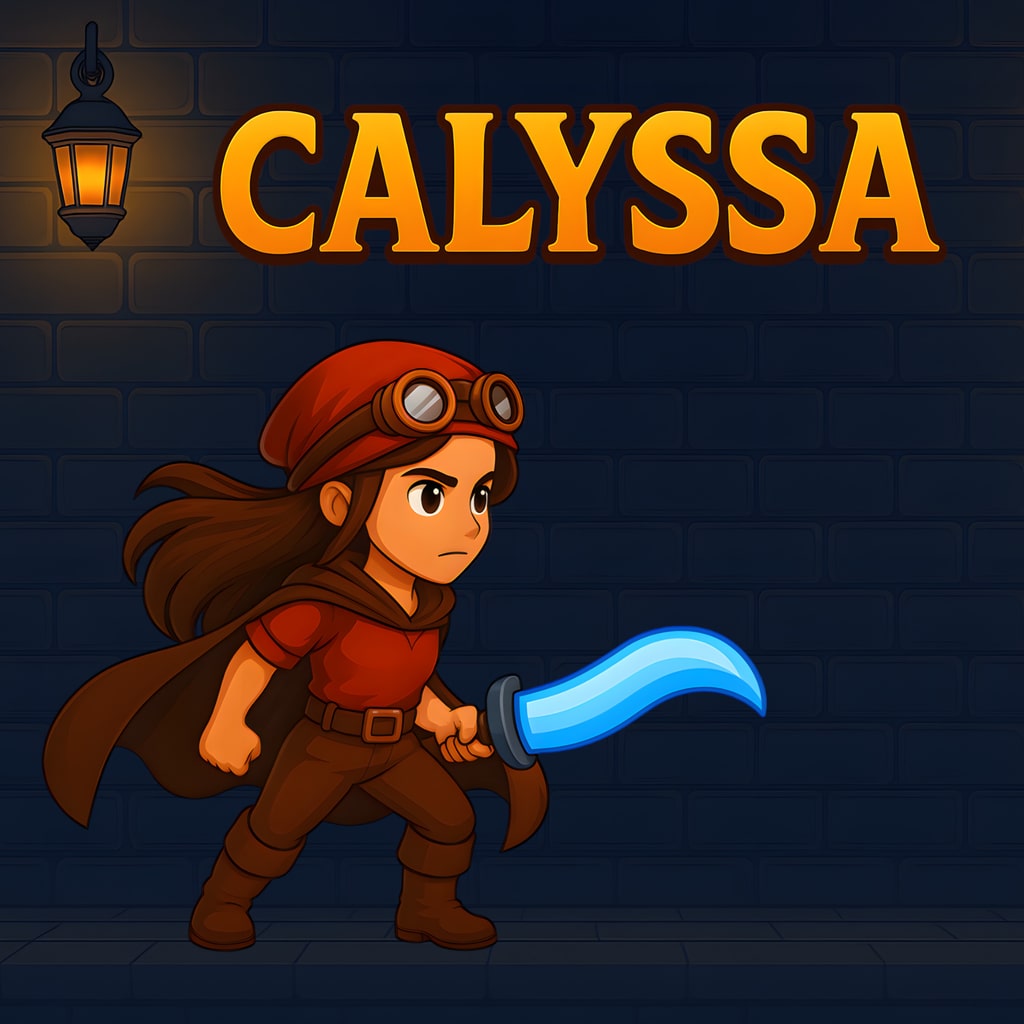
You play as Calyssa, a lone explorer chasing rumors of ancient ruins and a legendary treasure. The setup is minimal—intentionally so. There’s no lengthy exposition or elaborate lore dump. The narrative exists primarily as atmosphere: something dark lies beneath these ruins, and your journey will test both reflexes and patience.
This stripped-back storytelling approach works. Calyssa isn’t about dialogue-heavy worldbuilding. It’s about forward motion—one jump, one dash, one near-miss at a time.
The Core Gameplay: Precision Above All
Calyssa is unapologetically built around difficulty.
Expect:
- Spike-lined corridors
- Narrow wall climbs
- Fast enemy patterns
- Instant resets upon death
The controls are tight and responsive. Wall climbing feels sticky without being sluggish. The dash mechanic is the game’s central pillar—used both for traversal and quick evasive maneuvers.
Every screen functions like a miniature puzzle. Timing matters. Positioning matters. Hesitation kills.
And death is frequent.
Thankfully, respawns are instant. There’s no punitive downtime between attempts. The game understands that if it’s going to demand perfection, it must respect your time.
Trial, Error, Repeat
Calyssa falls squarely into the “learn by failing” design philosophy.
The first time you encounter a trap pattern, you will probably die. The second time, you might survive long enough to notice its rhythm. By the fifth attempt, muscle memory begins to take over.
It’s the familiar cadence of tough-as-nails indies: frustration followed by breakthrough.
Unlike some genre peers, however, Calyssa avoids overly complex mechanics. There are no elaborate skill trees or evolving movement systems. What you learn early—jump, wall climb, dash, sword strike—is what you’ll rely on throughout.
This mechanical consistency keeps the focus sharp.
Combat: Simple but Serviceable
Enemies populate the ruins, and Calyssa’s sword provides a straightforward means of dispatching them.
Combat is not the main draw. Most encounters are brief, with enemies serving more as moving hazards than deep tactical challenges.
The dash often doubles as a positioning tool during fights, letting you close distance or escape counterattacks.
While functional, combat rarely evolves beyond its basic framework. Enemy variety increases slightly over time, but the emphasis remains on platforming rather than swordplay.
That’s not a flaw—just a prioritization choice.
Atmosphere and Pixel Art
Visually, Calyssa embraces traditional pixel art with a darker palette. Ruins are rendered in muted tones, punctuated by glowing traps and environmental hazards.
The aesthetic isn’t groundbreaking, but it’s cohesive. Background layers create modest depth without cluttering the foreground.
Animations are clean, especially Calyssa’s dash and wall climb transitions. Readability remains high, which is crucial in a game demanding split-second precision.
The soundtrack leans into tension—driving, moody tracks that underscore the constant risk of failure. It never overwhelms but reinforces the oppressive atmosphere of the cursed ruins.
Switch Performance
On Nintendo Switch and Switch 2, performance is stable and smooth. Frame rates hold steady during high-intensity sequences. Load times between deaths are nearly instantaneous—a critical factor in a game built around repetition.
The portability factor arguably benefits Calyssa. Short, focused sessions—clearing a few screens before stepping away—feel natural on handheld.
This isn’t a sprawling epic. It’s a compact challenge best consumed in bursts.
Where It Stumbles
For all its strengths, Calyssa isn’t immune to genre fatigue.
Precision platformers have become a crowded space. While Calyssa executes its mechanics competently, it doesn’t introduce a defining twist that elevates it above its inspirations.
Level variety, while consistent, rarely surprises. Trap types rotate, enemy placements shift, but the structural rhythm remains steady from start to finish.
Additionally, difficulty spikes may alienate less patient players. Though fair, certain sections demand near-perfect execution over extended sequences, which can test endurance.
There’s also limited replay incentive beyond self-imposed challenge. No alternate routes, no secret endings, no time-attack leaderboards.
What you see is what you conquer.
Value Proposition
At £4.19, expectations must be calibrated accordingly.
Calyssa doesn’t pretend to be a genre-defining masterpiece. It offers a focused, challenging experience at a price point lower than most indie coffee breaks.
For players who crave precision challenges, it delivers solid value. For those merely curious, the low cost lowers the barrier to entry.
In that sense, Calyssa understands its lane.
The Feel Test
Ultimately, precision platformers hinge on one question:
Does it feel good to fail?
In Calyssa’s case, surprisingly often, yes.
Deaths feel earned rather than cheap. Success feels mechanical rather than random. When you clear a difficult sequence, it’s because you improved—not because the game relented.
That’s the hallmark of thoughtful design.
Final Verdict
Calyssa is a tight, focused precision platformer that embraces difficulty without wasting your time. Its controls are responsive, its atmosphere cohesive, and its challenge satisfying for players willing to embrace trial-and-error design.
While it lacks genre-defining innovation and deeper progression systems, it delivers exactly what it promises: intense, trap-filled platforming with no safety net.
At its budget price, it’s a commendable addition to the retro-inspired indie catalog. Not revolutionary. But reliably sharp.