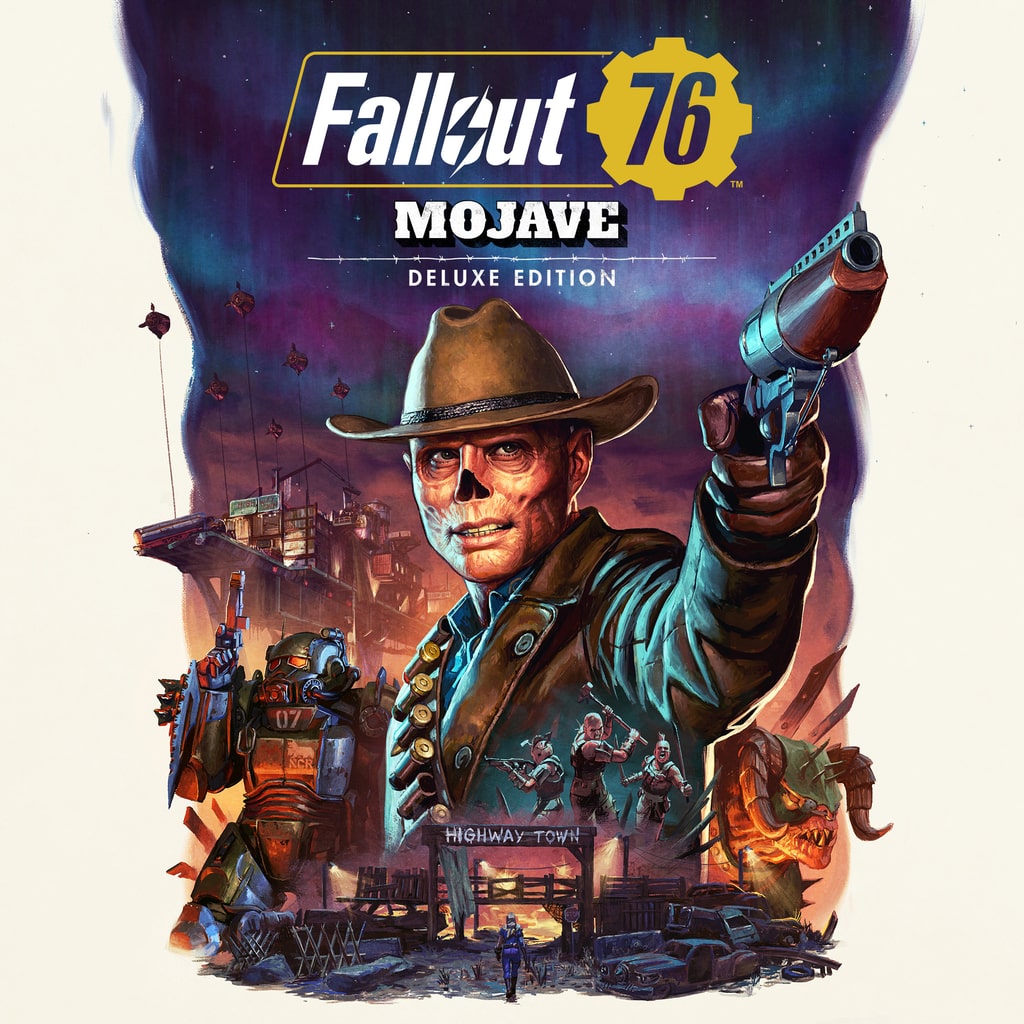
Few games have traveled a road as long and radioactive as Fallout 76. Launched in 2018 to a storm of criticism, Bethesda’s online experiment initially felt like a vault door that opened too early. Years of updates, expansions, and community rebuilding have slowly transformed it into something closer to the Fallout many hoped for. The Mojave Deluxe Edition represents the latest stage of that evolution, bolting a substantial new desert region—Burning Springs in post-nuclear Ohio—onto the already sprawling Appalachia, while weaving in familiar faces from the Fallout TV series. It’s an ambitious package that asks a simple question: has 76 finally earned its place beside the mainline entries?
A New Wasteland on the Horizon
The headline addition is Burning Springs, a sun-scorched biome that feels like a spiritual cousin to New Vegas. Dusty highways, bleached motels, and irradiated canyons replace West Virginia’s forests, providing a visual and tonal shift the game desperately needed. Ruling this territory is the Rust King, an unusually intelligent Super Mutant who commands both Deathclaws and raiders in a brutal hierarchy. His presence gives the region a distinct identity—less scattered survival sandbox, more organized frontier tyranny.
Bethesda smartly uses this setting to introduce structured activities. At the local watering hole you meet The Ghoul from the television series, reimagined as a bounty broker. These hunts start small—tracking low-level miscreants across the dunes—but escalate into multi-stage pursuits against legendary targets. The loop is immediately compelling: follow clues, survive ambushes, return for caps and unique mods that benefit both human and ghoul characters. It’s the clearest expression yet of Fallout 76’s potential as a shared role-playing world.
Two new public events further flesh out the region. “Gearing Up” has players assisting the Rust King’s Beastmaster in preparing Deathclaws for arena combat, a chaotic objective that often dissolves into glorious panic. “Sinkhole Solutions” tasks groups with protecting Highwaytown from swarms of Radscorpions and Stingwings bursting from the earth. These encounters capture the cooperative spirit the game has chased since launch—dozens of strangers improvising tactics amid explosions and mutated screams.
Appalachia Revisited
Outside the Mojave-flavored detour, the core of Fallout 76 remains Appalachia, still one of Bethesda’s most impressive maps. The six regions—from the gentle Forest to the hellish Cranberry Bog—are dense with stories, environmental puzzles, and the melancholy humor that defines the series. The main questline, rebuilt after the addition of human NPCs in the Wastelanders update, now feels like a proper Fallout campaign rather than a museum of holotapes.
The S.P.E.C.I.A.L. system continues to anchor character progression. Perk cards allow for flexible builds, encouraging experimentation without the fear of permanent mistakes. Want to be a shotgun-wielding medic who moonlights as a camp architect? The game shrugs and hands you the tools. Legendary gear and the seasonal scoreboard provide long-term goals, though the grind can still feel designed with live-service retention in mind.
Building the American Dream
The C.A.M.P. system remains one of 76’s greatest strengths. Years of additions have turned base-building into a creative metagame of its own. The Mojave Deluxe content adds desert-themed structures and decorations, letting players craft roadside diners or fortified ranches that wouldn’t look out of place in a spaghetti western. Visiting other survivors’ camps has become a highlight—mini museums of personality scattered across the map.
Trading and player vending give the world an economic pulse, while Fallout Worlds offers customizable rule sets for those who want harsher survival or carefree experimentation. Few online games blend construction, role-play, and exploration with such casual friendliness.
The Ghosts That Remain
Yet even in this improved state, Fallout 76 carries the DNA of its troubled birth. Combat, though smoother, still lacks the punch of single-player Fallout titles. Enemy AI can behave erratically, and hit detection occasionally feels like it’s negotiating via satellite. Inventory management remains a bureaucratic mini-game, especially for newcomers without subscription perks.
Narratively, the Mojave content sometimes leans too hard on fan service. The inclusion of The Ghoul is fun but occasionally feels like a marketing cameo rather than an organic resident of the world. Long-time players may also notice the familiar pattern: new region launches with excitement, then gradually settles into the routine of daily challenges and event rotations.
A Community Reclaimed
What truly saves the experience is the community that has grown around it. Encounters with other players—helpful strangers dropping supplies, impromptu teams forming to tackle events—create stories no scripted quest can match. The Mojave Deluxe Edition wisely designs its best content around cooperation, acknowledging that Fallout 76’s soul lies in shared survival.
Technically, performance on modern hardware is far improved. Load times are reasonable, crashes rarer, and the once-notorious bugs mostly tamed. It’s not flawless, but it finally feels like a stable platform rather than an early access experiment.
Is This the Fallout You Wanted?
The answer depends on expectations. If you crave the solitary, choice-driven intimacy of Fallout: New Vegas, 76 will always feel different. This is a theme park built from Fallout parts, not a traditional sequel. But judged on its own terms—as an evolving online RPG steeped in Bethesda’s worldbuilding—it has matured into something genuinely enjoyable.
The Mojave Deluxe Edition is the strongest argument yet for giving the game another chance. Burning Springs adds flavor and structure, bounty hunts provide repeatable purpose, and the integration with the TV series lends a dash of cross-media charisma. It doesn’t erase the past, but it proves how far the project has traveled since Reclamation Day.
Final Verdict
Fallout 76: Mojave Deluxe Edition stands as a testament to stubborn reinvention. What began as a controversial experiment has grown into a rich, communal wasteland worth exploring—especially with the dusty allure of Burning Springs drawing veterans and newcomers alike. It’s messy, occasionally grindy, but filled with moments that feel authentically Fallout.