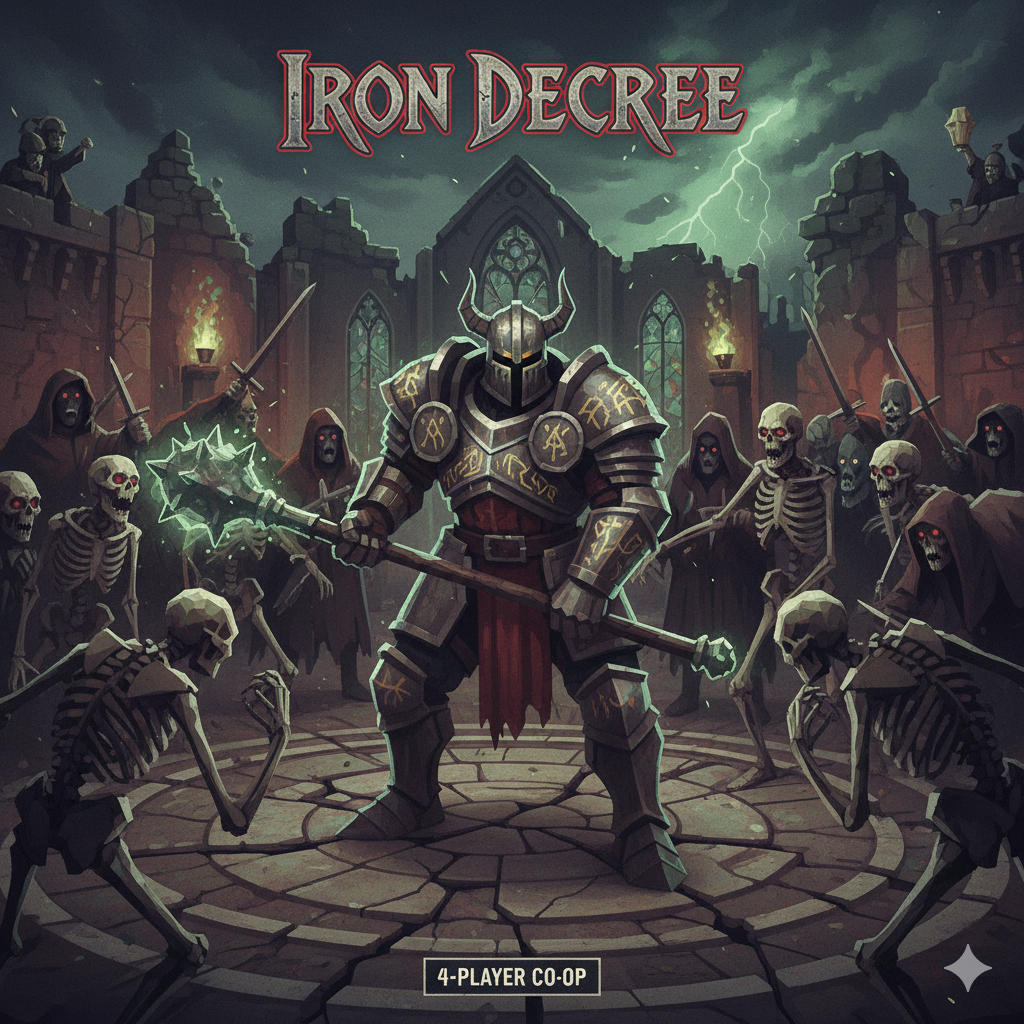
Strategy games often live or die by their ability to make players feel intelligent rather than overwhelmed. Iron Decree understands this balance remarkably well. Eschewing flashy excess in favour of focused, disciplined design, it presents a tactical experience rooted in positioning, foresight, and calculated risk. This is a game that demands attention, rewards planning, and refuses to rush the player — a refreshing stance in an era increasingly dominated by instant gratification.
Set within a gritty, industrial-inspired conflict where steel, territory, and authority shape the battlefield, Iron Decree aims to capture the weight of command. Every unit placement, every resource decision, and every engagement carries consequences. It’s a game less concerned with cinematic heroics and more invested in the quiet satisfaction of executing a well-considered strategy.
Core Gameplay: Thoughtful, Deliberate Strategy
At its heart, Iron Decree is a turn-based tactical strategy game that places emphasis on control and consequence. Battles unfold across grid-based or sector-driven maps, where terrain, line-of-sight, and unit roles play a critical part in determining outcomes.
Units are not disposable cannon fodder. Each squad or vehicle has a defined purpose — whether it’s holding choke points, providing long-range support, or disrupting enemy supply lines. The game encourages players to think holistically rather than reactively. Rushing forward without preparation is rarely rewarded, and reckless aggression is often punished.
Combat Systems
Combat in Iron Decree is built on layered mechanics:
- Positioning matters: High ground, cover, and flanking routes significantly affect engagements.
- Unit synergy: Certain units perform best when supported by others, reinforcing the importance of combined arms tactics.
- Attrition over spectacle: Battles often unfold slowly, with incremental advantages compounding over time rather than ending in explosive clashes.
This deliberate pacing may feel restrained to players accustomed to faster strategy titles, but it suits the game’s tone perfectly. Victory feels earned not because of reflexes, but because of foresight.
Strategic Depth and Decision-Making
Beyond individual battles, Iron Decree layers its tactical combat within a broader strategic framework. Players must manage resources, reinforce positions, and make high-level decisions that ripple across the campaign.
Resource management is particularly well-handled. Supplies are finite, reinforcements are costly, and every deployment carries opportunity cost. This forces players to make difficult choices: reinforce a weakened front, or invest resources in future stability? Push forward aggressively, or consolidate gains?
Crucially, the game avoids over-complication. While systems are deep, they’re communicated clearly. Tooltips, visual indicators, and intuitive menus ensure that information is always accessible, allowing players to focus on strategy rather than deciphering opaque mechanics.
Campaign Structure and Narrative Tone
Iron Decree’s campaign leans toward atmospheric storytelling rather than overt narrative exposition. The world is shaped through mission briefings, environmental cues, and the consequences of player actions. Rather than following a singular heroic arc, the story emphasises the cost of prolonged conflict and the burden of command.
This subdued narrative approach works in the game’s favour. It reinforces the sense that you’re a commander making hard choices in an unforgiving environment, not a protagonist destined to win. Losses feel personal not because of scripted drama, but because you caused them.
Mission variety is solid, with objectives ranging from territorial control and defensive holds to limited-resource offensives. While the core mechanics remain consistent, shifting conditions keep the campaign engaging without undermining its identity.
Presentation: Industrial Grit Over Glamour
Visually, Iron Decree adopts a restrained, industrial aesthetic. Maps are defined by steel structures, scarred terrain, and muted colour palettes that reflect the game’s grounded tone. This isn’t a strategy game designed to dazzle — it’s designed to communicate information clearly and effectively.
Unit designs are functional and readable, prioritising silhouette clarity over excessive detail. Animations are deliberate rather than flashy, reinforcing the sense of weight and realism. Explosions and combat effects are impactful without being distracting, maintaining focus on tactical clarity.
The audio design complements this approach. Metallic impacts, distant artillery, and subdued musical cues build atmosphere without overwhelming the player. The soundtrack, in particular, understands when to step back, allowing tension to emerge naturally from gameplay rather than forced drama.
Accessibility and Learning Curve
Despite its depth, Iron Decree is surprisingly accessible. Early missions serve as effective tutorials, gradually introducing mechanics without overwhelming newcomers. The learning curve is steady, and mistakes are framed as lessons rather than outright failures.
That said, this is still a strategy game that demands patience. Players unwilling to engage thoughtfully may find the pace slow or the punishment for poor decisions frustrating. But for those willing to learn, the game offers a rewarding sense of mastery.
Difficulty options allow players to tailor the experience, though even lower settings maintain the game’s emphasis on planning. Iron Decree respects the player’s intelligence — it doesn’t simplify its identity to chase mass appeal.
Replayability and Longevity
Replayability is one of Iron Decree’s quiet strengths. Multiple strategic paths, varying unit compositions, and branching campaign outcomes encourage repeated playthroughs. Different approaches to resource management and battlefield tactics can dramatically alter how scenarios unfold.
While the game doesn’t rely on procedural generation or endless modes, its systems are robust enough to sustain long-term engagement. Strategy enthusiasts will find plenty of incentive to revisit missions, refine tactics, and experiment with alternative solutions.
Where Iron Decree Falls Short
Despite its strengths, Iron Decree isn’t without flaws:
- Pacing may feel slow for players seeking constant action
- Limited spectacle may disappoint those expecting cinematic presentation
- Occasional repetition in mission structure can emerge late in the campaign
These issues don’t undermine the core experience, but they do limit the game’s appeal to a more specific audience.
Final Verdict
Pros:
- Deep, rewarding tactical gameplay
- Meaningful decision-making at every level
- Clear, functional presentation
- Strong sense of atmosphere and consequence
Cons:
- Slow pace won’t suit all players
- Limited visual spectacle
- Some mission repetition over time
Summary:
Iron Decree is a confident, disciplined strategy game that values thought over theatrics. Its deliberate pacing, layered systems, and emphasis on consequence create an experience that feels mature and rewarding. While it may not cater to players craving fast-paced action or flashy visuals, it excels at what it sets out to do: delivering a methodical, intelligent approach to tactical warfare.
For fans of grounded strategy experiences that respect the player’s intelligence and patience, Iron Decree stands as a strong and commendable entry in the genre.