When a title unabashedly leans into a maximalist identity — blending high-speed action, mythic overtones, and mechanically layered combat — there’s always an inherent risk: can the design coherently sustain all that ambition? DaemonBride: ADDITIONAL GAIN answers that question with a confident yes, anchoring a barrage of systems, aesthetics, and narrative echoes into a tightly pitched action-RPG that succeeds by rewarding mastery as much as spectacle. Its world may be supernatural and slightly surreal, but its core is unmistakably grounded in healthily competitive combat, tactical depth, and escalating strategic complexity.
DaemonBride: ADDITIONAL GAIN is not a modest experience. It combines fast-paced action rooted in intricate combo systems, rich character customisation, and layered progression mechanics that echo influences ranging from classic ARPGs to modern hack-and-slash design. Yet this isn’t a derivative clone — the game imbues its combat and exploration with a distinctive rhythm and flair that make each encounter feel meaningful. After extensive playtime across main narrative arcs, side challenges, and advanced gear systems, the experience reveals itself as a polished, engaging expression of genre hybridity.
Narrative and Worldbuilding
At a superficial glance, DaemonBride: ADDITIONAL GAIN might evoke comparisons to mythic or demon-infused fantasy titles, but its narrative ambition is more subtle and researchable than overtly cinematic. The story centres on the eponymous DaemonBride — a warrior entwined with otherworldly forces, tasked with navigating a fractured realm infested with aberrant spirits and forgotten gods. This narrative unfolds through dialogue sequences, environmental storytelling, and quest interactions, creating a tapestry of myth and conflict that feels substantial without descending into needless verbosity.
What makes the world compelling is not only its lore but the way DaemonBride uses that lore to inform gameplay. Story beats interlock with mechanical progression: each major narrative milestone unlocks new skills, introduces strategic considerations, or recasts the significance of previously encountered foes. There is a sense of purpose behind each layer of the narrative, and as the veil lifts on ancient conspiracies and cosmic bargains, the stakes register both in dialogue and tactical necessity.
Presentationally, the game balances gravitas with accessibility. Characters are voiced well enough to sustain engagement without overwhelming the player, and the script avoids slogging through exposition dumps. In a genre where narrative can sometimes feel like an afterthought, DaemonBride’s world — rich with shadowy mythology and doctrinal hints — feels like a partner in the gameplay rather than just a backdrop.
Combat Mechanics: Flow, Precision, Mastery
Where DaemonBride: ADDITIONAL GAIN truly earns its stripes is in combat. The core combat engine is a meticulously tuned blend of responsiveness and complexity — fluid enough to be instinctive, precise enough to reward deliberate thought. Players are introduced to a suite of basic attacks, dodges, and special skills early on, with additional layers — such as guard breaks, counter windows, and aerial juggling — gradually introduced as the experience deepens.
Movement and responsiveness are standout features. Character animations, hit detection, and spatial feedback work in concert to create a visceral sense of agency. Dodges feel purposeful, strikes land with weight, and enemy reactions — stagger, recoil, flinch frames — contribute to a battle flow that is smooth yet rich with consequential decisions.
Skill variety supports a range of playstyles. You might lean into a fast, evasion-oriented build, darting around foes and punishing overextensions. Alternatively, you could orchestrate heavy hits, trading mobility for wide-reach abilities that excel in crowd control. Magic systems and augments add a strategic dimension, enabling elemental synergies, temporal effects like slow fields or burn surfaces, and buffs/debuffs that reshape tactical priorities.
A high point for many players will be the combo system. Rather than rote button chaining, DaemonBride emphasises intentional sequencing — varying normal attacks, skill executions, and assist triggers to maintain momentum. Like a well-crafted musical score, high-damage sequences emerge when rhythm and precision align. It’s gratifying to see a string of attacks unfold not merely as preprogrammed loops, but as the product of player decision and timing.
Enemy Design and Encounter Structure
Enemies in DaemonBride: ADDITIONAL GAIN are far from window dressing. A well-designed roster ensures strategic diversity: shielded foes demand careful positioning, aggressive mutants punish poor spacing, and aerial spectres force an upward re-thinking of attack arcs. Boss encounters — which punctuate major story beats — take these systems and, rather than merely buffing HP pools, remap battle dynamics entirely. Timed phases, environmental hazards, and layered attack patterns demand adaptation rather than rote memorisation.
This encounter design philosophy pays dividends. Simple mobs become meaningful tests of the player’s current toolkit, and larger set-pieces reward pattern recognition without ever feeling robotic. Environmental context frequently matters: luring enemies into traps, using terrain elevation for tactical advantage, or avoiding chasms and hazards adds layers to what might otherwise feel like repetitious combat arenas. As progression continues, these encounter permutations make replayation feel like deep mastery rather than grinding against respawns.
Progression, Customisation, and Systems Depth
Progression in DaemonBride is multi-branched. Experience points unlock skill points, gear upgrades unlock stat boosts, and a robust enchantment system lets players tailor equipment to suit evolving needs. This breadth of options allows players to define their ideal build rather than funnel them toward a single optimal path.
The game introduces quantum relics as a meta system — optional items that grant high-impact effects at the cost of increased challenge. When equipped, these relics can change gameflow dramatically: altering enemy resistances, modifying attack behaviours, or reshaping world parameters. They are a potent way to dial difficulty and novelty, giving players the tools to self-select challenge intensity, rather than forcing a binary normal/hard toggle.
Combined with skill trees and loadout presets, this progression system invites experimentation without overwhelming players with excessive minutiae. The learning curve is intelligent: fundamental upgrades matter most early, while nuanced builds reward investment and strategy later on.
Visuals and Audio Aesthetic
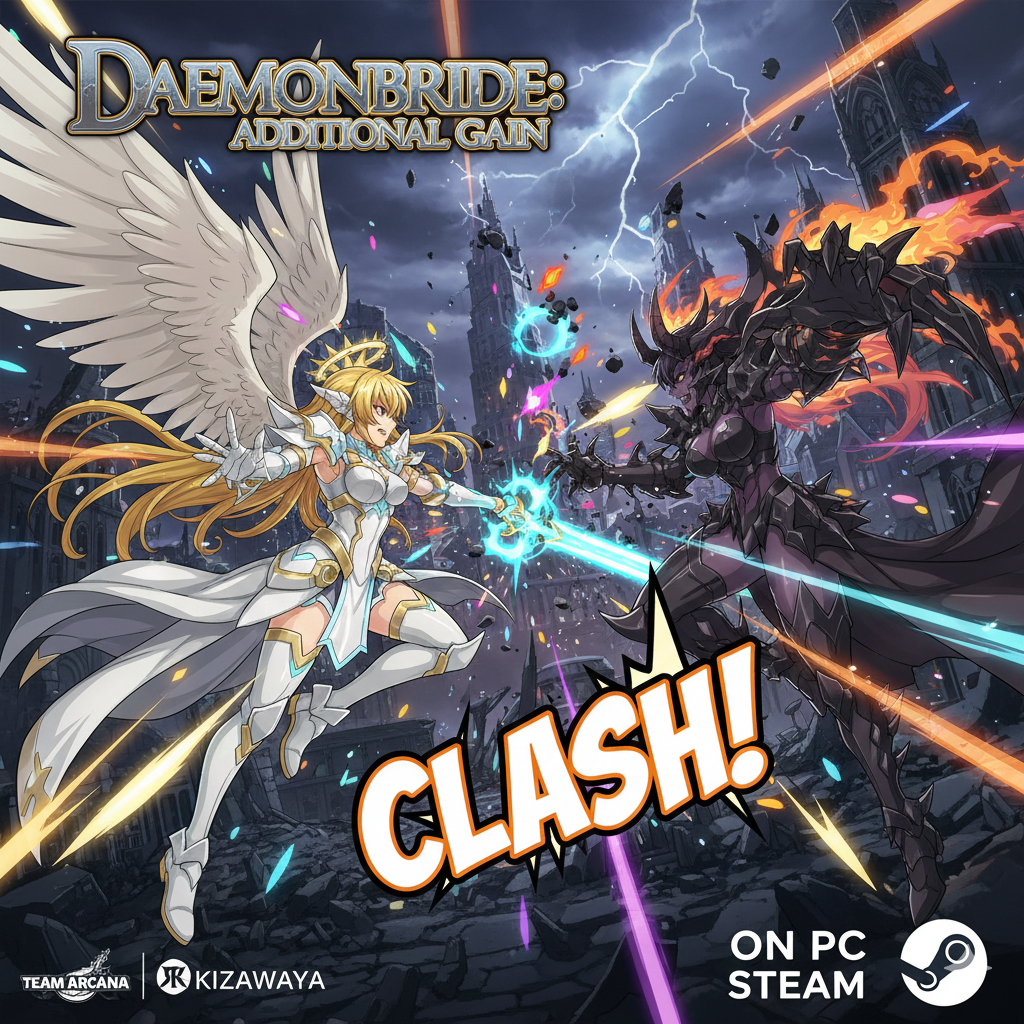
Visually, DaemonBride: ADDITIONAL GAIN skilfully blends gothic, sci-fi, and mythic styles. Detailed character models, fluid VFX for abilities, and layered backgrounds contribute to a sense of a world in motion. Lighting is used not just for atmosphere, but to guide focus — glimmers highlighting secrets, shadows indicating danger, and visual contrast ensuring foreground action remains readable even amidst particle-heavy effects.
Audio design mirrors this thoughtfulness. Combat sounds — blade clashes, arcane pulses, structural impacts — have both presence and clarity. The soundtrack oscillates between ambient tension and rhythmic momentum, underscoring narrative beats without overwhelming them. Voice work, while not cast at Hollywood scale, is competent and enhances character interaction without stepping on player agency or mood.
Accessibility and Learning Curve
DaemonBride: ADDITIONAL GAIN offers a generally approachable experience for newcomers to action RPGs. Tutorials are integrated into early gameplay gently, introducing mechanics over time rather than front-loading complexity. For players favouring assistive options, adjustable difficulty, and control customisation are present, helping ensure the experience isn’t gated behind brute mechanical precision alone.
However, mastery remains demanding by design. This is not a pared-down experience for casual play alone; the game rewards commitment and nuance. For players seeking a shallow or purely narrative experience, the depth here may occasionally feel demanding — but for those who embrace challenge, it’s generative rather than punitive.
Critiques and Minor Limitations
No game is without its flaws, and DaemonBride has a few minor areas worth noting:
- Pacing Spikes: While the campaign pacing is mostly balanced, some mid-game sequences can linger or feel repetitive before a compelling narrative beat arrives.
- UI Density: Menus around relic selection, enchantments, and augment systems can feel dense initially; more contextual help could ease onboarding.
- Narrative Abstraction: Players craving explicit emotional arcs or character development may find the story’s subtlety leaves certain threads tantalising but unresolved.
These issues never detract significantly from the overall experience, but they are worth noting for context.
Final Verdict
DaemonBride: ADDITIONAL GAIN stands tall as an action-RPG that manages complexity without sacrificing clarity. Its combat is engaging, its systems rewarding, and its world compelling. Whether you’re slashing through waves of corrupted titans, experimenting with build synergies, or chasing advanced relic combinations, the game consistently delivers satisfaction through mastery and discovery.