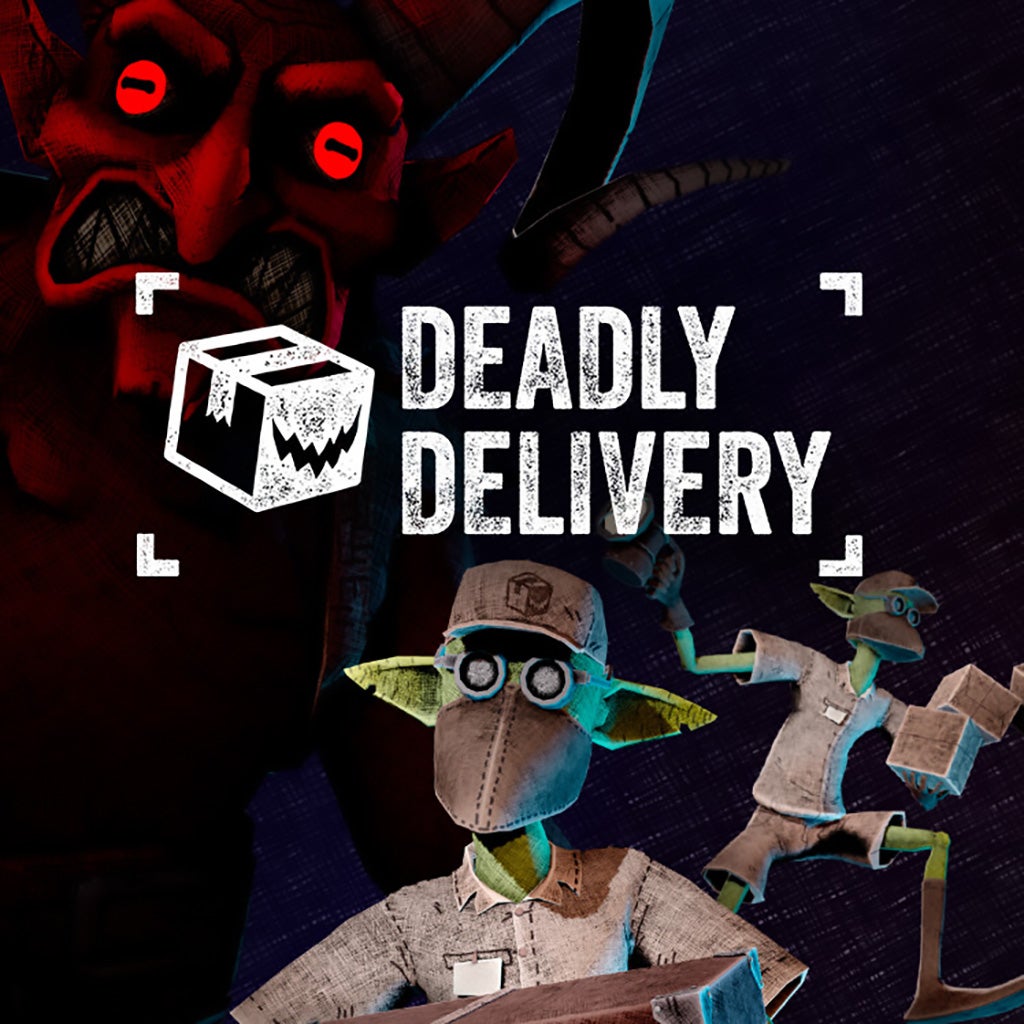
In a VR landscape increasingly dominated by narrative walk-throughs and social experiments, Deadly Delivery on Meta Quest throws players into something much more visceral: a hyper-kinetic, first-person shooter where split-second decisions, frantic target prioritisation, and physical action reign supreme. At its core, Deadly Delivery is a VR adaptation of classic arcade run-and-gun shooters, reimagined for motion controls, spatial awareness, and immersive tracking. The result is a title that captures the intensity of fast-paced combat while showcasing both the strengths and limitations of the Quest platform. After extensive playtesting, the experience proves exhilarating in bursts, intermittently frustrating in its structure, and consistently spirited in execution—but it doesn’t fully transcend its genre.
Across lobby matches and solo sessions, Deadly Delivery makes a compelling argument for VR as an arena for twitch reflexes and strategic movement. However, its potential is sometimes diluted by repetitive pacing, an uneven difficulty curve, and design choices that favour spectacle over sustained tactical depth. Still, for players seeking heart-pounding combat and cooperative carnage tethered to intuitive motion controls, this game delivers a satisfying slice of high-octane VR action.
Concept and Core Identity
At its essence, Deadly Delivery is designed to be a combat sprint: players are dropped into localized environments where waves of enemies, environmental hazards, and escalating pressure force both reaction and planning. Where many VR shooters opt for structured narratives or sprawling campaign arcs, this game doubles down on compressed, arcade-style loops where rounds are short, scoring is king, and survival depends on quick thinking as much as quick aiming.
Its premise is simple—navigate enemy encounters, deliver precision damage, and make it to the next checkpoint without being overwhelmed. The game captures a distinct identity rooted in immediacy, rewarding players for quick kills, inventive weapon usage, and spatial positioning. There is no pretense of deep narrative; the experience is about action now, not contemplation later.
Gameplay Mechanics and Controls
The first thing any player notices is how Deadly Delivery translates gunplay into VR. Motion controls are responsive; aiming feels natural, and the physicality of ducking, dodging, and reloading elevates the gameplay beyond simple button inputs. The developers deserve credit for implementing an intuitive control scheme that feels like a genuine evolution of shooters into virtual space rather than a half-hearted adaptation.
Weapon handling is varied and generally satisfying. From rapid-fire pistols to heavier ordinance, each firearm has a distinct weight and rate of fire, and mastering their quirks becomes part of the joy. Reload mechanics are physical and engaging—players must chamber rounds, pump barrels, or swipe magazines into place depending on the weapon. This tactile feedback loop adds a layer of immersion that flat screen shooters struggle to replicate.
Combat loops are brisk: enemy waves appear in ever-intensifying patterns, and the pressure to balance offensive output with evasive movement creates a cyclical rhythm that’s easy to grasp but hard to master. One minute, you’ll be mopping up basic grunts; the next, you’re flanked by agile foes or pressured by environmental hazards. Enemies react unpredictably enough to keep you on your toes, and the game rarely lingers in quiet moments—almost by design, it wants players in motion.
However, this breakneck pacing is also a double-edged sword. While it fuels excitement, it occasionally leads to jagged difficulty spikes where encounters feel less like strategy and more like reactionary scrambles. Some players will relish this intensity; others may find the learning curve steeper than necessary, especially in later stages where enemy spawn rates push the limits of Quest hardware responsiveness.
Level Design and Variety
Visually, Deadly Delivery embraces a stylised aesthetic that prioritises readability over hyper-realism. Arenas are clearly laid out, with identifiable cover points, spawn zones, and threat vectors. This clarity is crucial in fast-paced VR combat—the last thing any player wants is obfuscated enemies or confusing terrain during a firefight.
Yet while the arenas are serviceable, their variety is modest. Some environments—abandoned industrial complexes, warehouse interiors, and dusty alleyways—provide atmosphere and tactical nuance, but after several hours, these spaces begin to feel derivative. More distinct level identities or environments with dynamic elements (moving platforms, interactive hazards) could have injected renewed energy into repeated encounters.
Boss encounters, when they appear, help break the monotony. These set-piece moments often demand pattern recognition and controlled movement rather than pure aggression, giving the combat loop room to breathe and forcing players to adapt their strategies. Unfortunately, such moments are relatively sparse, meaning the game’s pacing relies heavily on its standard wave-based shtick.
Multiplayer and Social Dynamics
Deadly Delivery supports co-operative play—a welcome inclusion that dramatically changes the experience. With a squad, combat becomes a choreography of synergies: players can flank enemies, share firepower, and revive fallen allies. Co-op elevates tension and enjoyment, especially when facing larger hordes or trying to synchronise tactics under pressure.
That said, the multiplayer layer could stand to gain more structure. Matchmaking is functional but lacks depth—there are few options for skill-based lobbies, competitive leaderboards, or team-oriented objectives beyond simple survival and score tallies. As a result, the social component feels like a promising foundation more than a fully fleshed-out ecosystem.
Presentation and Immersion
In Meta Quest terms, Deadly Delivery is respectable: assets are clean, draw distances sensible, and performance stable even during heavy confrontations. The game’s artistic direction doesn’t try to mimic cutting-edge PC graphics, but its visual clarity supports rapid decision-making and reduces fatigue during extended play.
Audio plays a significant role in building intensity. Weapon sounds carry weight; enemy cues feel spatially accurate, and rumbling bass lines during climactic moments heighten sensory engagement. Sound design is one of the game’s strengths, effectively complementing its kinetic action without overpowering.
Progression and Replay Value
Progression in Deadly Delivery revolves around score, weapon unlocks, and incremental performance improvements. Players earn upgrades or cosmetic enhancements as they rack up successful runs. This loop incentivises repetition and best-effort play, but the reward structure never quite evolves into a compelling long-term hook. There’s no evolving narrative, and stat-based upgrades are modest in impact—meaning the main draw remains the pure thrill of combat rather than a sense of growing power or mastery.
For players drawn to competitive play, this may feel like a missed opportunity. More robust progression—skill trees, persistent unlock paths, or meta-objectives—could have significantly deepened long-term engagement without compromising the core action.
Accessibility and Learning Curve
Deadly Delivery is approachable by design. Tutorial sequences are clear, and basic mechanics are easy to pick up. The VR control scheme feels natural, lowering barriers for newcomers. That said, difficulty spikes can be unforgiving when enemy density surges, and players not accustomed to high-pressure shooter scenarios may find themselves overwhelmed.
Options to adjust difficulty dynamically or tailor enemy aggression based on skill would have broadened the game’s appeal. As it stands, this title feels best suited to VR players who already enjoy action shooters and aren’t daunted by rapid reflex requirements.
Final Verdict
Deadly Delivery on Meta Quest is an action-packed, high-tempo VR shooter that delivers satisfying combat loops and memorable encounters. Its intuitive controls, solid audio design, and cooperative multiplayer make it a standout among VR shooters. However, limitations in level variety, progression depth, and structured multiplayer features prevent it from achieving greatness.