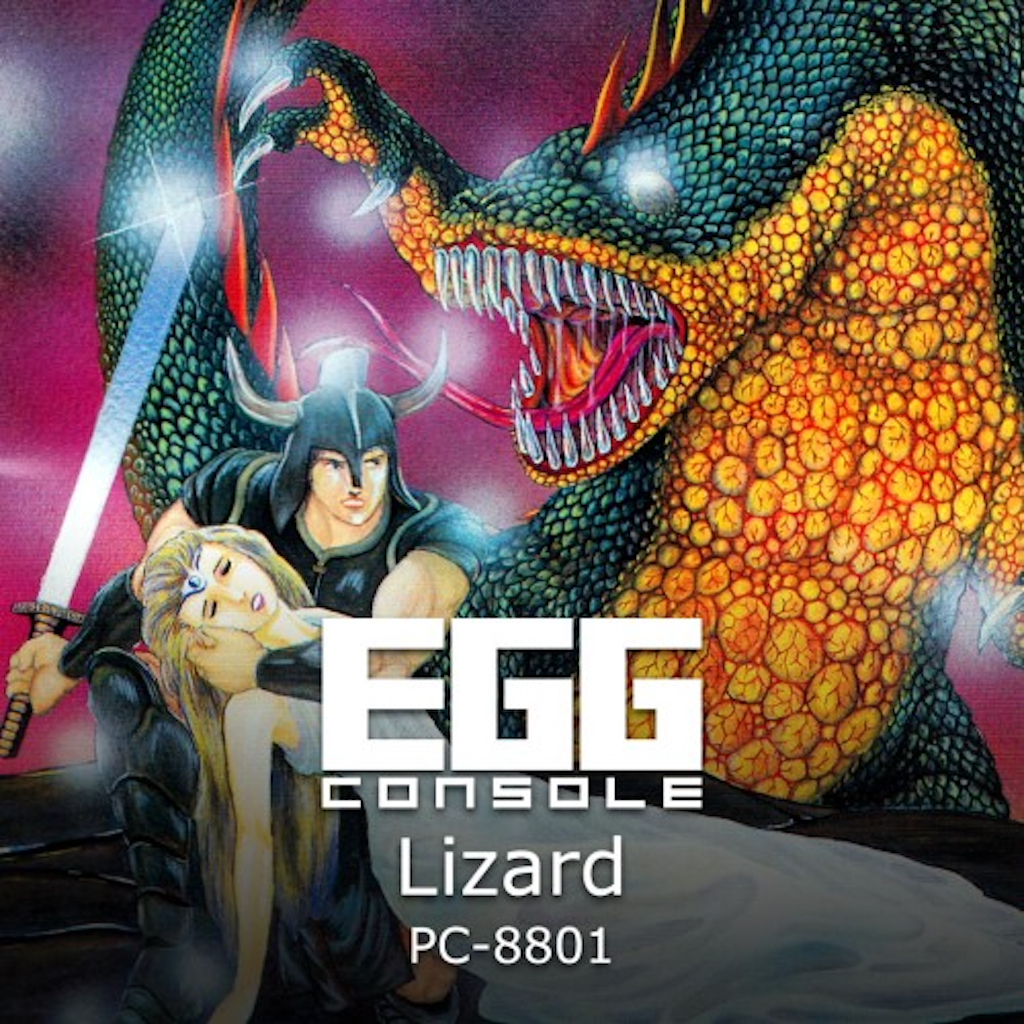
In the emerging renaissance of retro gaming, few releases manage to balance nostalgia with fun as deftly as EGGCONSOLE Lizard PC-8801. Originally birthed on NEC’s PC-8801 in the 1980s — a platform beloved in Japan but less familiar in Western gaming lore — Lizard arrives on modern systems as part puzzle, part action, and wholly reminiscent of an era when developers distilled ideas down to their purest form. For players drawn to arcade-era simplicity, intriguing systems, and games that reward curiosity over constant direction, Lizard delivers a charming bite of vintage design.
This isn’t the sort of title that plunges you into cinematic spectacle or sprawling worlds. Instead, Lizard invites you into compact levels, tight mechanics, and a deceptively simple premise that unfolds into surprisingly deep play. It’s a reminder that great game design isn’t always about complexity — sometimes it’s about how well a small idea is executed.
The Oddball Charm of a Classic
At its core, EGGCONSOLE Lizard PC-8801 positions you as a nimble reptilian protagonist navigating maze-like stages filled with obstacles, movable objects, and hostile forces. The goal is straightforward: manoeuvre through each level, solve spatial puzzles, avoid or neutralise enemies, and reach the exit with as much efficiency as possible.
But simple doesn’t mean shallow. Each stage feels like a micro-puzzle, with multiple potential approaches and hidden opportunities for optimisation. Paths twist and turn, pressure is always in play — whether from advancing enemies or limited space — and success demands not only good reflexes but spatial reasoning.
It’s the sort of challenge that evokes arcade chasing — that gleeful tension where every movement has weight, and even small missteps carry consequences.
Gameplay: Precision Meets Progression
The mechanics in Lizard are lean and intentionally minimalistic, but every control feels intentional. Movement is responsive and predictable, and the relatively small input set allows you to focus on planning rather than wrestling with a complex control scheme. This simplicity is key to the game’s appeal: it lets the puzzle logic take centre stage without unnecessary distractions.
Stages start modestly, introducing movement patterns and environmental interactions at a digestible pace. As you progress, levels evolve in both structure and challenge. Narrow corridors, shifting barriers, and enemy placements shift the emphasis from “figure it out” to “execute with precision.” What starts as a gentle introduction soon becomes a test of timing and forethought.
One of the more satisfying systems Lizard employs is how it layers complexity through reuse. A mechanic introduced early — pushing a block, timing a trap, baiting an enemy — becomes part of larger, more intricate puzzles in later stages. You aren’t learning new rules so much as learning new ways to combine familiar ones.
For players who enjoy incremental mastery, this builds a compelling sense of competence: yesterday’s obstacles become today’s tools, and increasingly elegant solutions begin to emerge.
Level Design: Tight, Thoughtful, and Incremental
Retro games often shine through level design, and Lizard is no exception. Levels are compact but intelligently constructed, with each screen feeling like a purposeful test rather than filler. There’s rarely a sense of wandering — every corridor, dead end, and switching mechanism feels like it plays into the larger puzzle.
A key strength of the design lies in how it balances exploration with constraint. In early stages, you can explore freely, learning movement patterns, enemy behaviours, and environmental quirks without immediate threat. Later, time pressure and enemy aggression ramp up, encouraging decisive thinking. The transition feels natural, never jarring, yet consistently demanding.
The PC-8801’s hardware limitations often led original developers to design around efficiency — making the most of limited screen space and processing capability. That legacy is alive here. You never feel like you’re wading through empty areas; instead, every pixel seems purposeful, and every stage feels like an expertly packed micro-puzzle.
Visual and Audio Presentation: Nostalgia With Clarity
Retro purists will appreciate Lizard’s visual fidelity to its early home computer roots. Graphics embrace the crisp, blocky charm of vintage 8-bit aesthetics, replete with clear sprites and readable level elements. While not flashy by modern standards, the visual clarity is crucial for gameplay — you need to assess positions and trajectories at a glance, and Lizard ensures nothing gets muddled in translation.
Visual effects are used sparingly and functionally: they highlight important objects, signal dangers, and provide feedback without overwhelming the eyes. The result is a game that’s instantly recognisable in its lineage yet never visually dated in the way that obscures play.
The audio complements the visual style with simple, catchy chiptune compositions and crisp sound cues. Background music loops with a jaunty retro flair, and sound effects — from enemy alerts to movement confirmations — provide satisfying audio feedback without becoming repetitive or grating.
Together, the audio-visual package evokes nostalgia without feeling like a museum piece. It’s playful, purposeful, and — importantly — it serves the gameplay rather than distracting from it.
Challenge and Accessibility
While Lizard begins gently, its challenge curve climbs steadily. Early levels may feel like warm-ups, but before long, players will find themselves juggling multiple threats — timed traps, patrolling enemies, and spatial puzzles that don’t forgive hesitation.
What’s refreshing is how the difficulty is taught rather than imposed. Instead of springing entirely new mechanics that feel unrelated to earlier stages, Lizard builds on its own ruleset, repackaging existing elements into tighter, more devious combinations. This keeps the learning curve engaging without ever feeling arbitrary.
That said, the challenge isn’t for everyone. Some sequences demand near-perfect timing, and the lack of modern conveniences — such as generous checkpoints or in-level hints — means repeated trial and error can feel tedious for players who favour less demanding progression.
Yet for those who relish classic puzzle-platformers where mastery is earned through repetition and pattern understanding, Lizard delivers a rewarding sense of accomplishment.
Replayability and Longevity
Once the main stages are completed, EGGCONSOLE Lizard PC-8801 doesn’t offer a massive suite of extra modes — but what it does offer feels fitting for its design. Time attack options, optional challenges, and level score optimisation encourage players to revisit stages with new goals in mind. Speedrunners, in particular, will find appeal in shaving seconds off runs and discovering more efficient solutions.
While the game doesn’t aim for endless replay value, it doesn’t need to. Its core strengths in design and engagement ensure that each stage is already worth replaying, should you desire better performance or cleaner runs.
Final Thoughts
EGGCONSOLE Lizard PC-8801 is a standout example of how retro design philosophies can still resonate today. It takes a simple premise — navigating a lizard through perilous, puzzling stages — and expands it into a game that’s clever, rewarding, and consistently engaging. Its strengths lie in tight mechanics, thoughtful level design, and the way it teaches players to think rather than simply react.
It’s not the deepest or most ambitious title on the market, but that’s by design. What it is — a compact, charming, and often clever retro throwback — it does very well.
For players who appreciate puzzle-platformers that make every movement count, Lizard offers a satisfying challenge. Its retro roots aren’t just nostalgic flourishes; they form the backbone of its identity, giving modern players a glimpse into how elegant design can thrive within constraints.