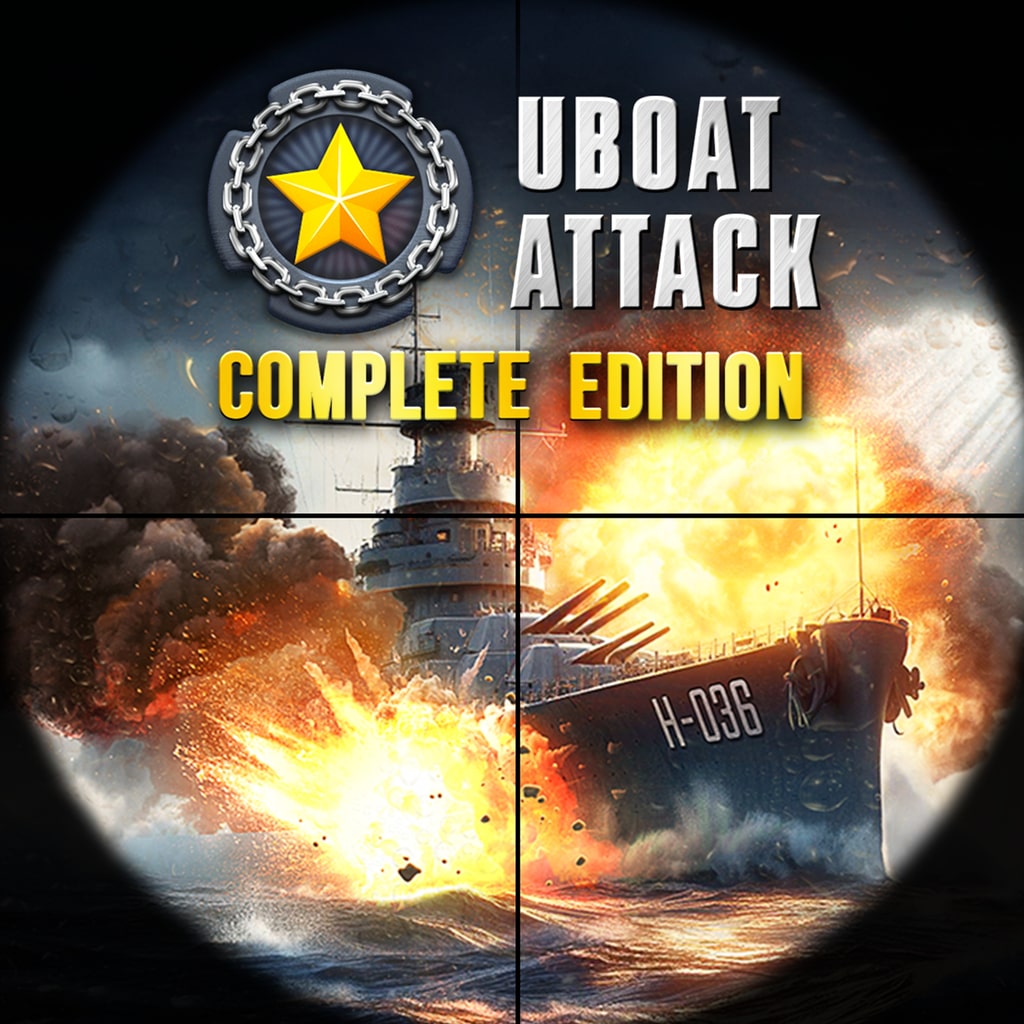
Uboat Attack: Complete Edition sets out to immerse players in the perilous, tactical world of submarine warfare. Drawing inspiration from historical U-boat campaigns where stealth, timing, and decision-making were literal matters of life and death, this title attempts to fuse tactical planning with real-time action. The Complete Edition collects all base content and expansions into one package, lifting the veil on the full suite of missions, upgrades, and environments the game has developed.
Unfortunately, Uboat Attack often feels like a ship built with admirable intent but insufficient ballast: its compelling premise is occasionally undermined by uneven pacing, surface-level mechanics, and missed opportunities in execution. For players drawn to asymmetric strategy, historical warfare, or tense naval simulations, the game offers flashes of depth and tension. Yet, for others, the experience may fall short of the immersive, nuanced submarine command imagined from the premise.
Premise and Setting: A War Beneath the Waves
The core conceit of Uboat Attack is straightforward: assume command of a submarine flotilla tasked with disrupting enemy convoys, navigating treacherous seas, and surviving detection from increasingly sophisticated anti-submarine forces. Missions range from convoy ambushes and stealth patrols to escort protection and minefield traversals. The ocean is both battlefield and labyrinth, its vastness a canvas for strategic manoeuvre and suspense.
Visually, the game leans into its atmospheric potential with brooding ocean vistas, storm-tossed waves, fog-shrouded horizons, and evocative lighting. It captures a sense of isolation and vulnerability that should define submarine warfare. Sound design — the whine of sonar pings, distant detonations, wind buffeting the hull — reinforces this mood, ensuring that audio cues are integral to tension rather than mere background decoration.
From the outset, Uboat Attack nails the premise: being alone in a hostile ocean feels oppressive and serious. The environment is not merely a backdrop, but a storyteller in its own right.
Core Gameplay Loop: Strategy Meets Action — Unevenly
At its heart, the game is built around a dual rhythm of strategic planning and real-time naval engagement. Before each mission, players manage crew assignments, refit the submarine with weapons and systems, and select tactical approaches. Depth charges, torpedo types, engine tuning, and sensor upgrades all factor into mission preparations.
Once in the water, however, gameplay shifts into an action-oriented paradigm. Players navigate the sub in third-person or periscope view, identify targets, set torpedo courses, dodge depth charges, and evade detection in real time. This hybrid loop — macro tactical prep followed by micro engagement — is promising on paper, but in practice it teeters between satisfying simulation and shallow execution.
Strengths of this blend include:
- Tense Engagements: When a convoy creeps into periscope range and sonar echoes narrow your options, the game captures that classic submarine tension effectively. Firing solutions, evasive manœuvres, and risk assessments feel genuine.
- Preparation Matters: Loadouts and crew assignments genuinely influence outcomes. A well-equipped and prepared boat feels markedly more capable than an under-prepared one.
However, several challenges dilute this potential:
- Action-Heavy Focus: The game leans more toward real-time naval shooting than contemplative naval command. The tension of setting up ambushes and managing systems subsides quickly once focus shifts to rapid firing and manoeuvring in active combat.
- Limited Tactical Depth: While initial crew and loadout choices matter, deeper strategic systems — such as long-term resource management, far-reaching patrol planning, or complex enemy AI behaviour — feel underdeveloped. The result is that tactical decisions are episodic rather than enduring.
This imbalance leaves the strategy layer feeling thin relative to the real-time action, which in turn lacks the polish or complexity of a dedicated naval shooter.
Mission Variety and Pacing
The Complete Edition offers a range of missions intended to break monotony and expand challenges. Escort duties, demolition runs, stealth patrols, and large fleet engagements each bring distinct scenarios. Early missions do well to introduce systems gradually; however, mid-game pacing can feel uneven.
Some missions offer crisp, engaging objectives that reward thoughtful approach and steady nerve. Others revert to repetitive “find and destroy” loops that risk blending into one another after extended play. The pacing can feel like a tide that fluctuates without clear rhythm — moments of high drama set against stretches of procedural repetition.
Part of this comes down to mission variety: while scenarios nominally differ, the underlying structures often revert to similar engagement templates. Without deeper narrative context or meaningful mechanical evolution between missions, the tension platesaus.
That said, discoveries do occur. Randomised weather, patrol behaviours, and convoy compositions introduce enough variation that dedicated players may tune their tactical choices rather than rely on rote responses.
Controls and Interface: Functional, But Limited
Interface and control schemes aim for accessibility: menus are clear, key tactical options are visible, and aiming mechanisms are responsive. For players approaching the game casually, this simplicity lowers the barrier to entry.
However, for players expecting a true submarine sim interface — with console-style command menus, fine-grained subsystem control, and layered input depth — the design feels flatter than desired. Actions such as redirecting crew focus, precise sensor tuning, or detailed battle planning are dialled back to quick selections rather than rich interfaces.
This approach makes the game accessible, but at the cost of depth. The interface supports quick play but does not foster a deep sense of command mastery.
Visual and Audio Presentation
On the aesthetic front, Uboat Attack largely succeeds in conveying the mood of submarine warfare. The ocean environments are atmospheric: water physics, lighting shifts, and weather variations create a convincing maritime backdrop. Interiors of the submarine — cramped corridors, flickering instrument panels, sonar rooms — evoke claustrophobia and operational seriousness.
Audio design is especially effective. Sonar pings, radio chatter, torpedo launches, and environmental ambience all work together to craft a soundscape that feels tense without becoming overwhelming. Music swells strategically during combat and recedes into minimal ambience during quieter navigation, enhancing pacing without dominating attention.
Graphically, however, the game remains serviceable rather than spectacular. Textures and models are competent but seldom eye-catching; distant environments can feel sparsely detailed, and some animations lack fluidity. This doesn’t diminish gameplay, but limits visual memorability.
AI and Challenge Balance
Enemy AI performance is another area of mixed results. In some encounters, adversaries react intelligently — adjusting formation, deploying counter-measures, and forcing evasive action. In others, enemy behaviour feels predictable or mechanically scripted, reducing strategic tension.
Difficulty scaling is adjustable, which provides welcome accessibility for newcomers, but the difference between easy and hard modes often feels more like increased resource thresholds than refined tactical opposition. A deeper, more adaptive AI would have elevated engagements significantly.
Final Verdict
Uboat Attack: Complete Edition offers an intriguing premise with flashes of tactical tension and atmospheric maritime design. Its blend of strategy prep and real-time submarine action delivers episodic thrill, especially in moments when silence, stealth, and timing converge under pressure. The environmental presentation and audio design underscore a mood of isolation and danger that suits the theme well.
However, the game’s strategic depth is inconsistent, pacing fluctuates, and the action layer — while competent — lacks the polish to fully enthral players seeking naval complexity. The interface prioritises accessibility over command nuance, and mission variety, while respectable, doesn’t always sustain engagement over longer play sessions.
For players seeking a casual yet thematic taste of submarine warfare with accessible mechanics and occasional excitement, Uboat Attack: Complete Edition is worth exploring. For those craving deeper systems, richer strategic loops, or more rigorous tactical challenge, it remains a competent but imperfect voyage.