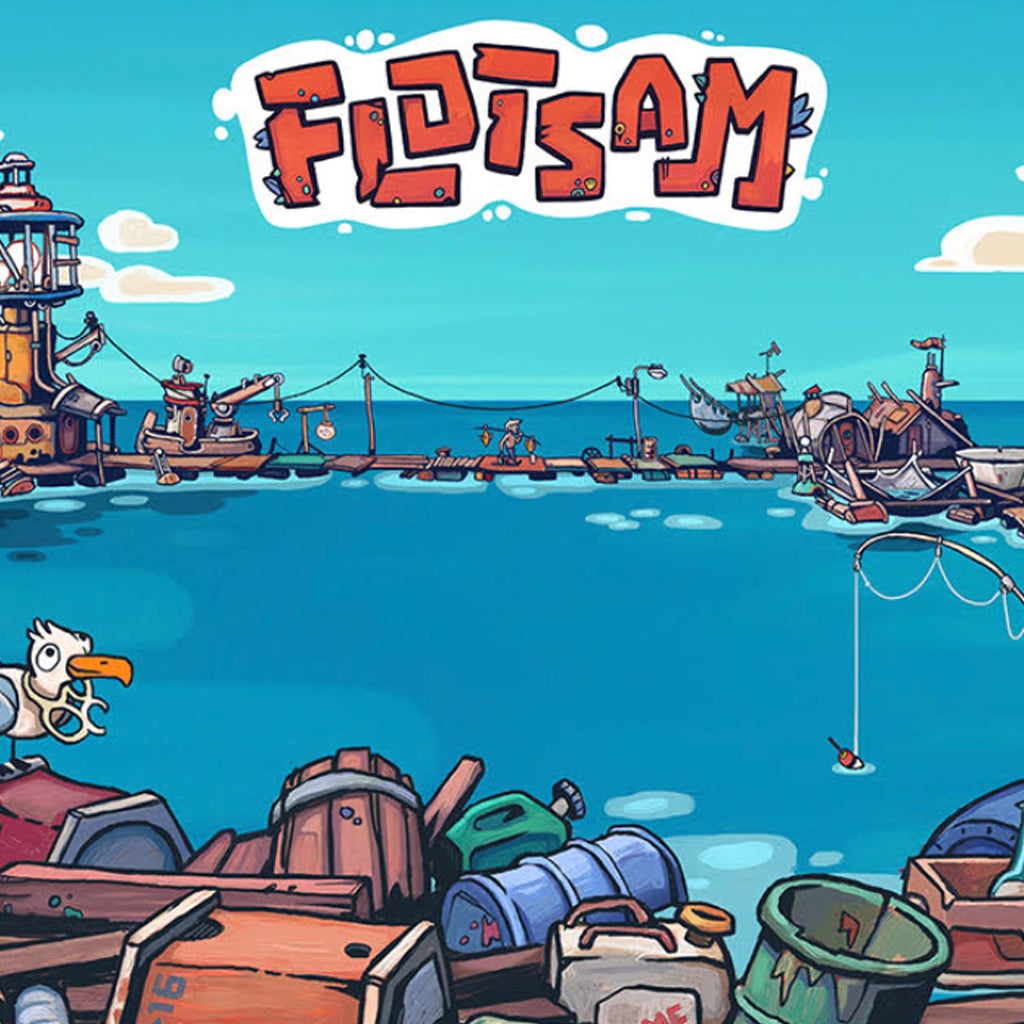
Some survival city-builders thrive on bleakness—ashen wastelands, frozen tundras, post-apocalyptic misery. Flotsam takes a dramatically different route: a bright, colourful, almost cheerful take on the end of the world. Your mission? To gather drifting debris, build a floating town, rescue stranded drifters, and carve out a thriving ecosystem atop a sunken Earth. It’s whimsical, visually charming, and radiates positivity… but beneath its pastel smile lies a surprisingly demanding strategy sim with teeth.
Initially launched in early access and now polished into a full release, Flotsam has matured into a cohesive survival-management experience that feels both familiar and distinctly its own. It borrows the resource chains and city-planning of classics like Banished or Frostpunk, but approaches them with a maritime twist that refreshes nearly every system players expect from the genre.
A Floating City of Junk—and Possibility
In Flotsam, the world has flooded and humanity has been reduced to pockets of drifting survivors clinging to scraps of civilisation. You lead a band of drifters, gathering wood, plastic, scrap metal, and food from the surrounding ocean while slowly constructing your ramshackle floating settlement.
The game absolutely nails its atmosphere. Everything—from ramshackle boats to makeshift water stills to towering walkways—is made from found objects. Plastic bottles become buoys, shopping trolleys become platforms, umbrellas become sails. There’s a playful joy in how the game embraces repurposing. Every structure looks like it was built by clever eccentrics trying to make the most of the world they inherited.
The charming art direction pairs beautifully with smooth animations and a soothing soundtrack. Despite the environmental anxiety built into the premise, Flotsam feels strangely hopeful. It’s a game about surviving, yes—but also about rebuilding, repurposing, and imagining a future with creativity rather than despair.
A Survival Sim at Heart
Don’t let the whimsical presentation fool you: Flotsam is a deceptively tough survival management builder. The loop is tight and unforgiving early on. You must juggle:
- Thirst through fresh-water production
- Hunger via fishing, drying racks, and seaweed farms
- Energy through rest cycles and housing
- Material costs for every expansion
- Weather and drift patterns that determine what resources are nearby
Every drifter has needs, stamina meters, work preferences, and behaviour quirks. Overworking them leads to breakdowns; mismanaging food or water leads to death. The early game revolves around building a stable supply chain, and the systems are designed to feel precarious. A single storm or late harvest can trigger a domino effect of shortages.
Progression unlocks more sophisticated infrastructure—electric dryers, scrap presses, seaweed distilleries, and multi-tiered housing. Each new piece of machinery further layers complexity into your survival strategy, encouraging players to create efficient pathways for production.
Scavenging the Open Sea
One of Flotsam’s most compelling systems is the map exploration. Rather than anchoring your city in one static place, your floating town drifts through a procedurally arranged ocean map. Different biomes offer different challenges:
- Garbage Patches for bulk plastic
- Sunken Ruins for rare materials
- Whale Feeding Grounds with unique wildlife
- Old Settlements housing stranded survivors
- Oil Platforms useful for metal salvage
This structure gives Flotsam a sense of adventure missing from many city-builders. You’re not overseeing a static settlement, but a nomadic flotilla, steering it strategically toward resources and story events.
Some players may find the pacing slow—travelling between nodes takes time, and exploration is limited by how quickly you can process the supplies you gather. But the loop is satisfying, especially as your city becomes more efficient.
A Delightful—But Demanding—Balancing Act
The biggest strength of Flotsam is its layered economy. Nearly every building interacts with another:
- Wood is needed for crafting platforms, boats, and cooking fuel
- Plastic builds walkways, storage, and boat docks
- Metal is required for advanced machinery
- Food production is tied to water availability
- Water production is tied to fuel and drying mechanisms
The result is a constant juggling act where upgrades feel meaningful and mistakes carry weight. Once you get into mid-game, the challenge shifts from mere survival to optimisation. You begin streamlining resource chains, expanding housing, assigning drifters into specialised roles, and ensuring everything flows smoothly even under pressure.
This rhythm—of stabilising, expanding, then scrambling again when the environment shifts—keeps the game engaging throughout. It’s a loop that rewards long-term thinking without overwhelming players with micromanagement.
Charming Survivors With Personality
Each drifter in Flotsam has unique traits. Some are energetic but clumsy, some are fast swimmers, others excel at crafting or cooking. These traits influence how you assign tasks and build your workforce.
Their animations and behaviours add life to the city: workers hauling loads across creaking walkways, swimmers diving theatrically into the water, boats returning with loot, and drifters resting on rooftops. It’s a small touch, but one that makes the settlement feel alive and worth protecting.
Where Flotsam Struggles
Despite its strengths, Flotsam does have some rough edges:
- Late-game pacing can feel slow, with long production times and resource bottlenecks.
- Repetition emerges once you’ve mastered the core loops and built a stable ecosystem.
- Pathfinding occasionally glitches, leading to drifters getting stuck or tasks stalling.
- Difficulty spikes may frustrate casual players, particularly during droughts or resource drought stretches.
- Lack of narrative progression beyond environmental storytelling may leave some craving bigger stakes.
Still, none of these flaws detract significantly from the overall experience. They’re more limitations of the genre than failures of design.
Pros & Cons
Pros
- Unique and uplifting aesthetic that stands out among post-apocalyptic city-builders.
- Strategic, engaging survival systems with a strong emphasis on resource chains and efficiency.
- Nomadic map exploration keeps the experience fresh as your floating town drifts between biomes.
- Clever, creative art direction, with every structure built from scavenged materials that visually tell a story.
- Satisfying progression from fragile beginnings to a bustling, multi-layered floating city.
- Charming drifter animations and personality traits bring life and character to your settlement.
- Tight survival balancing, offering challenge without relying on punishing randomness.
- Strong atmosphere and relaxing soundtrack despite the game’s survival focus.
Cons
- Late-game pacing slows noticeably, especially once production chains stabilize.
- Repetition sets in after many hours as exploration nodes begin to feel familiar.
- Pathfinding issues can occasionally disrupt workflow or stall tasks.
- Difficulty spikes may overwhelm casual players early on.
- Limited narrative progression, which may disappoint players looking for a story-driven campaign.
Final Verdict
Flotsam is a delightful surprise: a colourful, optimistic take on survival city-building that manages to hide a sharp, strategic backbone beneath its friendly charm. Whether you’re managing your first tiny raft, expanding into a multi-deck floating settlement, or navigating the ruins of a drowned world, the game offers a blend of challenge, creativity, and personality that few indie builders match.
It’s thoughtful, polished, and full of heart—an ideal game for players who love resource management but crave a setting that feels fresh and uplifting rather than bleak.