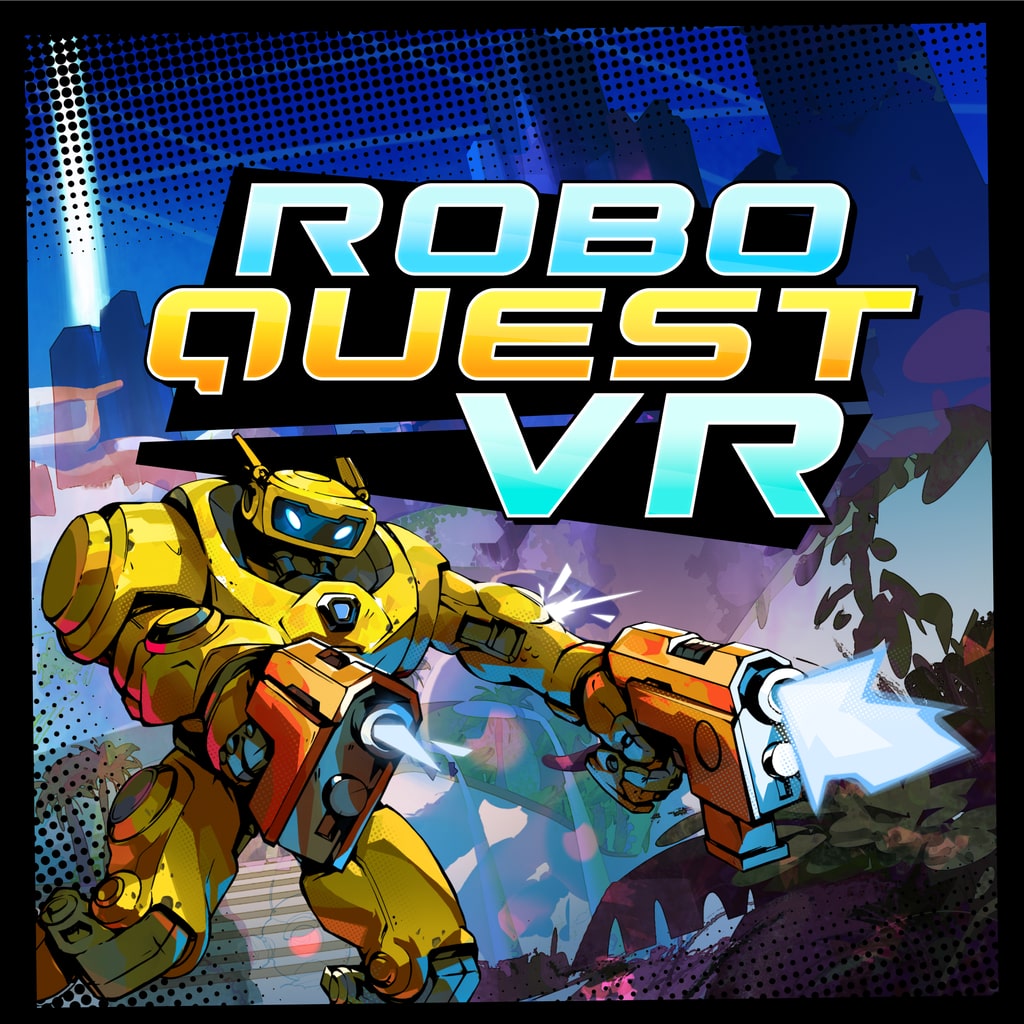
Fast, frantic, and unapologetically energetic, Roboquest VR brings the acclaimed rogue-lite shooter into virtual reality with a confidence that immediately stands out. In a genre where many VR shooters chase realism or slow, tactical pacing, Roboquest VR instead opts for pure velocity: rocket-powered movement, explosive skirmishes, bright cel-shaded visuals, and an emphasis on mobility that rarely gives you a moment to breathe. The result is one of the most kinetic and satisfying VR action games in recent memory—provided you can keep up.
Roboquest VR places you in the metal boots of a hyper-agile Guardian, awoken in a ruined future where robots have overrun civilization. The narrative takes a backseat to the gameplay, but that’s expected; this is a game about flow, speed, and constant combat. What makes the jump to VR so exciting is how seamlessly the core identity of Roboquest survives the transition. Its signature run-based structure, character builds, and frantic arena encounters all translate into a VR space that feels both intuitive and exhilarating.
Movement is the defining pillar of Roboquest VR. You glide through levels using smooth locomotion that feels surprisingly comfortable despite the game’s blistering pace. Jumping, dashing, sliding, and snapping around cover all feel natural, and the developers clearly put care into avoiding the motion sickness pitfalls that plague similar high-speed VR titles. The game encourages acrobatics—sliding under laser fire, darting up ramps, or dashing sideways to avoid a barrage of rockets—and your body becomes the controller in a way that enhances both immersion and intensity.
Combat is where Roboquest VR truly comes alive. Enemy groups swarm with unpredictable aggression, forcing you to constantly reposition while juggling threats from all angles. Weapons, which range from plasma rifles and SMGs to explosive cannons and quirky sci-fi contraptions, feel punchy and satisfying. Reloading is streamlined rather than micro-simulated, keeping the focus on staying in motion. Haptics and sound design deliver clear impact feedback, particularly with heavier weapons, without bogging the experience down in complexity.
Each run is a unique progression of levels, weapons, perks, and class upgrades. This rogue-lite structure remains intact from the flatscreen version, but VR enhances the satisfaction of watching your Guardian build into a powerhouse. Class archetypes such as the Engineer, Recon, and Commando each translate well, offering distinctive playstyles that reward experimentation. The upgrade economy provides meaningful build variety, giving each run a different rhythm and flow.
Visually, the cel-shaded aesthetic is a perfect fit for VR. Environments pop with vibrant colours, clear silhouettes, and bold outlines that make quick threat identification effortless. The exaggerated art style also avoids the uncanny valley issues that sometimes plague more realistic VR shooters. Whether you’re sprinting through desert canyons, neon-lit factories, or abandoned cities overgrown with nature, the world feels crisp and readable even at top speed.
The biggest challenge Roboquest VR faces isn’t its mechanics—it’s its intensity. This is a demanding VR experience, physically and mentally. Extended sessions can be exhausting, and players not accustomed to fast locomotion may find the difficulty curve steeper than expected. Even with solid comfort options, the sheer velocity of the game won’t suit everyone. But for those who want a VR workout disguised as a rogue-lite shooter, Roboquest VR delivers in spades.
Enemy variety is strong, particularly in later levels, where drones, snipers, mini-bosses, and melee brutes converge into chaotic but fair assault patterns. Boss fights are a particular highlight, using sweeping attacks, bullet-hell patterns, and rapid repositioning to test every skill you’ve developed. They feel epic without ever losing Roboquest’s signature rhythm.
Progression between runs remains a major draw. Earned resources unlock permanent upgrades, weapon types, and new class options, encouraging long-term engagement. The VR adaptation doesn’t water this down; instead, it maintains the addictive “one more run” loop that defined the original. The sense of mastery grows with each session, and the game rewards skill development as much as statistical upgrades.
Where Roboquest VR stumbles is in moments where the control scheme struggles to keep pace with the action. Occasionally, weapon switching feels clumsy in the heat of battle, and some environmental geometry can snag the player during chaotic skirmishes. These aren’t dealbreakers, but they do create occasional friction in an otherwise fluid experience. The game is also somewhat light on narrative depth, even by rogue-lite standards, though this is unlikely to bother players drawn to its gameplay-first design.
Multiplayer—one of Roboquest’s strongest features—returns in VR and remains a highlight. Teaming up with a friend enhances the chaos, creating thrilling co-op runs where coordination becomes key. Laughing, panicking, and strategizing through VR adds an additional layer of camaraderie that elevates the experience beyond its solo mode.
Pros & Cons
Pros
- Blisteringly fast, fluid VR movement that feels natural and exhilarating
- Responsive, punchy gunplay with a wide variety of weapons
- Excellent rogue-lite progression that thrives in VR
- Vibrant cel-shaded visuals that read clearly during fast action
- Strong enemy and boss variety that keeps runs engaging
- Excellent co-op mode that brings the game’s chaos to life
Cons
- Extremely fast pace may overwhelm VR newcomers
- Physically demanding during long sessions
- Occasional weapon switching and environment collision issues
- Minimal narrative depth
- Some comfort settings may still not suit sensitive players
Verdict
In the end, Roboquest VR succeeds not simply because it translates a beloved shooter into virtual reality, but because it embraces everything VR does best. The physicality of aiming, the immediacy of dodging, the exhilaration of momentum, and the satisfaction of kinetic combat all combine into a package that feels tailor-made for the platform. It’s bold, intense, and wonderfully alive.