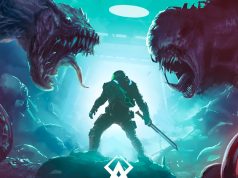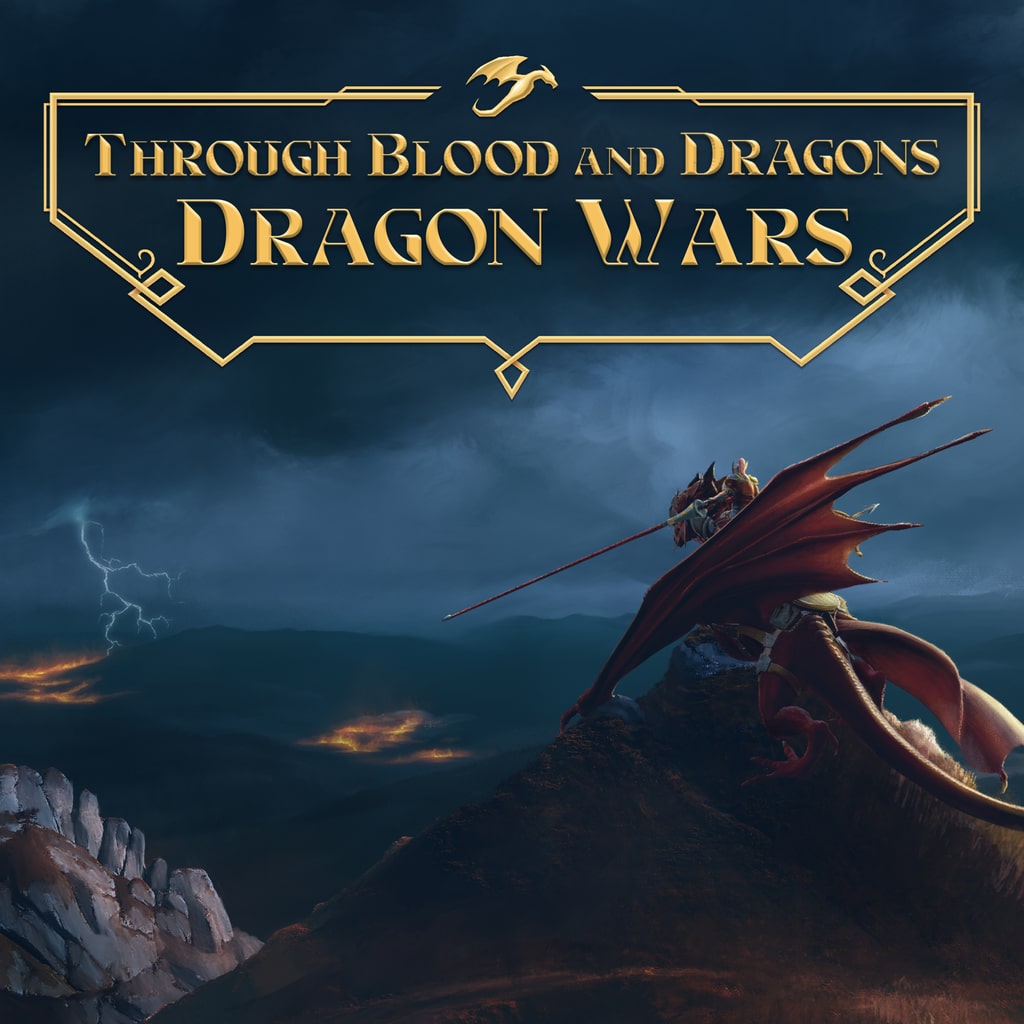
There is something undeniably magical about the idea of taking to the skies on the back of a dragon, particularly when you are armed with a bow, surrounded by hostile creatures and caught in the middle of a war that could change an entire fantasy world. It is the sort of premise that immediately brings to mind classic arcade adventures, where spectacular scenery, enormous enemies and frantic action mattered far more than complicated mechanics. Through Blood and Dragons: Dragon Wars embraces that spirit wholeheartedly, delivering a fantasy flight shooter that wears its influences proudly while attempting to carve out an identity of its own. It may be a relatively brief adventure, but there is a certain charm to its combination of dragon riding, archery and elemental attacks that makes it an appealing prospect for fans of old-school arcade action.
Developed by Dream Foundry Games and published by Sky Sea and Sword Publishing, Through Blood and Dragons: Dragon Wars is based on the fantasy world created by author R.M. Schultz. Set on the continent of Cimeren, the story follows Curik, an unlikely hero and dragon squire who finds himself caught up in a devastating conflict after the Dragon Queen launches an attack. With the kingdom of Belvenguard under threat, Curik and his dragon must take the fight into the skies, battling enemy forces, reclaiming castles and challenging a powerful adversary whose ambitions threaten the entire land.
At its heart, this is an on-rails shooter inspired by classics such as Panzer Dragoon. The experience is built around carefully timed attacks, evasive manoeuvres and the ability to switch between Curik’s archery skills and his dragon’s devastating elemental powers. It is a familiar formula, but one that can still be immensely enjoyable when the action, presentation and sense of momentum come together.
A Dragon Takes Flight
The opening moments quickly establish the game’s central appeal. Rather than placing players on foot in a sprawling fantasy world, Dragon Wars sends Curik soaring along carefully designed aerial routes, with enemies approaching from all directions and the environment constantly shifting around him. The on-rails structure means the journey itself is largely predetermined, allowing the developers to focus on staging encounters, creating dramatic set pieces and keeping the action moving.
There is a nostalgic quality to this approach that fans of classic arcade shooters will immediately recognise. The sensation of flying through fantastical landscapes while hostile creatures emerge from the distance has a simplicity that remains appealing, particularly as the game introduces larger threats and more demanding enemy formations. It is not trying to replicate the freedom of a modern open-world flight game, nor does it need to. Instead, it focuses on delivering a sequence of tightly focused encounters where quick reactions and accurate targeting are essential.
The fantasy setting gives those encounters a distinctive identity. Cimeren offers a world of dragons, castles and warring factions, providing a suitable backdrop for the aerial battles. There is a clear sense of adventure in the premise, and the idea of reclaiming Belvenguard from the Dragon Queen gives Curik’s journey a straightforward objective. Although the narrative is not particularly elaborate in its structure, it provides enough context to make the battles feel connected to a larger conflict.
Two Heroes, One Battlefield
The most interesting aspect of the gameplay is the relationship between Curik and his dragon. Rather than relying on a single attack system, the game gives players two distinct ways to engage with enemies, and learning when to use each becomes an important part of the experience. Curik’s bow offers a more precise approach, with a 360-degree lock-on system that allows players to target enemies around them. This gives combat a degree of flexibility that suits the constantly changing direction of aerial encounters.
The dragon, meanwhile, brings a more destructive style of combat to the battlefield. Its elemental attacks include fire, ice and acid, giving players different ways to deal with the threats ahead. There is a pleasing sense of spectacle to unleashing these abilities, particularly when confronting groups of enemies or larger opponents that require more sustained attention. The contrast between Curik’s archery and the dragon’s elemental powers helps prevent the combat from feeling entirely dependent on one mechanic.
The dual-role system is also a welcome way of giving the player a sense of partnership. Curik is not simply a passenger being carried through the sky, and the dragon is more than a vehicle with a health bar. Their combined abilities are central to the action, creating a gameplay identity that feels appropriate for a fantasy adventure built around an unlikely hero and his powerful companion. It is a relatively simple idea, but one that gives Dragon Wars more character than a straightforward fantasy shooter.
The Joy of Arcade Combat
The influence of Panzer Dragoon is difficult to ignore, and it is also one of the game’s most appealing qualities. On-rails shooters thrive on rhythm, asking players to divide their attention between aiming, anticipating incoming threats and reacting to dangers before they become overwhelming. Dragon Wars uses its 360-degree targeting system to add a little more freedom to that familiar structure, allowing players to engage enemies that might otherwise be awkward to reach.
The lock-on mechanics make the action accessible, particularly for players who are not accustomed to the precision demands of traditional flight shooters. There is still a need to react quickly and prioritise threats, but the targeting system helps keep combat focused on decision-making rather than demanding constant pinpoint accuracy. When several enemies appear at once, identifying the most immediate danger and choosing the right attack can create satisfying moments of arcade intensity.
Barrel rolls add another useful layer to the action, allowing Curik and his dragon to evade incoming attacks while maintaining forward momentum. These manoeuvres give the player a sense of involvement beyond simply aiming and firing, and they are particularly important when the battlefield becomes crowded. The combat is at its best when attacking and evading feel like parts of one continuous movement, creating the impression of a desperate aerial battle rather than a series of disconnected shooting galleries.
Facing the Dragon Queen
Boss encounters provide some of the game’s more dramatic moments, offering a welcome change of pace from the regular waves of enemies. These confrontations are an important part of any arcade shooter, giving players a larger threat to overcome and a clear sense of progression through the adventure. In a game centred on dragons and fantasy warfare, there is plenty of potential for imposing aerial opponents and visually striking encounters.
The challenge lies in recognising attack patterns, avoiding incoming damage and making effective use of the abilities available to Curik and his dragon. The encounters help break up the more familiar enemy formations, although the overall variety could be stronger. Some of the regular enemies rely on similar attack behaviours, and ballista-bearing dragons appear frequently enough that encounters can begin to feel predictable.
That repetition is particularly noticeable during a short campaign, where there is less time for the mechanics to evolve into something more complex. The game introduces enjoyable ideas, but it does not always push them as far as they could go. More varied enemy behaviours, additional aerial hazards and greater differences between encounters would have helped the battles maintain their impact for longer.
A World of Dragons and Discovery
The connection to R.M. Schultz’s fantasy book series gives Dragon Wars an established world to draw on, and the fully voiced lore cutscenes help introduce players to its characters, history and conflict. For fans already familiar with the source material, these moments may offer an enjoyable opportunity to revisit Cimeren from a different perspective. For newcomers, they provide useful context for the events unfolding across the campaign.
The story has the ingredients for a much larger fantasy adventure, with an unlikely hero, a powerful enemy and a kingdom in need of rescue. Curik’s position as a dragon squire also provides an appealing starting point, giving his involvement in the conflict a sense of discovery. However, the game’s relatively short runtime leaves limited room for narrative development. The cutscenes help establish the setting, but the adventure often feels more interested in moving players towards the next aerial encounter than in exploring the emotional weight of the conflict.
That is not necessarily a problem for a game built around arcade action, but it does leave some potential unexplored. The world feels as though it has much more to offer than the campaign has time to reveal. A longer adventure with more character development, additional locations and greater interaction with the wider conflict could have made the setting feel even more memorable.
Making Your Dragon Your Own
Unlockable dragon breeds and cosmetic customisation offer a welcome incentive to keep playing. The chance to personalise your dragon adds a little more individuality to the adventure, particularly for players who enjoy collecting different appearances and making their character feel unique. In a game where your dragon is such a central part of the experience, even cosmetic choices can help strengthen the sense of attachment.
These additions are not extensive enough to transform the overall structure, but they do provide a reason to revisit the action and work towards further unlocks. The ability to experiment with different dragon appearances complements the game’s fantasy setting, giving players a small personal reward beyond simply completing another stage. It would have been interesting to see customisation expanded further, perhaps with more meaningful differences between dragon breeds or additional ways to develop their elemental abilities.
Still, the inclusion of unlockable breeds is a nice touch, adding a little extra value to a campaign that can otherwise be completed relatively quickly. Players who enjoy replaying arcade shooters to improve their performance or unlock additional content may find enough here to justify another run.
A Brief but Enjoyable Adventure
The biggest limitation facing Through Blood and Dragons: Dragon Wars is its length. With the campaign reportedly taking under two hours to complete, it is a very compact experience, particularly for players who prefer longer adventures with substantial progression. The short runtime means the game can be enjoyed in a single sitting, which suits its arcade roots, but it also limits how far its ideas can develop.
Repetition becomes more apparent when the campaign is so brief, as there is less opportunity for combat to evolve beyond its core mechanics. Recurring enemy patterns and familiar objectives can make some sections feel similar, even when the environments and encounters change. Minor technical issues reported during the initial demo launch are also worth noting, though they should be considered separately from the game’s fundamental design.
On the positive side, the focused structure means Dragon Wars rarely feels burdened by unnecessary padding. It gets to the action quickly and keeps the adventure moving, making it an accessible choice for players who want a short burst of fantasy shooting. The challenge is finding enough variety and replay value to make the experience worth returning to after the initial journey is over.
Verdict
Through Blood and Dragons: Dragon Wars is a charming little fantasy shooter that understands the appeal of classic arcade flight action. Its combination of Curik’s archery, the dragon’s elemental attacks, 360-degree targeting and evasive barrel rolls creates an enjoyable combat system that suits the on-rails format. The fantasy setting, voiced lore cutscenes and dragon customisation give the adventure a little extra personality, while its clear inspiration from Panzer Dragoon will appeal to anyone with a fondness for the genre.
However, the short campaign and repetitive enemy patterns prevent it from reaching the heights of the classics it draws inspiration from. The combat mechanics are enjoyable, but they could have benefited from greater variety, more elaborate boss encounters and a longer adventure that gave the world and its characters more room to breathe. Minor technical issues may also affect the experience for some players, although the central concept remains appealing.
Ultimately, Dragon Wars is best approached as a compact arcade adventure rather than a sprawling fantasy epic. It offers a satisfying taste of dragon riding and aerial combat, with enough charm to make its brief journey worthwhile. It may not set the skies alight for long, but for fans of old-school on-rails shooters and fantasy action, there is plenty here to enjoy before the final confrontation with the Dragon Queen.