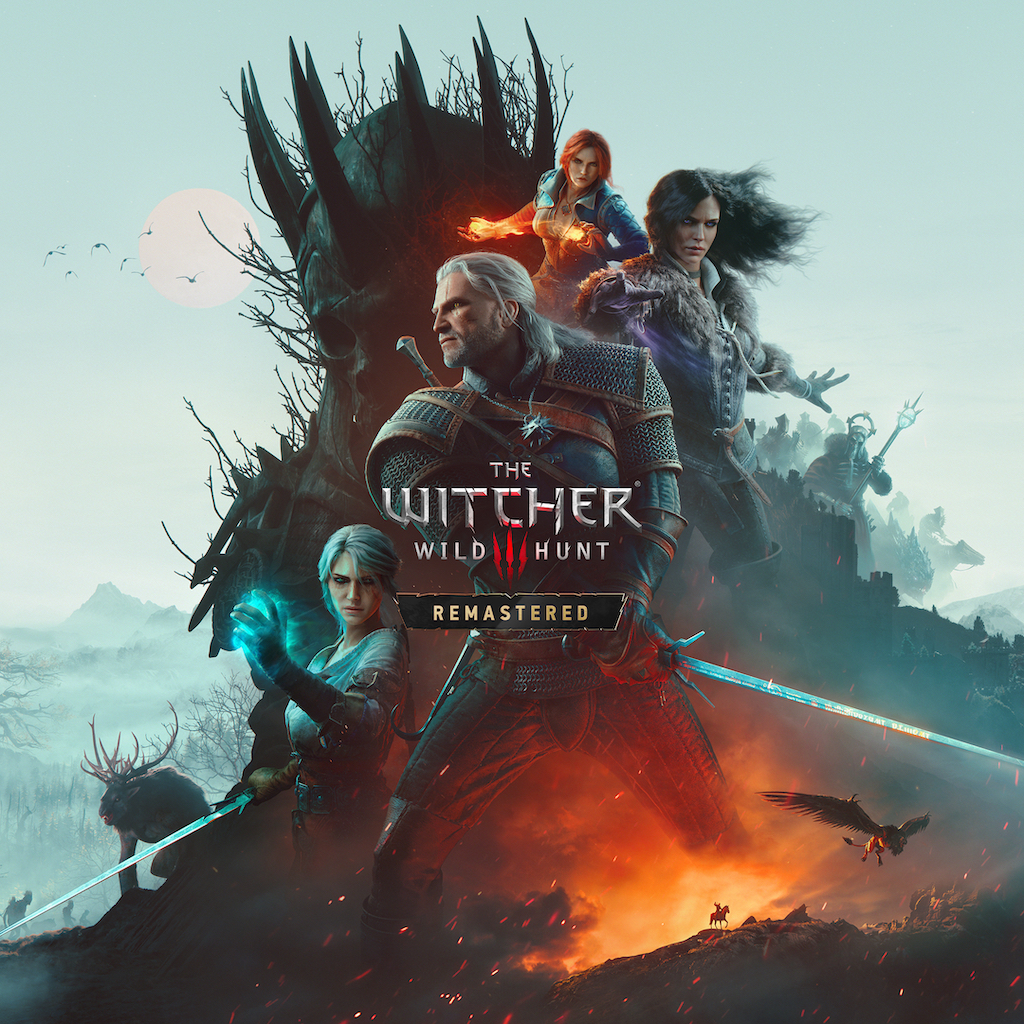
There are games you finish and move on from, and then there are games that somehow stay with you. The Witcher 3: Wild Hunt has always firmly belonged to the second category. Geralt of Rivia’s journey across the war-torn Northern Kingdoms is one of those rare adventures that makes an enormous open world feel personal, populated by people with their own problems, ambitions, prejudices and secrets. More than a decade after the original adventure first captured the imagination of millions of players, The Witcher 3: Wild Hunt Remastered arrives with the rather intimidating task of improving something already considered extraordinary.
Thankfully, this is not a remaster that simply turns up the resolution and calls it a day. CD Projekt Red has approached the project with a surprisingly thoughtful touch, modernising the visuals, performance, combat and quality-of-life systems while retaining the identity that made the original so special. With Hearts of Stone and Blood and Wine included as part of the package, this is an enormous amount of RPG for your money and, more importantly, an opportunity to experience one of gaming’s great adventures with a fresh coat of paint that actually means something.
A World Worth Getting Lost In
The world of The Witcher 3 has always been its greatest character. The Northern Kingdoms are bleak, beautiful, cruel and occasionally absurd, and the Remastered edition makes exploring them more captivating than ever.
From crowded cities and muddy villages to ancient ruins, dense forests and windswept wilderness, the world feels considerably more alive thanks to the visual overhaul. Lighting has been dramatically improved, foliage is denser, and environmental detail has received considerably more attention. With the appropriate hardware, path tracing takes things even further, producing more natural lighting, reflections and shadows that can transform familiar locations into places that feel surprisingly new.
What impressed me most, though, is that the improved visuals do not make the world feel artificial. The Witcher universe was never supposed to be pretty in the conventional sense. Its beauty comes from contrast. A breathtaking sunset can illuminate a landscape where something horrible happened only moments earlier, while a picturesque village can hide a story that becomes increasingly uncomfortable the deeper you dig. The Remastered edition preserves that atmosphere beautifully.
Geralt Still Has It
At the heart of everything is Geralt. He remains one of gaming’s most compelling protagonists because he is neither a traditional hero nor an antihero desperate to convince you he is one. He is a professional monster hunter trying to make a living in a world where the monsters are not always the ones with claws.
Geralt’s search for Ciri gives the main story its emotional backbone, but the brilliance of The Witcher 3 lies in what happens along the way. You can become embroiled in local disputes, investigate supernatural mysteries, help people who probably do not deserve your assistance, and make decisions that seem insignificant at the time, only to discover their consequences hours later.
The writing remains exceptional. Conversations are frequently funny, occasionally heartbreaking, and often morally complicated. There is rarely a simple answer of good or evil, and the game is at its best when it leaves you sitting in front of the screen wondering whether the choice you just made was actually the right one.
A Story That Still Hits Hard
It is easy to assume that familiarity would diminish the story’s impact, particularly for returning players. Surprisingly, it does not. If anything, the improved presentation lends additional weight to some of the game’s most memorable moments.
Ciri remains the emotional centre of the adventure, and Geralt’s determination to find her gives the enormous world a sense of purpose. The Wild Hunt itself is an appropriately intimidating threat, but the story succeeds because it never forgets the human consequences of what unfolds around it.
There are moments of genuine warmth here, moments of ridiculous humour, and moments that can leave you staring at the screen after the dialogue has finished. The game is not afraid to let conversations breathe, either. It understands that a quiet conversation in a tavern can sometimes be every bit as memorable as a massive battle. That is the secret of The Witcher 3. It understands people.
Fighting Like A Witcher
Combat was one area where the original game occasionally showed its age, so the improvements here are particularly welcome. Geralt’s swordplay feels more polished, while the broader combat and quality-of-life changes make encounters easier to understand and more satisfying to control.
You have swords, signs, bombs, potions and other tools at your disposal, and learning to combine them effectively is part of the pleasure. A powerful monster is rarely defeated by simply hammering the attack button. Preparation matters, particularly when you start taking on tougher creatures.
The combat still retains that slightly deliberate Witcher feel rather than transforming Geralt into a hyperactive action hero. That is important. The goal was never to make this Devil May Cry. Geralt should feel like a skilled professional who knows his trade, and the Remastered edition largely maintains that balance while smoothing away some of the rougher edges.
The Little Things Matter
One of the biggest benefits of a remaster is that it offers an opportunity to address the small frustrations that accumulate over a long adventure. The Witcher 3 has plenty of those, simply because the original was such an enormous game.
The updated quality-of-life features make the experience more comfortable without fundamentally changing what the game is. Inventory management, exploration, combat options and general navigation all benefit from years of hindsight. None of these changes are likely to dominate a screenshot or trailer, but they become incredibly noticeable once you are several hours into the adventure.
This is where the Remastered edition feels particularly mature. It is not trying to reinvent the game. It is trying to make the experience smoother while keeping the original personality intact.
Two Expansions That Could Be Games Of Their Own
Then there are the expansions. Including Hearts of Stone and Blood and Wine in the Remastered package is almost ridiculous given how much content they contain. These are not throwaway pieces of DLC designed to give players another afternoon of entertainment. They are substantial adventures with new characters, locations, stories and choices.
Hearts of Stone offers a darker, more focused story, while Blood and Wine transports Geralt to the strikingly beautiful realm of Toussaint. The contrast between the two is wonderful, and both demonstrate how capable CD Projekt Red was of expanding the foundations of the main game.
Toussaint, in particular, remains one of the most visually striking areas in the entire experience. It looks almost too beautiful to belong in the same world as some of the grim locations Geralt has previously visited, which makes the darker elements lurking beneath its surface all the more effective. Having both expansions included means this package is not simply a remastered RPG. It is an enormous, complete Witcher experience.
The Price Of Perfection
There is very little to criticise here without becoming unfairly fixated on the fact that this is still fundamentally the same game. The core quest structures remain familiar, and some of the open-world conventions that were perfectly acceptable years ago can occasionally feel more dated today.
There are also moments when the age of the underlying design becomes apparent. Not every animation is flawless, and some systems still feel like they belong to a previous generation of open-world RPGs. But these are blemishes on an otherwise remarkably polished experience rather than problems that undermine it.
The important thing is that the Remastered edition understands where improvement matters most. It does not attempt to turn The Witcher 3 into a completely different game. It simply gives an already magnificent adventure the technical foundation it deserves.
Still The White Wolf
Playing The Witcher 3: Wild Hunt Remastered in 2026 is a fascinating experience, showing how much of the original design has endured. Modern open-world games have become bigger, prettier and more technically ambitious, yet very few have matched the combination of world-building, writing and character development found here.
The scale is impressive, but it is the details that keep pulling you back. A notice pinned to a board can lead to an unexpected quest. A stranger on the road can introduce you to a story you never anticipated. A decision made in one village can quietly influence something much later.
That sense of discovery is still magical. And then there are the moments when you simply stop. You climb a hill, watch the sun disappear behind the mountains and realise you have completely forgotten what quest you were supposed to be doing. That is the magic of a great open world. It makes wandering feel like progress.
Final Verdict
The Witcher 3: Wild Hunt Remastered has no business being this good all over again, yet somehow it is. CD Projekt Red has taken one of the most celebrated RPGs of its generation and modernised the areas that genuinely needed attention without sanding away the personality that made it unforgettable.
The Unreal Engine 5 era may have brought technically astonishing new worlds, but The Witcher 3 proves that atmosphere, writing and characters remain every bit as important as polygon counts. The improved lighting, foliage, environmental detail and path tracing make the Continent more beautiful, while refined combat and quality-of-life improvements make the journey more comfortable. Most importantly, the story remains as compelling as ever.
With Hearts of Stone and Blood and Wine included, the package becomes almost absurdly comprehensive. There are hundreds of hours of adventure here, and remarkably little of it feels like filler. Even after all these years, Geralt’s journey remains one of those rare experiences in which you can lose an entire evening without noticing the clock.
A remaster should make you appreciate the original all over again. This one does something even better. It reminds you why the original was so special in the first place.