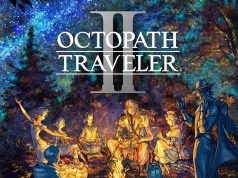
There is something wonderfully old-fashioned about OCTOPATH TRAVELER, and I mean that as a genuine compliment. In an industry where role-playing games have grown increasingly enormous, cinematic and obsessed with spectacle, Square Enix took a very different approach when it introduced this adventure in 2018. Rather than trying to reinvent the genre, it looked both backwards and forwards, combining the charm of classic pixel art with modern 3D environments, lighting and visual effects to create something that felt both familiar and completely new. The result was a game that reminded players why the simple act of setting off on an adventure can be so magical.
Now arriving on Nintendo Switch 2, OCTOPATH TRAVELER feels just as distinctive as it did when it first appeared. The game has been optimised from its original Nintendo Switch release, with improved resolution and frame rate giving its celebrated HD 2D presentation a welcome technical boost. That may not sound revolutionary on paper, but this is a game where presentation matters enormously. The combination of tiny pixel-art characters, enormous landscapes, atmospheric lighting and detailed environments benefits considerably from additional clarity and smoother performance.
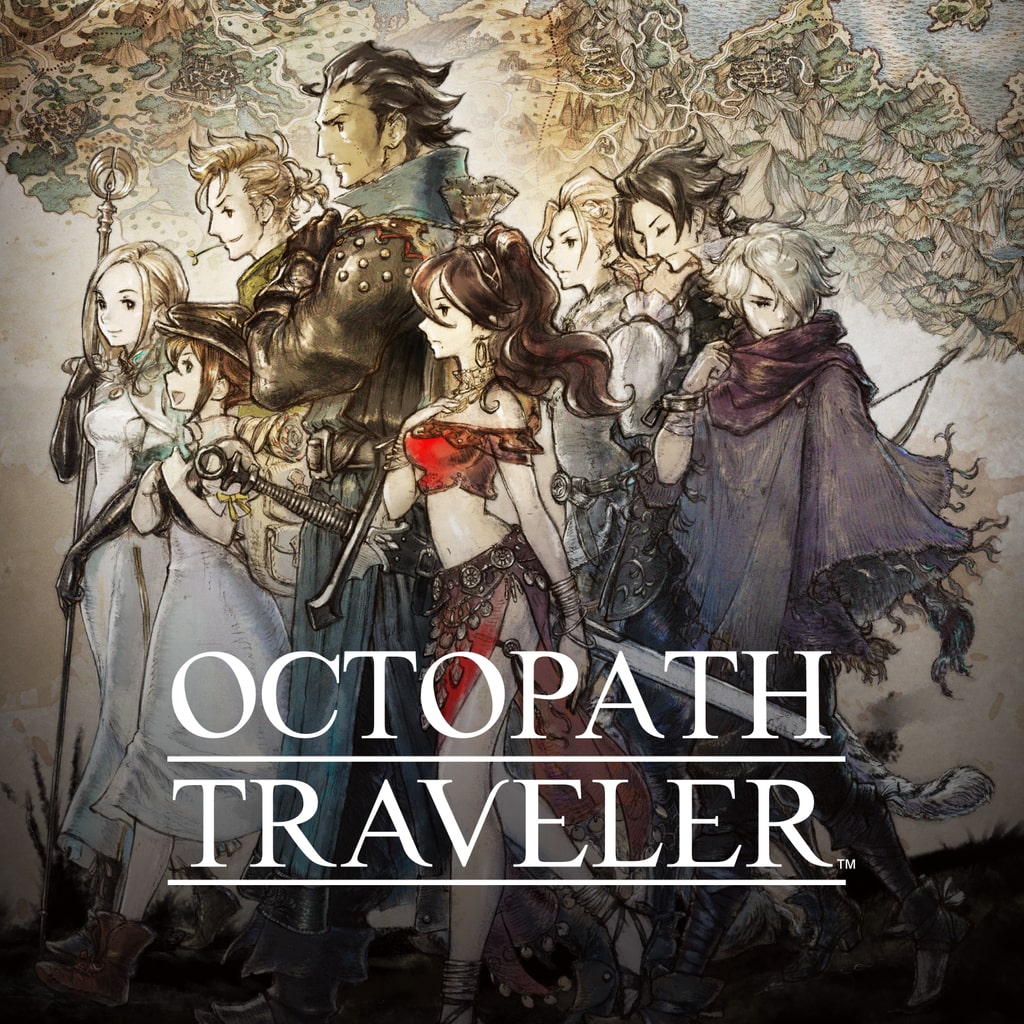
At the heart of the adventure are eight protagonists, each with their own history, motivations, abilities and personal ambitions. You can begin your journey with whichever character catches your imagination, and from there the world gradually opens up as you encounter the remaining travellers and invite them to join your party. There is no single prescribed route through the game, and that freedom is one of its greatest pleasures. Your journey genuinely feels like your own.
Eight Stories Worth Discovering
The eight protagonists are more than different character classes in different costumes. Each brings their own story and perspective to the world of Orsterra, and their personal journeys form the narrative backbone of the adventure. Olberic is a warrior seeking answers and purpose; Primrose is driven by revenge; Cyrus is a scholar searching for knowledge; and Tressa dreams of becoming a successful merchant. Ophilia’s journey is shaped by faith and responsibility; Alfyn wants to use his knowledge of medicine to help others; Therion is a skilled thief with his own reasons for accepting dangerous jobs; and H’aanit is a hunter searching for her missing master.
What makes this structure so interesting is the freedom it gives the player. You can decide which story to pursue first and when to move on to another character’s tale. You might spend several hours following one protagonist before deciding it is time to head across the world and see what someone else has been up to. That freedom occasionally comes at the expense of a tightly connected overarching narrative, but it creates something arguably just as valuable: the feeling that you are creating your own adventure rather than simply following somebody else’s.
Some stories naturally have more emotional impact than others, and the writing can occasionally fall into familiar fantasy RPG territory. Even so, the variety of themes gives the campaign considerable range. There are stories of revenge, ambition, friendship, discovery, duty and redemption, and moving between them prevents the adventure from becoming tonally monotonous. The eight characters also gradually become more interesting as their individual journeys progress, particularly when their personalities and abilities begin to complement one another.
The Birth of HD 2D
It is impossible to discuss OCTOPATH TRAVELER without acknowledging its extraordinary visual design. The HD 2D style became one of Square Enix’s most recognisable modern approaches to traditional role-playing games, and this is where that concept first made such an impression. Pixel art characters inhabit beautifully rendered 3D environments, while lighting, shadows, depth of field and atmospheric effects create a world that feels considerably more sophisticated than its retro-inspired foundations might suggest.
There is something almost dreamlike about the way the world is presented. A tiny pixel character can stand at the edge of an enormous cliff, wander through a misty forest or walk beneath the towering architecture of a bustling town, and the contrast between the character and their surroundings somehow makes the world feel larger rather than smaller. It captures the imagination in a way that photorealism often struggles to do. Your brain fills in the details, leaving plenty of room for the player to become emotionally invested in the world.
The Nintendo Switch 2 optimisation makes this visual approach even more appealing. The improved resolution allows the environments, effects and intricate visual details to appear with greater clarity, while the improved frame rate makes movement and exploration feel smoother. It is not a complete visual overhaul, nor does it need to be. Instead, it feels like the original game’s artistic vision has been given a cleaner, more refined canvas on which to shine.
The presentation is also helped enormously by a fantastic soundtrack. The music moves effortlessly between gentle exploration themes and much more dramatic battle compositions, often giving otherwise simple encounters a real sense of occasion. There are melodies that stay with you long after you have stopped playing, and the soundtrack plays a huge part in establishing the personality of each region. Combined with the visual presentation, it gives OCTOPATH TRAVELER an atmosphere that is remarkably easy to become lost in.
Battle, Break and Boost
Beneath all that beautiful presentation lies a surprisingly deep turn-based combat system. Battles revolve around identifying enemy weaknesses and exploiting them until their defensive shield is broken. Once an enemy has been successfully broken, they become considerably more vulnerable, giving you the opportunity to unleash powerful attacks while they are unable to retaliate.
The Boost system adds another layer of strategy. Characters accumulate Boost Points during battle, which can then be spent to strengthen their abilities or increase the number of times certain attacks are performed. Deciding when to save those points and when to spend them is often the difference between comfortably winning an encounter and finding yourself in serious trouble. The system is straightforward enough to learn quickly, but it has enough depth to remain interesting throughout the adventure.
Boss battles are where the combat really comes alive. Larger enemies often have several weaknesses and can change their behaviour as the battle progresses, forcing you to adapt rather than simply repeating your strongest attacks. The satisfaction of finally breaking a powerful enemy at exactly the right moment before unleashing a fully boosted attack never really fades. It is a system that rewards paying attention, and that makes even relatively routine encounters feel more engaging than they might otherwise have been.
Finding Your Own Path
The game’s title is more than a clever reference to its eight protagonists. The entire adventure is built around choice and personal direction. Each character has unique abilities outside combat that can be used on the people in the world, creating opportunities to gather information, obtain items, challenge opponents, or otherwise interact with towns and their inhabitants.
These Path Actions make exploration considerably more interesting. Towns are not simply places to buy equipment and restore your health before moving on to the next dungeon. There are secrets to uncover and people to investigate, and different characters can approach the same situation in entirely different ways. This encourages experimentation and gives players a reason to think carefully about which members of the party to bring into a particular location.
The world itself is also wonderfully varied. From peaceful villages and bustling towns to forests, caves, ruins and imposing castles, there is always somewhere new to explore. The environments have a distinct sense of identity, and the gradual discovery of new locations creates that familiar RPG feeling of wondering what might be waiting just beyond the next hill.
A Classic Formula With Some Familiar Problems
For all its strengths, OCTOPATH TRAVELER occasionally shows its age. The eight individual stories can sometimes feel disconnected, and there are moments when the party seems more like eight people travelling in the same direction than a genuinely close-knit group. Later entries in the series would build upon this idea, but here the separation between individual narratives can occasionally make the overall story feel less cohesive than it might have been.
There is also the inevitable repetition that comes with a traditional turn-based RPG. Exploring the world means fighting plenty of random encounters, and although the Break and Boost mechanics remain enjoyable, repeated battles can eventually become a little routine. Character progression and job development provide plenty of opportunities for experimentation, but players who prefer a faster pace may find the game’s more traditional structure a little demanding.
The sheer amount of freedom can also occasionally work against the narrative. Because players can approach different stories in various orders, the difficulty and pacing do not always feel perfectly balanced. You may find yourself breezing through one character’s chapter before suddenly encountering a considerably tougher challenge elsewhere. It is a consequence of the game’s open structure rather than a fundamental flaw, but it can make the overall journey feel slightly uneven.
Even with those limitations, there is something immensely satisfying about the game’s traditional approach. It asks the player to slow down, explore, experiment with their party, and actually engage with its systems. In an age when many RPGs are determined to constantly push the player towards the next major spectacle, OCTOPATH TRAVELER is comfortable allowing its world and characters to breathe.
A Beautifully Preserved Adventure
What makes OCTOPATH TRAVELER so important is not simply that it is a good RPG. It helped demonstrate that there was still an enormous appetite for traditional role-playing adventures presented with modern technology and thoughtful design. Its HD 2D aesthetic proved that pixel art did not need to be abandoned to create something visually sophisticated, and its success helped establish a style that would become increasingly prominent in Square Enix’s RPG catalogue.
The Nintendo Switch 2 version feels like a natural opportunity to revisit that original adventure. The improved resolution and frame rate do not attempt to change what made the game special in the first place. Instead, they polish the experience and allow its art direction to look and move with greater refinement. For returning players, it is an attractive reason to revisit Orsterra, while newcomers get to experience one of the defining HD 2D RPGs in a particularly polished form.
There is also something rather lovely about seeing the game on modern hardware without losing its identity. It has not been rebuilt to chase contemporary trends or transformed into something it was never intended to be. The pixel art remains pixel art, the turn-based combat remains turn-based, and the eight protagonists still follow their own winding paths. That sense of confidence is one of the reasons the game has aged so well.
Verdict
OCTOPATH TRAVELER remains a beautiful, ambitious and wonderfully traditional role-playing adventure. Its eight protagonists provide plenty of variety, its turn-based combat is thoughtful and rewarding, and the HD 2D presentation remains one of the most distinctive visual styles in modern RPGs. The individual stories can sometimes feel disconnected, and the traditional structure and repeated encounters will not appeal to everyone, but there is an undeniable warmth and charm running through the entire adventure.
On Nintendo Switch 2, the improved resolution and frame rate give this already gorgeous RPG a welcome technical polish. The enhancements are not about reinventing the experience but about allowing the game’s beautiful environments, atmospheric effects and expressive pixel art to shine more clearly and move more smoothly. It feels like a respectful upgrade to a game that helped establish an entire visual identity for modern Japanese RPGs.
Most importantly, OCTOPATH TRAVELER still understands the magic of setting off without knowing exactly where the road will take you. There is pleasure in choosing your first traveller, meeting the others along the way, discovering a new town on the horizon and wondering what story might be waiting there. More than anything, it is a game about journeys, and on Nintendo Switch 2, this particular journey remains well worth taking.