There is something strangely comforting about Minecraft. For all its blocky simplicity, Mojang’s creation has become one of the biggest gaming worlds on the planet, capable of being whatever its players want it to be. Minecraft Dungeons took that familiar universe and stripped away the building to focus on something altogether more direct: charging into dangerous places, smashing monsters, collecting ridiculous amounts of loot and doing it all again because the next piece of gear might just be the one that makes your hero feel unstoppable.
Now Minecraft Dungeons II arrives with a considerably bigger adventure in mind. Developed by Mojang Studios and Double Eleven and published by Xbox Game Studios, the sequel expands the dungeon crawling formula with a new dimension, new threats, new environments, more customisation and cooperative play for up to four players. It is familiar enough that fans of the original should immediately understand what they are doing, yet there is a sense that this sequel wants to push the formula further rather than simply handing us another collection of dungeons.
And then there is the Sift.
An uncharted dimension filled with danger, mystery and breathtaking beauty, this strange new realm provides the backdrop for an adventure that feels considerably more ambitious. The illagers are plotting something far more sinister than a simple raid, and their corruption threatens to spread back into the Overworld. Once again, it falls to the player to pick up some weapons, find some friends if possible and go charging towards the danger.
Frankly, that sounds like exactly the sort of afternoon I want from a Minecraft dungeon crawler.
Into the Unknown
The biggest change in Minecraft Dungeons II is the introduction of the Sift, and it gives the sequel an opportunity to expand beyond the environments players already know. There is an appealing sense of stepping into somewhere genuinely unknown, particularly when the familiar Minecraft visual language is used to create something that feels strange rather than simply comfortable.
That contrast is important. Minecraft has always been at its best when it makes the familiar feel mysterious, and the idea of exploring an entirely uncharted dimension gives the adventure a welcome sense of discovery. There are threats waiting around every corner, but there is also the promise that you might stumble across something you have never seen before.
The sequel also introduces new regions across the Overworld, meaning the adventure is not confined to one strange new location. There is a broader feeling of travelling through a world that is responding to the growing threat, and that helps give the campaign a sense of scale.
It is a simple premise, but it works. The illagers are powerful, their plans are already underway and somebody has to stop them before the Overworld becomes another victim of their corruption. You can probably guess who gets the job.
Smash, Loot, Repeat
At its heart, Minecraft Dungeons II remains an action RPG, and that means the most important question is whether running around hitting things remains satisfying. Thankfully, the foundations of the original have been retained while the sequel expands the combat system with fluid, class free weapon abilities.
That class free approach is particularly appealing because it allows players to shape their character around the equipment they enjoy rather than being locked into a traditional RPG role. Your build becomes a reflection of the weapons and abilities you choose, allowing experimentation to become part of the fun.
This is where the loot system naturally becomes important. Every battle potentially offers another reason to keep exploring, whether it is a more powerful weapon, a useful piece of equipment or something that changes the way your character approaches combat. There is a wonderfully addictive quality to this kind of progression because you are rarely just fighting enemies for the sake of fighting them. There is always the possibility that the next encounter will leave something behind that makes your character noticeably stronger.
That familiar loop is one of the reasons dungeon crawlers remain so easy to lose hours to. You enter an area, fight your way through it, collect everything that is not nailed down, improve your equipment and then convince yourself that you will just tackle one more dungeon.
We all know how that usually ends.
A World Worth Exploring
Visually, Minecraft Dungeons II takes another sizeable step forward thanks to its Unreal Engine 5 foundation. That is an interesting direction for a series so closely associated with its distinctive block based aesthetic, because the challenge is not simply making everything technically impressive. It is about improving the presentation without losing the personality that makes Minecraft immediately recognisable.
The result is a world that can retain that unmistakable Minecraft identity while giving environments greater visual richness. The Sift in particular sounds like an opportunity to play with scale, atmosphere and colour in ways that would not necessarily fit comfortably into the more familiar Overworld.
There is also something inherently appealing about seeing a Minecraft adventure presented with more dramatic visual spectacle. The combat is more explosive, the environments have greater scope and the threats feel worthy of a full sequel rather than a simple expansion.
Minecraft has never needed photorealism to look good. Its strength has always been its visual identity, and Dungeons IIappears to understand that the best way forward is to build upon that identity rather than abandon it.
Better With Friends
While Minecraft Dungeons II can be tackled as a lone hero, cooperative play is clearly one of the game’s major attractions. Supporting cross platform four player co op means the adventure can become a shared experience, allowing friends to take on the Sift and the wider threat together regardless of their chosen platform.
This is where dungeon crawlers can become something genuinely special. Fighting your way through an area alone can be enjoyable, but doing it alongside friends introduces an entirely different rhythm. Someone inevitably runs ahead, somebody else becomes obsessed with collecting every piece of loot and another player is probably wondering why everyone else has disappeared around the next corner.
The class free approach should also help make cooperative groups more flexible. Rather than forcing everyone into a rigid selection of traditional roles, players can experiment with their own equipment and abilities. That makes the process of putting together a team feel less restrictive and potentially more personal.
It is also the sort of game that seems naturally suited to different levels of experience. Minecraft’s enormous popularity means there is a good chance that players will arrive with very different gaming backgrounds, and an accessible hack and slash structure provides a relatively welcoming entry point.
The Deluxe Edition
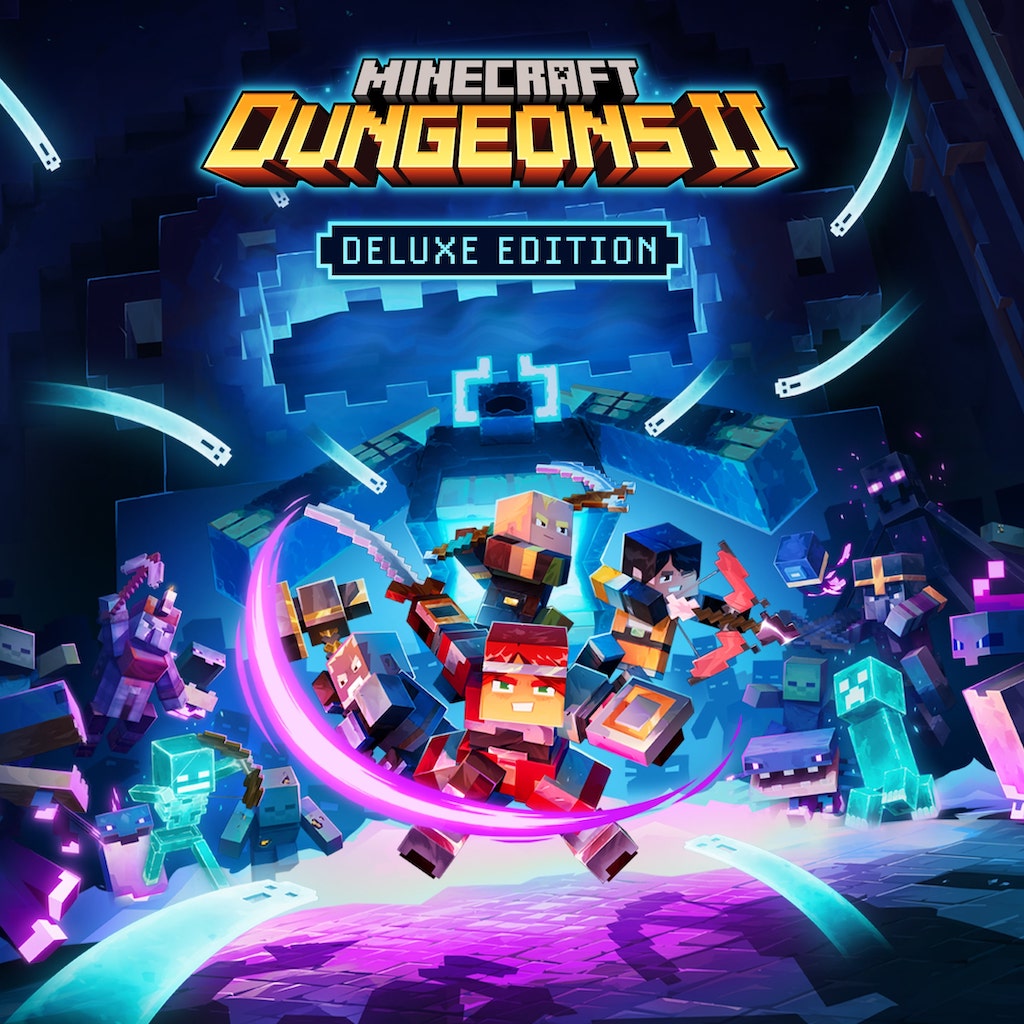
The Minecraft Dungeons II Deluxe Edition adds a little more incentive for players who already know they are going to spend plenty of time with the sequel. Alongside the main game, the package includes four hero skins, the Soul cape and the Blub pet, as well as DLC 1 and DLC 2.
The cosmetic extras are exactly that, cosmetic, but there is nothing wrong with having a few additional ways to make your hero feel like your own. The Blub pet is particularly well suited to Minecraft’s playful personality, while the hero skins and Soul cape give players some additional freedom to customise their appearance.
More significant is the inclusion of the first two DLC expansions. That gives the Deluxe Edition a longer term appeal, particularly for players who already know that the base game’s loot driven structure is going to become part of their regular gaming rotation.
There is a slight question mark here, though. With the game’s long term endgame depth and loot variety expected to benefit heavily from post launch expansions, some of the Deluxe Edition’s value is tied to content that has yet to arrive. That is not unusual for a modern game, but it does mean that the complete picture will only emerge as those promised expansions become available.
Familiar, But Bigger
Perhaps the biggest compliment I can give Minecraft Dungeons II is that it seems to understand what made the original work. It is not trying to reinvent the action RPG or turn Minecraft into something unrecognisable. Instead, it takes a proven formula and expands it with a new dimension, broader environments, more expressive combat, procedural dungeon layouts and a stronger emphasis on cooperative adventure.
There is always a danger with sequels like this that more becomes confused with better. More enemies, more loot and more environments do not automatically create a more compelling game. What matters is whether the systems work together to keep the player moving forward, and the combination of exploration, combat and equipment progression remains a particularly dependable foundation.
The procedural nature of the dungeons should also help keep repeated adventures from feeling completely identical. That matters enormously in a loot driven game because replayability is part of the appeal. If every return journey followed precisely the same path, the excitement of discovering what comes next would disappear rather quickly.
There is still a sense that the sequel’s ultimate staying power will depend on what comes after launch. The promise of DLC expansions gives the game room to grow, but the quality and depth of that future content will inevitably influence how long players remain invested.
Verdict
Minecraft Dungeons II Deluxe Edition feels like a sequel that knows exactly why people enjoyed the first game. It takes the satisfying combination of hack and slash combat, exploration and loot hunting and gives it a larger playground, a mysterious new dimension and more opportunities to customise the way you play.
The Sift is an appealing new setting, while the return to the Overworld gives the adventure a reassuring connection to the Minecraft universe. The class free approach to equipment and abilities should encourage experimentation, and the prospect of four player cross platform co op makes this particularly easy to recommend to groups of friends looking for something they can tackle together.
The Unreal Engine 5 upgrade gives the presentation more scope without abandoning Minecraft’s distinctive personality, while the procedural dungeon layouts offer some welcome replayability. The Deluxe Edition is also a sensible package for players who already know they want to stick around, although its inclusion of DLC 1 and 2 inevitably means part of its long term value depends on content that has not yet been released.
There are no scored mainstream reviews to draw upon at launch, so the game’s wider critical reception is still waiting to take shape. Based on what is on offer, however, Minecraft Dungeons II looks like a confident continuation of a formula that never needed to be reinvented in the first place. Sometimes you simply want to pick up a ridiculous weapon, walk into a dungeon with your friends and hit everything that moves. Minecraft Dungeons II understands that beautifully.