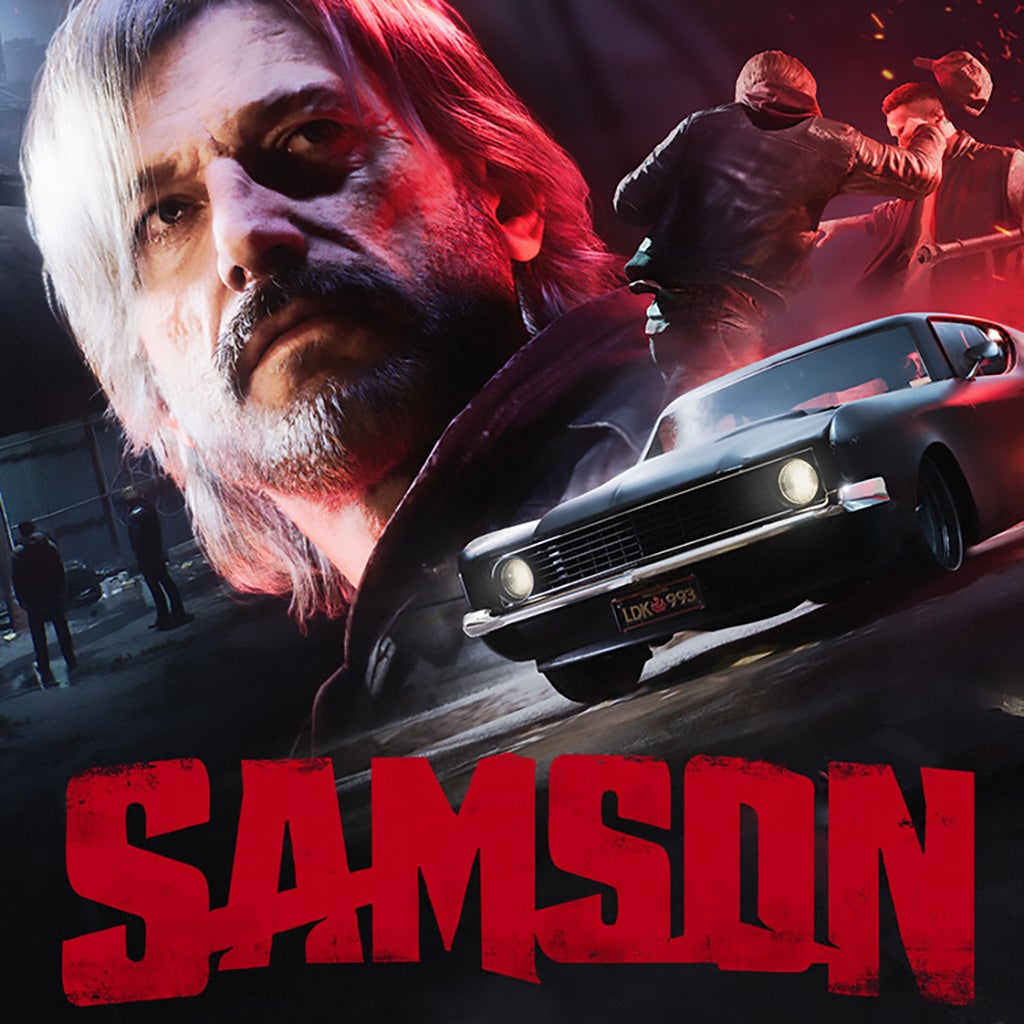
Some cities in games feel like places you would actually want to visit. Tyndalston is very much not one of them. It is grimy, cramped, battered, and seemingly designed to ensure that anyone trying to get through the day comes away with another bruise, another debt, or another reason to keep looking over their shoulder. For Samson, however, this miserable collection of streets is home, and returning to it means confronting everything he thought he had left behind.
Samson: A Tyndalston Story is a deliberately rough-around-the-edges action-adventure built around close-quarters combat, dangerous driving, and the constant pressure of owing money to people who do not seem like the patient type. There is a pleasing simplicity to the premise. Samson has a debt, his sister is being used as leverage, time is running out, and there is nobody coming to rescue him. You fight, drive, climb, steal, survive, and keep moving because stopping means the people chasing you catch up.
It is the kind of setup that immediately promises a gritty urban adventure rather than a sprawling open world packed with distractions. Tyndalston is not somewhere you visit to admire the scenery before moving on to the next objective. It is the scenery, the enemy, and the challenge all rolled into one, and there is something appealing about a game that understands its setting should feel like an active part of the experience.
A City With Character
The strongest part of Samson: A Tyndalston Story is arguably Tyndalston itself. Its streets, alleys, rooftops and industrial wastelands have a grimy authenticity that gives the game a distinctive identity. The battered architecture and grimy urban environments evoke a city chewed up by time and economic hardship, while the 1990s-inspired aesthetic gives everything a particularly grounded personality.
There is a lot of atmosphere here, and it does a good job of selling the idea that Samson knows these streets because they helped shape him. You can almost imagine him recognising a particular alley or backroom before trouble arrives, which reinforces the story’s personal nature. This is not some anonymous criminal playground where the protagonist happens to be passing through. Tyndalston is part of Samson’s history, and the game clearly wants that relationship between character and location to matter.
The problem is that a strong setting can only carry a game so far. Once the novelty of exploring Tyndalston wears off, the underlying gameplay needs to keep things interesting, and this is where Samson occasionally struggles to match the strength of its presentation.
When Every Fight Gets Personal
Combat is very much about getting up close and personal. Samson is not a character who stands comfortably on the other side of a battlefield, calmly picking enemies apart. He gets his hands dirty, and the emphasis on tight spaces and brutal fist fights fits the character perfectly on paper.
There is something satisfying about the basic idea. You enter an alley, spot trouble, close the distance and start throwing punches before the opposition has time to surround you. The game clearly wants combat to feel physical and desperate rather than elegant, with every encounter becoming a scrappy fight for survival. When everything clicks, that roughness can work in its favour because Samson feels like a man who has learned to fight because he had no other choice.
Unfortunately, the execution can be frustrating. The combat lacks the responsiveness and consistency needed to make repeated brawls genuinely satisfying, and some encounters can feel more awkward than brutal. Rather than leaving you with the exhilaration of having survived a nasty scrap, there are moments when you are simply relieved that the fight is over. That is a shame, because the central concept has plenty of potential.
No Room For Hesitation
One of the more interesting ideas is how the game builds pressure around Samson’s debt. Money is not simply a reward you collect because the game needs a reason to give you something for completing a mission. It is tied directly to your survival and progression, creating an underlying sense that every wasted day matters.
That pressure gives the otherwise straightforward action a little more purpose. You are not just beating people up because there happens to be an objective marker pointing you towards them. You are doing whatever is necessary because the debt continues to grow and the people demanding payment are becoming increasingly impatient. It is a simple mechanic, but it gives the adventure a strong sense of urgency.
There is something particularly effective about watching the clock while knowing that every job could either make your situation slightly better or plunge you even deeper into trouble. It gives the game a harsher personality than many action adventures, where failure often feels like a minor inconvenience. Here, the financial pressure is meant to make every decision feel uncomfortable, and when it works, it does.
Behind The Wheel
Vehicles play a surprisingly important role in Samson’s story. Cars are not simply there to get you from one mission marker to another, and the game treats them as weapons as much as as transport. Ram another vehicle, smash through obstacles, drift around corners, or simply try to outrun whoever is trying to put Samson into the ground.
Again, the concept is excellent. There is something inherently entertaining about tearing through industrial wastelands in battered vehicles that look as though they have survived several owners, a small war, and possibly a particularly aggressive scrapyard. The vehicles fit the world perfectly, and using them as blunt instruments gives the driving sections a suitably desperate flavour.
Sadly, the driving does not always live up to the idea. The handling can feel inconsistent, and moments that should produce adrenaline can instead become awkward battles against the physics. It is difficult for a driving sequence to feel exciting when you are spending more time trying to understand what the vehicle is doing than worrying about whoever is chasing you.
A Story About Family And Debt
Beneath all the fists, cars and dirty streets lies a surprisingly straightforward personal story. Samson has returned to Tyndalston because he has run out of alternatives, and his sister has become the pressure point his enemies can exploit. That gives the adventure something more meaningful than simply escaping a dangerous neighbourhood.
The relationship between debt and family is an effective foundation, giving Samson a reason to keep going when walking away might seem sensible. Every job is another attempt to buy a little breathing room, while every setback makes the situation more desperate. The story may not always have the depth required to make these themes hit as hard as they should, but there is enough here to give Samson’s journey an emotional backbone.
Where the game sometimes falls short is in turning that promising setup into a consistently engaging narrative. The ideas are there, but some of the storytelling can feel underdeveloped, leaving the player with the impression that a better, more substantial story is hiding beneath the one being presented.
The Trouble With Repetition
The biggest problem Samson faces is repetition. The game establishes its formula quickly, and while that initially works in its favour, it does not always expand on those ideas enough. Fight, drive, collect money, deal with another problem and keep moving can become a familiar rhythm surprisingly quickly.
For a game that prides itself on being focused, this is not necessarily a fatal problem. There is nothing wrong with keeping an experience tight rather than filling it with pointless activities simply to make the map look bigger. The issue is that the individual activities need enough variety and polish to carry that focused structure, and Samson does not always manage that.
Technical problems also make some of the repetition harder to tolerate. Bugs, awkward encounters and occasional rough edges can interrupt the flow and remind you that the game needed a little more refinement before Samson was sent back into the streets.
A Rough Diamond
There is a good game hiding inside Samson: A Tyndalston Story. The atmosphere is strong, the setting has personality, and the debt mechanic provides a genuinely interesting source of pressure. I also like that the game does not seem interested in turning Samson into an unstoppable superhero. He is a man fighting his way through a city that knows him, understands his weaknesses, and is more than happy to exploit them.
The problem is that too many of the game’s individual systems feel as though they need another pass. Combat should feel heavier and more responsive, driving should be more predictable, missions could use greater variety, and the technical side needs tightening. When those weaknesses pile up, they begin to undermine the very tension the game is trying to create.
That makes Samson a difficult game to dismiss completely, because there is clearly ambition behind it. It has an identity, which is something plenty of bigger games struggle to achieve. Tyndalston feels different, Samson has a reason to be there, and the debt hanging over his head gives the whole adventure a suitably uncomfortable sense of urgency.
Final Verdict
Samson: A Tyndalston Story is at its best when it embraces its grimy, personal and slightly unpleasant world. Tyndalston has character; the 1990s-inspired aesthetic works wonderfully, and the idea of combining brutal street fights with vehicle combat and a constantly growing debt gives the game a distinct identity. There is a real sense that Samson is fighting not only the people coming after him but also the city that made him who he is.
Unfortunately, the experience is held back by combat that can feel clumsy, driving that struggles to find its rhythm, repetitive missions and technical issues that can take the shine off an otherwise interesting concept. The story also feels as though it could have gone deeper, particularly in its portrayal of Samson’s relationship with his sister and the personal consequences of the debt hanging over him.
Even so, there is something oddly appealing about its battered, uncompromising approach. Samson does not feel like a polished power fantasy, and perhaps that is part of its charm. It is rough, occasionally frustrating and undeniably imperfect, but beneath those problems is a focused action adventure with a strong sense of place and a protagonist who has nowhere left to run.