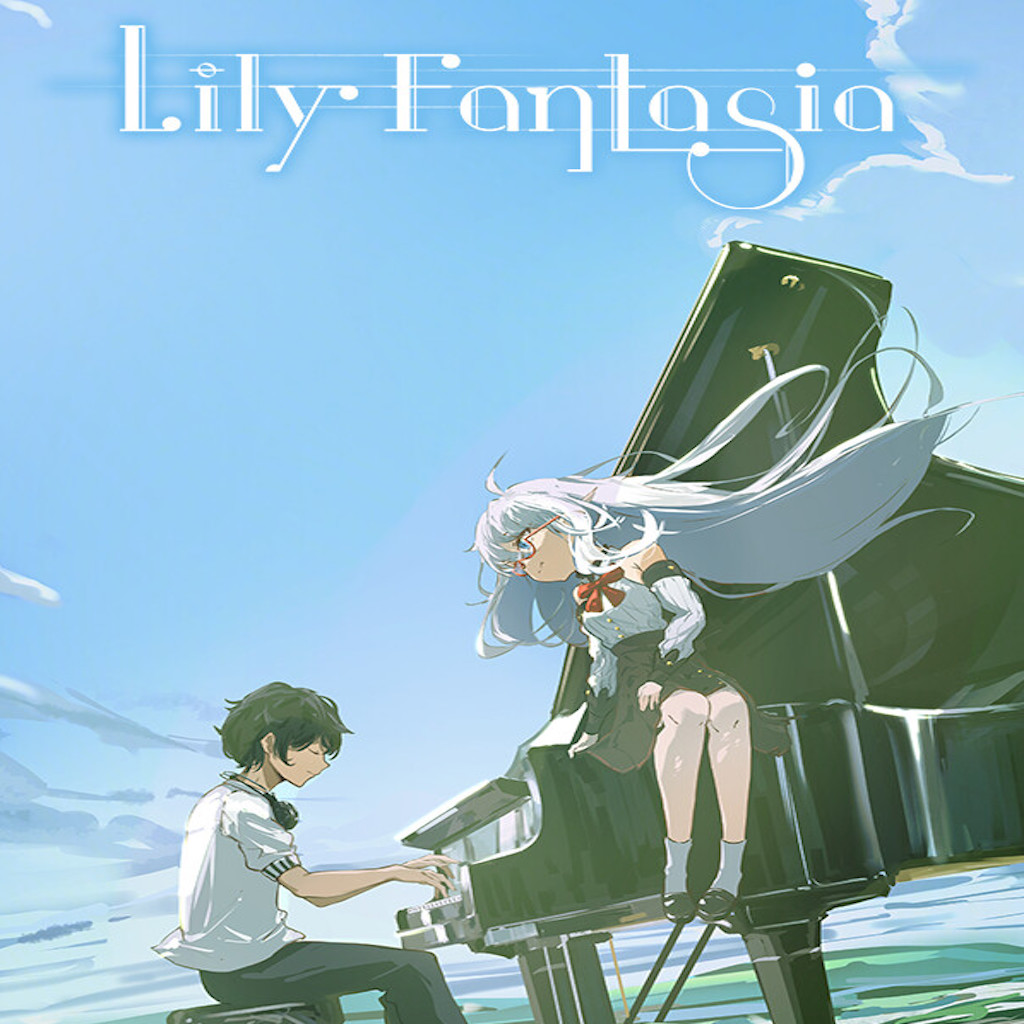
There is something instantly appealing about a game that dares to blend two very different worlds. Rhythm games thrive on precision, timing and repetition, while visual novels rely on emotion, character development and carefully paced storytelling. Lily Fantasia attempts to bring these ideas together by creating a fantasy adventure in which every piano note is not only part of the soundtrack but also a weapon, a defence mechanism and a reflection of the journey unfolding before the player. It is a charmingly ambitious concept that yields genuinely memorable moments, even when its ideas do not always blend perfectly.
Developed by Wiseye Studio Co., Ltd. and published by Justdan International Co., Ltd., Lily Fantasia tells the story of Hiano Kenji, a gifted pianist who has stepped away from his dreams to care for his seriously ill mother. Once celebrated as a promising musician, Kenji finds himself trapped between responsibility and regret, watching the life he once imagined slip away. His world changes when he encounters Lily, a mysterious vampire girl who offers him a chance to save his mother. What begins as a desperate search for a cure becomes a journey filled with magic, danger and the discovery that music may hold the key to changing destiny itself.
The narrative immediately establishes a strong emotional foundation. Kenji is not simply a hero chasing a legendary artefact; he is someone fighting the feeling that his own life has been put on hold. His relationship with Lily becomes the heart of the experience, with their contrasting personalities creating a dynamic that carries the story through its quieter moments. While some of the visual novel sections could have benefited from deeper character exploration, there is a genuine warmth running through the adventure that makes the journey worth following.
When Music Becomes a Weapon
The defining feature of Lily Fantasia is its unusual gameplay structure. Rather than simply asking players to hit notes in time with a song, the game transforms rhythm into a full combat system. Battles require players to read incoming attacks, parry at the right moment, and respond with perfectly timed piano inputs. The result is a fascinating blend of rhythm action and combat that gives every encounter a sense of performance.
The piano mechanics form the foundation of every battle. Players must follow moving keys across the screen, matching inputs to the rhythm of the soundtrack while also watching for enemy attacks. The challenge lies in balancing offence and defence, as focusing too heavily on one aspect can quickly lead to mistakes. A missed note is not just a dropped combo; it can mean failing to block an attack or losing momentum during a crucial battle sequence.
When everything clicks, Lily Fantasia creates a fantastic sense of flow. There is a satisfying rhythm to watching an enemy prepare an attack, successfully parrying the strike, and immediately responding with a musical counterattack. The best moments feel less like traditional combat and more like taking part in a dramatic concert where every movement has purpose. The game understands that rhythm is not just something players listen to, but something they physically experience.
However, the combat system does have a learning curve. Some players may find the combination of shifting piano layouts and real-time attacks overwhelming at first, especially as the difficulty increases. The game expects players to develop both musical timing and reaction skills simultaneously, which can create moments of frustration. Thankfully, multiple difficulty options make the experience more approachable, allowing newcomers to enjoy the story while offering experienced rhythm fans a serious challenge.
A Gothic Fantasy Filled With Heart
Beyond its gameplay, Lily Fantasia succeeds because of its atmosphere. The gothic fantasy setting provides a beautiful contrast to the music’s bright, expressive nature. The presence of vampires, demons and magical artefacts could have pushed the game towards a darker tone, but instead it embraces a more emotional and theatrical style. It feels like a fantasy story being performed on stage, with every battle acting as another dramatic musical number.
Lily herself is one of the game’s strongest elements. Her mysterious nature and supernatural background spark curiosity, but it is her connection with Kenji that gives the story its emotional weight. Their partnership is built on trust, necessity and a shared desire to overcome circumstances beyond their control. Watching their relationship develop is one of the main reasons players will want to continue through the adventure.
The visual novel sections also help give context to the battles. Without these moments, the rhythm gameplay could risk feeling like a collection of disconnected challenges. Instead, each confrontation has meaning because players understand what Kenji is fighting for. The search for the Golden Apple becomes more than a simple fantasy quest; it becomes a desperate attempt to protect the person who sacrificed so much for him.
A Soundtrack That Carries the Adventure
A rhythm game lives or dies by its soundtrack, and Lily Fantasia understands the importance of its music. The original tracks are among the game’s biggest strengths, offering a variety of compositions that mirror the story’s shifting moods. From emotional piano pieces to energetic battle themes, the soundtrack gives each moment its own identity.
The involvement of international rhythm game composers adds another layer of quality. The music is not merely background noise; it is the driving force behind the entire experience. Each song feels carefully crafted around the mechanics, ensuring the player’s actions feel connected to the performance rather than separate from it.
The inclusion of Lily’s Practice Room is also a welcome addition. It allows players to revisit tracks outside story mode and improve their skills without the pressure of progressing through the adventure. For those who enjoy chasing higher scores, the leaderboard features provide an extra reason to return, adding a competitive element that extends the game’s longevity.
Final Thoughts
Lily Fantasia is an imaginative rhythm adventure that succeeds by committing fully to its central idea. The concept of turning music into combat could easily have become a simple gimmick, but the game builds an entire experience around the relationship between sound, emotion and action. Its story may not reach the dramatic heights of the best visual novels, and some mechanics take time to master, yet there is undeniable charm in how everything comes together.
This is a game about finding hope through music, rediscovering passion, and the bonds formed when people are pushed to their limits. Kenji’s journey is not only about saving his mother but also about rediscovering himself after years of putting his own dreams aside. Lily Fantasia may not be flawless, but it delivers something rare: a genuinely heartfelt experience that feels like a musical performance rather than just another game.
For players who enjoy rhythm titles with a stronger narrative focus, or visual novels willing to experiment with interactive ideas, Lily Fantasia is an adventure worth hearing. It strikes a memorable chord and proves that sometimes the right melody can change everything.