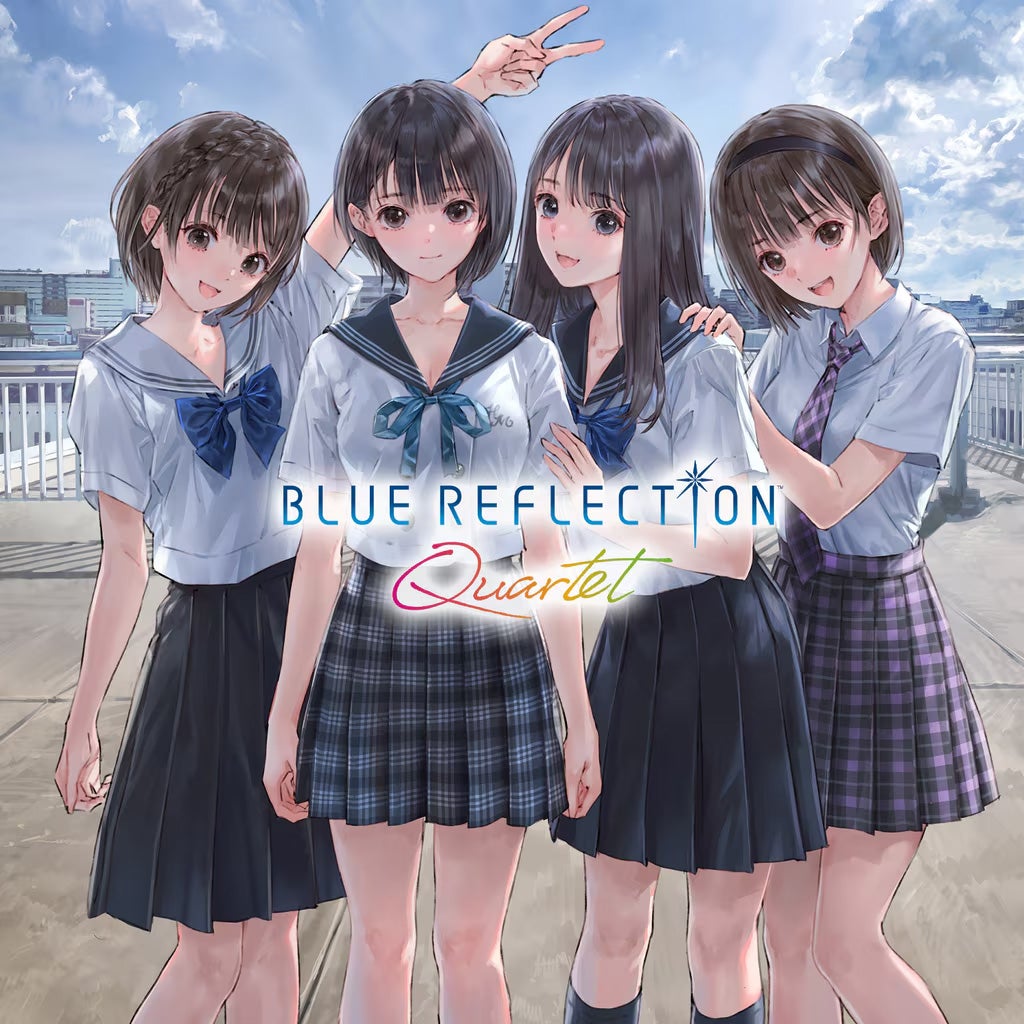
Some collections exist simply to preserve old games. Others aim to celebrate a series by polishing rough edges and making everything easier to access. BLUE REFLECTION Quartet manages to do both while also feeling like a love letter to one of the most emotionally driven JRPG franchises of the past decade. Rather than offering a straightforward bundle, Gust and Koei Tecmo have carefully assembled the entire Blue Reflection universe into a single package, bringing together the original game, Second Light, a reimagined version of the SUN mobile story, and a playable retelling of the RAY anime.
For newcomers, this is easily the best way to discover the series. For long-time fans, it offers meaningful quality-of-life improvements, additional story content, and a wealth of lore that ties together years of interconnected storytelling. More importantly, it reminds us why Blue Reflection has always stood apart from many of its JRPG contemporaries. While monsters are fought and worlds are saved, the real battles have always been emotional. This is a collection about friendship, self-doubt, grief, hope and healing. It wears its heart on its sleeve, and it is all the better for it.
Four Stories, One Emotional Journey
Trying to explain Blue Reflection purely through its fantasy elements misses the point. Yes, magical girls transform into powerful Reflectors, mysterious dimensions hide dangerous creatures, and supernatural threats constantly loom over humanity. Those ideas provide the framework, but the characters’ emotional struggles remain the true focus.
The original BLUE REFLECTION follows Hinako Shirai, a former ballet prodigy whose career was shattered by injury. It explores loss, identity, and the difficulty of rebuilding a future after dreams fall apart. Even years after its original release, the story remains surprisingly touching, thanks to restrained writing and believable character interactions.
BLUE REFLECTION: RAY condenses the television anime into a playable experience while introducing new scenes that better connect it to the wider series. Although the abbreviated format cannot capture every nuance of the full anime, it succeeds in making its central conflicts understandable to players who have not watched the show.
Perhaps the biggest surprise is BLUE REFLECTION: SUN. Originally released as a mobile title, its complete reworking into a console RPG using Second Light’s systems feels far more substantial than many expected. Instead of feeling like bonus content, it comfortably sits alongside the other entries, strengthened by additional events and improved pacing.
Then there is BLUE REFLECTION: Second Light, still widely regarded as the series’ high point. Its tale of forgotten memories, isolated students and gradually rebuilt friendships remains as captivating today. The addition of new playable characters from RAY and SUN makes an already excellent game even richer. Together, these four stories form something greater than the sum of their parts.
Character Bonds Above Everything Else
Many RPGs treat character relationships as optional side content. Blue Reflection builds its entire identity around them. Daily conversations, quiet moments between classmates and simple acts of kindness often carry more emotional weight than major boss encounters. The game understands that genuine friendships are built through ordinary interactions rather than constant dramatic revelations.
The writing consistently avoids exaggerated melodrama despite dealing with serious themes, including anxiety, loneliness, trauma and self-worth. Characters are allowed to make mistakes, misunderstand one another and grow slowly over time. That gradual development makes their victories feel earned rather than inevitable. Even when certain story beats lean into familiar anime tropes, the sincerity of the writing prevents them from feeling hollow. There is an honesty to these characters that makes spending dozens of hours alongside them genuinely rewarding.
Combat Evolves Throughout the Collection
One of Quartet’s greatest strengths is letting players experience how the gameplay has evolved across the franchise. The original Blue Reflection offers traditional turn-based battles that prioritise careful planning over speed. Combat remains enjoyable, though it occasionally feels slower than in more modern JRPGs.
Second Light dramatically refines nearly every mechanic. Battles become faster, more fluid and considerably more dynamic, blending timeline management, combo building and real-time decision-making into one of Gust’s strongest combat systems. Attacks chain together beautifully, while managing Ether and support abilities creates satisfying tactical depth.
The rebuilt version of SUN wisely adopts many of these improvements, making it far more enjoyable than a direct mobile conversion would have been. Combat feels responsive without sacrificing strategic decision-making.
Quality-of-life improvements across the collection also deserve praise. Increased movement speeds, battle acceleration, autosaves and event fast-forwarding remove many frustrations that once slowed progression. They do not fundamentally change the games, but they make returning to earlier entries far more comfortable.
A Beautiful World Painted in Pastels
Mel Kishida’s unmistakable character designs remain among the franchise’s greatest strengths. The pastel colour palette lends every environment a dreamlike softness that perfectly complements the emotional storytelling. Even when exploring surreal dimensions filled with dangerous creatures, an underlying elegance separates Blue Reflection from darker fantasy RPGs.
Updated high-resolution textures improve the original game considerably without sacrificing its artistic identity. Reflections shimmer more naturally, water effects add subtle atmosphere, and character models benefit from sharper presentation throughout the collection.
The soundtrack deserves equal recognition. Gentle piano melodies, emotional orchestral arrangements, and uplifting vocal themes create an atmosphere that consistently reinforces the series’ introspective tone. Few JRPG soundtracks capture vulnerability quite as effectively. Rather than overwhelming players with bombastic music at every opportunity, Blue Reflection often embraces quiet moments in which silence speaks as loudly as dialogue.
The Reference Database Is More Valuable Than It Sounds
One of Quartet’s smartest additions is its comprehensive Reference archive. At first glance, a collection of timelines, relationship charts and artwork galleries might seem aimed solely at dedicated fans. In fact, it becomes one of the anthology’s most useful features.
Because Blue Reflection originally unfolded across games, anime and mobile releases, newcomers often struggled to understand how everything connected. The Reference system finally solves that problem by presenting the series’ chronology in a clear, accessible format.
Returning players will also appreciate the ability to browse official artwork and deeper lore explanations that were previously scattered across multiple releases. It transforms Quartet from a simple collection into a genuine preservation project.
Hundreds of Hours Without Feeling Repetitive
There is an enormous amount of content here. Completing every major story comfortably takes more than one hundred hours, with optional character events, side activities and replay opportunities extending that figure even further. A package of this size can feel exhausting.
Fortunately, each entry maintains its own identity. The original game feels intimate and reflective, RAY offers a different perspective on familiar themes, SUN expands the universe in meaningful ways, and Second Light brings everything together in an emotionally satisfying conclusion.
The improved pacing from the quality-of-life updates also helps sustain momentum across such a lengthy experience. Players should still expect a significant time commitment. These are deliberately paced RPGs that value conversations and character development as much as combat. Those seeking constant action may struggle with the quieter stretches, but anyone willing to immerse themselves in the characters will find the slower pace immensely rewarding.
Final Verdict
BLUE REFLECTION Quartet is far more than a convenient compilation. It is the definitive version of an emotionally rich JRPG series that has quietly built one of gaming’s most heartfelt worlds over the past several years. By bringing together every major chapter, modernising older entries and adding thoughtful connective tissue, Gust has created a package that feels both comprehensive and welcoming.
Not every entry reaches the remarkable heights of Second Light, and the earlier games naturally show their age in places. Yet the collection succeeds because every story contributes meaningfully to the larger picture. Themes of friendship, healing and emotional resilience echo across every chapter, creating remarkable consistency despite spanning multiple games and media.
For existing fans, this is the ultimate celebration of the franchise. For newcomers, it is the perfect opportunity to discover one of the most sincere and emotionally rewarding JRPG series available today. Blue Reflection has always understood that strength is measured not by magical power but by the courage to face your own emotions. Quartet preserves that message beautifully.