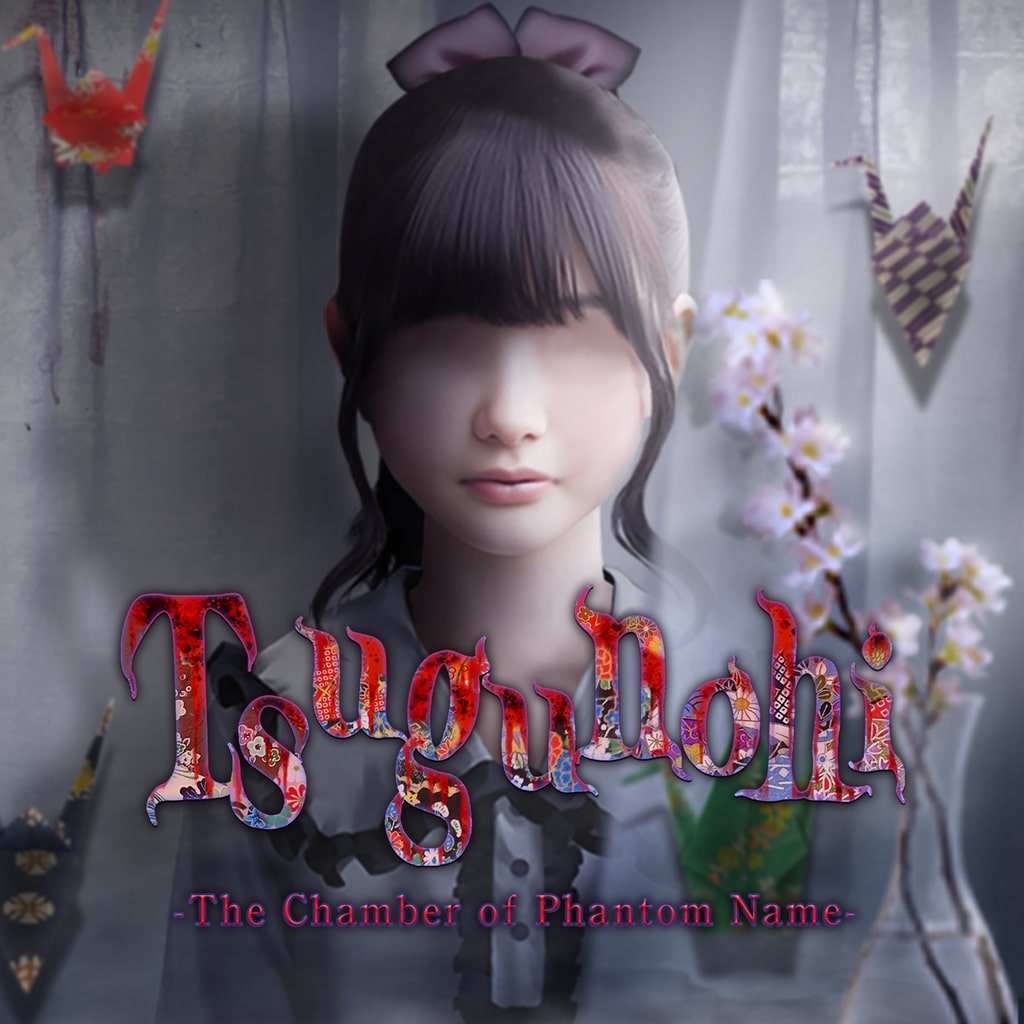
Horror games do not always need complex systems, combat mechanics, or sprawling environments to be effective. Sometimes the most unsettling experiences come from stripping interaction down to its bare minimum and letting atmosphere do the work. Tsugunohi – The Chamber of Phantom Name-, developed by ImCyan in collaboration with Vaka Game Magazine, is a textbook example of this philosophy.
Originally released on PC in April 2025 and later arriving on PlayStation 4 and Nintendo Switch on April 15, 2026, this entry continues the long-running Tsugunohi tradition of “daily-life horror” centred on one of the simplest control schemes in gaming: pressing left.
There is no combat, no inventory management, and no branching skill system. There is only movement, observation, and inevitability.
And that is precisely where its horror lies.
Core Concept & Gameplay Design
At its most basic, Tsugunohi is almost disarmingly simple. The entire game revolves around a single input: moving the protagonist left. That is it. No jumping, no attacking, no dialogue choices that alter mechanics. Just forward progression through increasingly distorted environments.
This design is not a limitation in the traditional sense but a deliberate constraint. By removing agency, the game forces players into a passive observational role, where horror is not confronted but endured.
In The Chamber of Phantom Name, this simplicity is retained but refined. The pacing is tighter, transitions more deliberate, and visual storytelling more layered than in earlier entries in the series. The result is a more polished, if still structurally minimal, horror experience.
Narrative & Setting
The story follows Kana Sakuragi, a young office worker who moves into Akembara House, a renovated old residence that initially seems ordinary. As in Tsugunohi, normality does not last.
Each night, subtle irregularities surface. At first, they are easy to dismiss: strange sounds, minor visual distortions, and unsettling yet ambiguous details. Over time, these anomalies escalate into full-blown surreal horror as reality and illusion blur.
Suspicious managers, mysterious phantom entities, and eerie origami motifs recur throughout the experience, though the narrative never fully explains their origins. Instead, the game leans heavily on implication and fragmented interpretation.
This ambiguity is central to the experience. Rather than providing answers, the game constructs an atmosphere of uncertainty in which meaning is constantly just out of reach.
Horror Design & Atmosphere
The defining strength of The Chamber of Phantom Name lies in its restraint. Horror is not delivered through spectacle or jump scares alone, but through the gradual distortion of the familiar.
Environments begin as ordinary domestic spaces and slowly transform into unsettling, almost dreamlike variations of themselves. The transition is subtle at first, making it difficult to pinpoint exactly when reality begins to break down.
This slow erosion of normality is where the game excels. With player interaction so limited, attention is forced onto environmental details. A small change in lighting, a slightly altered object placement, or a sudden shift in background behaviour becomes significant.
Sound design reinforces this unease. Ambient noise is minimal but carefully placed, and silence is often used as effectively as sound. When audio distortion does occur, it feels deliberately intrusive and unsettling.
Visual Presentation
Visually, the game employs a simple 2D aesthetic that is highly effective in its context. The environments are grounded in everyday realism, making their gradual corruption more impactful.
Character sprites and backgrounds are deliberately restrained, allowing small visual changes to carry significant weight. The horror does not come from complexity but from the alteration of the familiar.
As the game progresses, visual distortions become more pronounced, creating a sense of instability that mirrors Kana’s psychological state.
Gameplay Pacing & Structure
Each segment of The Chamber of Phantom Name is built around linear progression. The player moves left through a sequence of scenes, each escalating in tension and surrealism.
There is no exploration in the traditional sense, and no deviation from the intended path. This strict linearity is both the game’s defining feature and its primary limitation.
On the one hand, it ensures complete narrative control. Every moment is carefully curated, with no risk of missing content or breaking immersion through mechanical distractions.
On the other hand, it removes any sense of agency beyond observation. Players are participants only in the sense that they are present for the experience, not active in shaping it.
Psychological Impact
The effectiveness of Tsugunohi as a horror experience stems from psychological conditioning rather than mechanical interaction. By repeatedly exposing players to familiar environments that gradually distort, the game creates a sense of inevitability.
There is a growing expectation that something will go wrong, even in moments of apparent normality. This anticipation itself becomes a source of tension.
The lack of control amplifies this effect. Because players cannot stop, fight, or alter outcomes, they are forced into a passive relationship with the unfolding horror. This can be deeply unsettling, particularly during sequences when reality shifts without warning.
Accessibility & Audience
Despite its horror themes, The Chamber of Phantom Name is mechanically accessible to virtually all players. There are no complex inputs, systems, or progression barriers. The experience is entirely about observation and endurance.
However, this also means that engagement depends heavily on an appreciation of atmosphere and subtle storytelling. Players expecting a traditional gameplay structure may find the experience too limited.
Limitations
The most significant limitation of Tsugunohi as a series, and of this entry in particular, is its mechanical simplicity. While the “move left” design is conceptually strong, it inherently restricts variety.
Replayability is also limited once the experience is completed. While the atmosphere remains effective on a first playthrough, subsequent runs offer little new mechanical or narrative discovery.
Additionally, the lack of explicit narrative resolution may frustrate players who prefer more structured storytelling.
Final Verdict
Tsugunohi – The Chamber of Phantom Name- is a refined example of minimalist horror design. It employs an extremely limited interaction model to create a consistently unsettling psychological experience rooted in atmosphere, ambiguity, and gradual distortion.
It does not attempt to innovate beyond its established formula, but it refines it with care and precision. For players who appreciate slow-burn horror and environmental storytelling, it remains highly effective.
For those seeking gameplay depth or narrative clarity, it will feel intentionally restrictive.