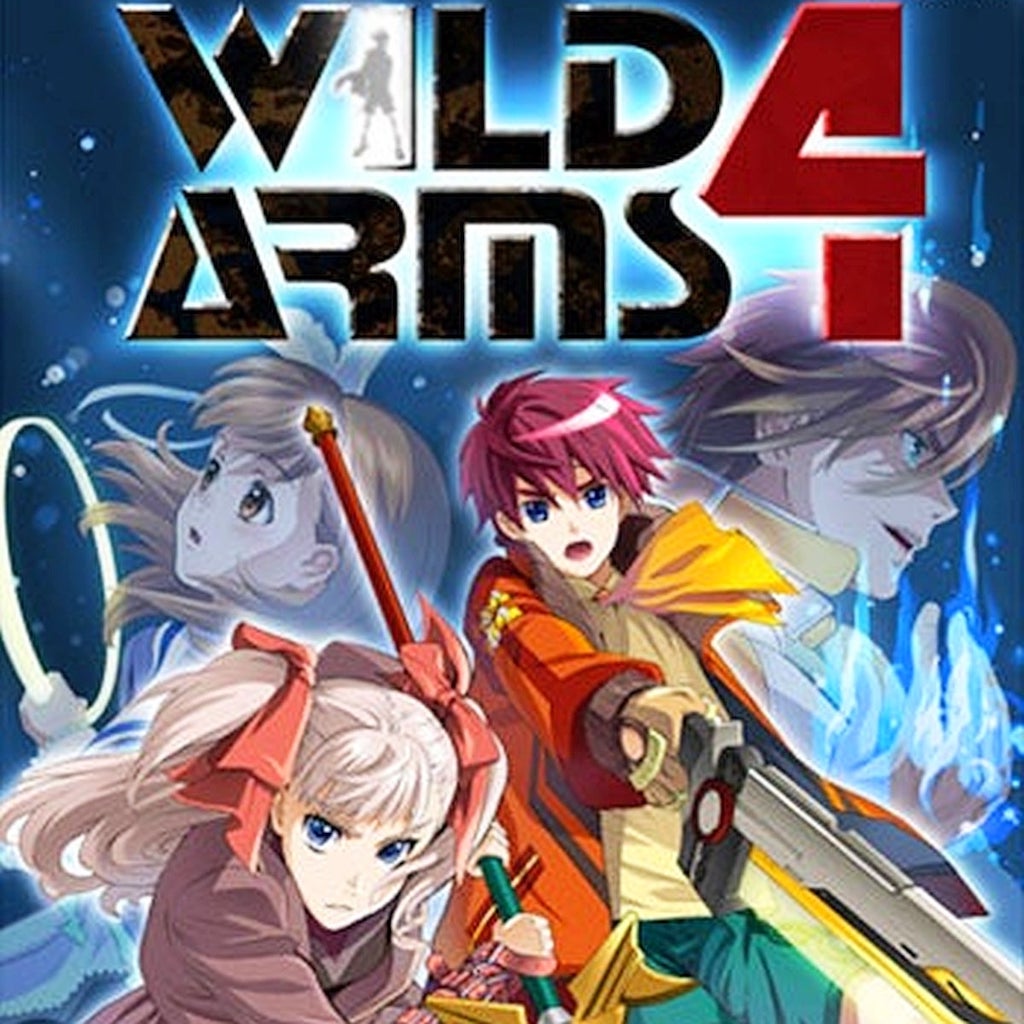
There is always a certain tension when classic games return through modern re-releases. On the one hand, there is preservation—an opportunity to revisit or discover something important. On the other, there is expectation—how well does it hold up today? Wild Arms 4, originally released on the PlayStation 2, arrives on the PlayStation 4 and PlayStation 5 via the PlayStation Plus Premium Classics catalogue on April 21, 2026.
This version brings modern conveniences such as upscaling, rewind, quick save, and custom video filters. However, beneath those additions lies a game firmly rooted in its era. Wild Arms 4 was always something of a departure for the series, shifting tone, structure, and mechanics in ways that divided fans at the time.
Revisiting it now, nearly two decades later, offers a clearer perspective. This is not just a classic JRPG preserved—it is a fascinating snapshot of a franchise trying to redefine itself.
Story & Setting
Set in the world of Filgaia, Wild Arms 4 unfolds ten years after a devastating war. Peace has technically been achieved, but the world remains scarred, both physically and emotionally. This lingering tension forms the backdrop for a story that is more introspective than many of its contemporaries.
The narrative follows a group of characters brought together by circumstance, each carrying their own burdens and perspectives. Themes of recovery, identity, and the cost of progress run throughout the story, giving it a more grounded tone than earlier entries in the series.
What stands out most is the game’s willingness to slow down. Rather than rushing from one major plot point to another, it allows space for reflection. Conversations often focus on personal struggles rather than grand heroics, which can feel refreshing, though the pacing is occasionally uneven.
Characters & Writing
The cast is central to the experience. Each character is given time to develop, with arcs that explore their motivations and internal conflicts.
While the writing does not always reach the emotional heights it aims for, its approach is sincere. Relationships evolve gradually, and moments of quiet interaction often carry more weight than major plot developments.
That said, the dialogue can feel dated. Certain lines and character interactions reflect early 2000s JRPG sensibilities, which may not resonate as strongly with modern audiences.
Gameplay & Combat
Mechanically, Wild Arms 4 introduces one of the more divisive changes in the series: the HEX battle system. Rather than traditional turn-based combat, battles take place on a grid where positioning is key.
Characters and enemies occupy spaces on this grid, and attacks can affect multiple hexes. This adds a layer of strategy, requiring players to consider movement, spacing, and timing alongside standard RPG mechanics.
When fully understood, the system offers depth. Positioning attacks for maximum effect or avoiding enemy zones can turn the tide of battle. However, the learning curve is steeper than expected, and early encounters do not always convey the system’s potential effectively.
Outside of combat, the game leans into puzzle-solving and environmental interaction. Dungeons often include platforming elements and traversal mechanics that break up the flow of traditional RPG exploration.
These sections add variety, though they can occasionally disrupt pacing, particularly when puzzles become repetitive.
Re-release Enhancements
The 2026 version introduces several modern features to improve accessibility. Rewind functionality allows players to correct mistakes instantly, while quick save ensures progress is never lost during longer sessions.
Up-rendering improves visual clarity, making the game more presentable on modern displays. Custom video filters offer options for players who prefer a more authentic retro look.
These additions are welcome, particularly for newcomers. However, they do not fundamentally alter the core experience. Wild Arms 4 remains very much a PlayStation 2-era game in structure and design.
It is also worth noting that minor technical inconsistencies can occur, as is common with emulated titles. These are not frequent, but they are present.
Visual & Audio Presentation
Visually, the game occupies an interesting space. Character models and environments reflect the PlayStation 2’s limitations, yet the art direction remains distinctive.
The series’ signature blend of western and sci-fi influences persists, though it is less pronounced than in earlier entries. Environments range from desolate wastelands to more industrial settings, reinforcing the theme of a world in recovery.
The up-rendering improves clarity, but it also highlights the age of certain assets. This is a re-release that improves clarity, not one that remakes or remasters visuals.
Audio design is more enduring. The soundtrack captures the mood of the world effectively, blending melancholic themes with moments of tension and optimism. Sound effects are functional, if unremarkable.
Pacing & Structure
One of the more noticeable aspects of Wild Arms 4 is its pacing. The game alternates between narrative-heavy sections, exploration, and combat, though not always seamlessly.
Some story segments linger longer than necessary, while certain gameplay sections feel abrupt. This uneven pacing can make the overall experience feel disjointed at times.
However, for players willing to engage with its rhythm, the game unfolds with deliberate pacing. It is not rushed, even when it occasionally feels slow.
Strengths
The game’s strongest element is its willingness to experiment. The HEX battle system, though imperfect, adds a distinctive layer of strategy to combat.
The narrative, though uneven, explores themes that lend it a more mature tone than many RPGs of its era.
The re-release’s features make the game more accessible than ever, allowing players to engage with it on their own terms.
Weaknesses
The age of the game is impossible to ignore. Visual limitations, dated dialogue, and pacing issues all reflect its era of release.
The combat system, while innovative, can feel unintuitive, particularly in the early stages.
The re-release, while functional, does not significantly modernise the experience beyond quality-of-life improvements.
Final Verdict
Wild Arms 4 in 2026 is both a time capsule and a curiosity. It captures a series in transition, experimenting with new ideas while holding on to its core identity.
For longtime fans and players interested in JRPG history, it offers a worthwhile experience. For newcomers, it may feel like a relic—interesting, but occasionally difficult to fully embrace.
The PlayStation Plus Premium re-release does its job well, making the game accessible and playable on modern hardware. But it does not attempt to redefine or modernise it in any significant way.
Ultimately, Wild Arms 4 remains what it always was: a flawed but intriguing chapter in a beloved series.