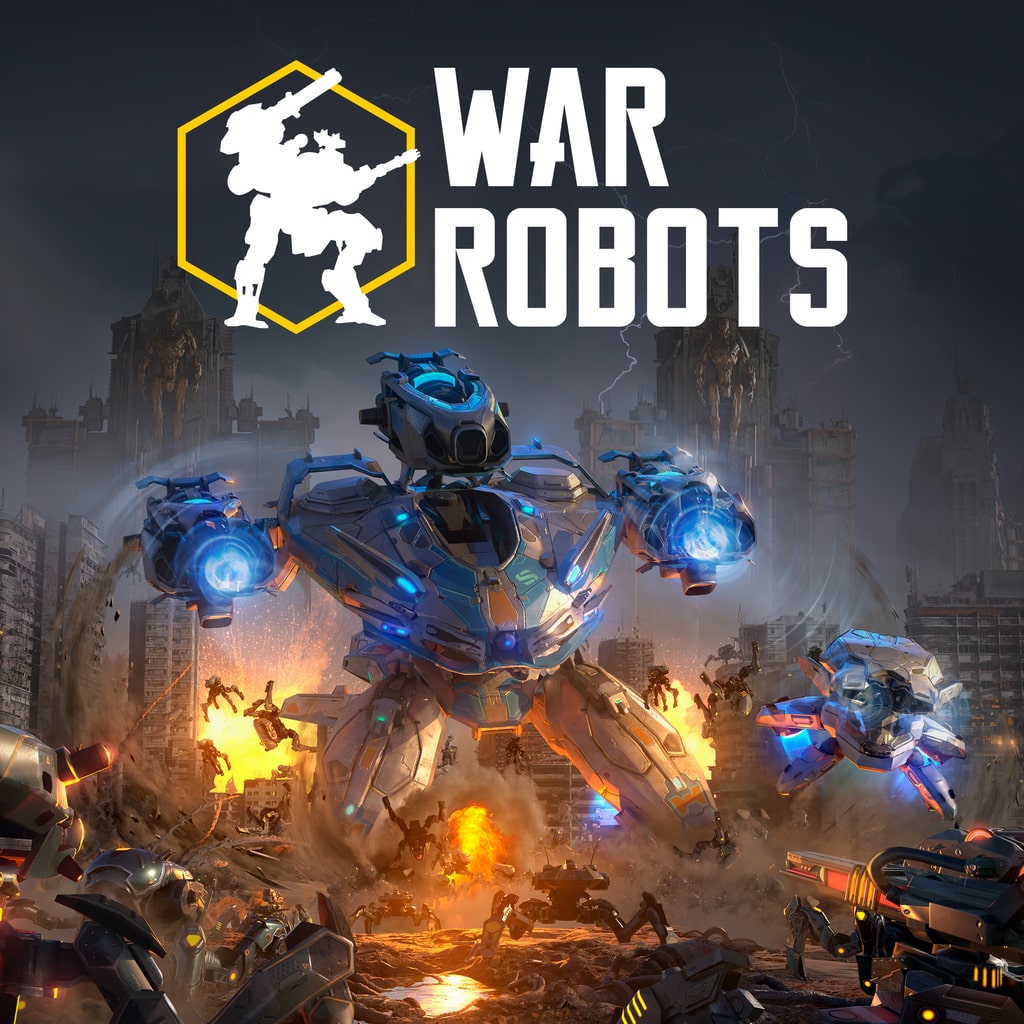
There is something timeless about giant robots. Whether in classic anime, blockbuster films, or video games, the fantasy of piloting a towering war machine continues to captivate imaginations. War Robots understands that appeal better than most. From the moment your mech stomps onto the battlefield, the game sells the fantasy of commanding a powerful mechanical titan in a war where every shot carries weight.
Unlike many modern shooters that prioritise speed and lightning-fast reflexes, War Robots adopts a slower, more deliberate approach. These machines are not agile superheroes darting across the landscape. They are walking tanks. Every movement feels purposeful, every engagement feels dangerous, and every mistake can have serious consequences.
That sense of scale and weight immediately sets War Robots apart from many of its competitors. Even after dozens of matches, there is still something satisfying about watching a heavily armed mech emerge from cover and unleash devastating firepower across the battlefield.
Tactical Combat Over Twitch Reactions
The biggest surprise for newcomers may be how strategic the combat is. On paper, giant robots blasting each other apart sounds like pure arcade action. In practice, War Robots rewards patience and positioning far more than reckless aggression. Understanding sightlines, managing weapon cooldowns, and coordinating with teammates often prove more valuable than raw aim.
Maps are centred on control points, defensive positions, and key chokepoints. Capturing beacons is often as important as destroying enemy machines. A team that controls the battlefield can often secure victory even against opponents with superior firepower. This makes matches feel surprisingly thoughtful. Advancing at the wrong moment can expose your mech to concentrated fire. Retreating too early may surrender valuable territory. Every decision carries weight because combat is often unforgiving.
When a team works together effectively, the results can be spectacular. Coordinated assaults, defensive holds, and last-minute comebacks regularly create memorable moments that keep players coming back.
Building the Perfect Machine
If combat is the heart of War Robots, customisation is its soul. The sheer number of robots, weapons, modules, drones, and upgrades is staggering. Players can spend hours experimenting with combinations to find the perfect build. Some machines excel as long-range snipers, while others thrive in close-quarters brawls. Fast scouts can capture objectives quickly, while heavily armoured behemoths anchor defensive positions.
The beauty of the system lies in its flexibility. There is rarely a single correct answer. Instead, success often comes from understanding how components interact and tailoring your loadout to your preferred playstyle.
One player may focus on overwhelming firepower. Another may prioritise mobility and objective control. Someone else might build an indestructible frontline tank designed to absorb punishment for the entire team. Few multiplayer games offer this level of mechanical expression. Building and refining your hangar becomes almost as enjoyable as the battles themselves.
Titans Change Everything
Eventually, players gain access to Titans, enormous war machines capable of dominating a battlefield. These towering monsters feel appropriately intimidating. When a Titan enters the fight, the entire dynamic of a match can shift instantly. Their weapons hit harder, their armour withstands incredible punishment, and their presence forces opponents to adapt quickly.
The arrival of Titans creates some of the game’s most exciting moments. A match that seemed comfortably under control can suddenly become a desperate struggle for survival. Teams often rally to bring down these mechanical giants, creating dramatic clashes that showcase the game’s strengths.
Importantly, Titans never feel like simple win buttons. While powerful, they still require smart positioning and tactical awareness to reach their full potential. Poor decisions can bring even the most heavily armed Titan crashing down.
A Strong Transition to Consoles
War Robots began life as a mobile title, and that history often raises concerns when games transition to larger platforms. Fortunately, the move to consoles feels surprisingly natural. The controls adapt well to a gamepad, and the slower pace of combat helps ensure matches remain comfortable to play without a mouse and keyboard.
Visuals have also benefited from the move. Battles look impressive on larger displays, with detailed robot designs and satisfying weapon effects helping to sell the scale of the conflict. While it may not rival the graphical showcases of the latest big-budget releases, War Robots delivers a consistently attractive battlefield experience.
Performance remains solid as well, which is especially important during larger engagements when multiple robots, explosions, and special abilities fill the screen.
The Grind Begins
For all its strengths, War Robots faces a challenge that has followed it throughout its existence. The monetisation. Early on, progression feels rewarding. New weapons arrive regularly, upgrades come at a satisfying pace, and unlocking fresh robots provides a steady stream of excitement. The game does an excellent job of making players feel invested in their growing collection.
Over time, however, the cracks begin to show. Higher-tier equipment often requires substantial grinding. New robots can feel tantalisingly out of reach without a significant time investment. Upgrades become increasingly expensive, and the gap between average equipment and top-tier builds becomes more pronounced.
The issue is not that free players cannot compete. Many absolutely can. The problem is that progression frequently feels slower than it should be. Players are constantly reminded that faster advancement is available through spending money. This creates a lingering tension throughout the experience. The excellent gameplay encourages long-term investment, while the progression economy occasionally tests that enthusiasm.
A Community That Keeps Fighting
Despite these frustrations, War Robots continues to maintain a dedicated global player base. Part of that success stems from the game’s constant evolution. New robots, weapons, maps, and events regularly refresh the experience. There is always another build to experiment with or another strategy to explore.
The clan system also fosters a sense of community. Playing alongside regular teammates transforms matches into far more coordinated and rewarding experiences. Friendships, rivalries, and shared victories help create the kind of long-term engagement that keeps multiplayer games alive for years. That passionate community remains one of War Robots’ greatest strengths.
Final Verdict
War Robots succeeds because its core gameplay is genuinely excellent. The tactical mech combat feels weighty and satisfying, the customisation options are incredibly deep, and the constant strategic decision-making keeps battles engaging long after the initial novelty wears off.
Unfortunately, the progression system prevents the game from reaching its full potential. Aggressive monetisation and lengthy upgrade paths can sometimes overshadow the enjoyment on the battlefield. While patient players can absolutely thrive without spending money, the grind becomes increasingly difficult to ignore at higher levels.
Even so, there is a reason War Robots has endured for so long. Few games capture the fantasy of piloting giant war machines this effectively. When everything comes together, and your carefully assembled mech enters battle to help secure victory through smart tactics and teamwork, the experience is genuinely exhilarating. War Robots may not be perfect, but beneath the free-to-play frustrations lies one of the most enjoyable mech shooters available today.