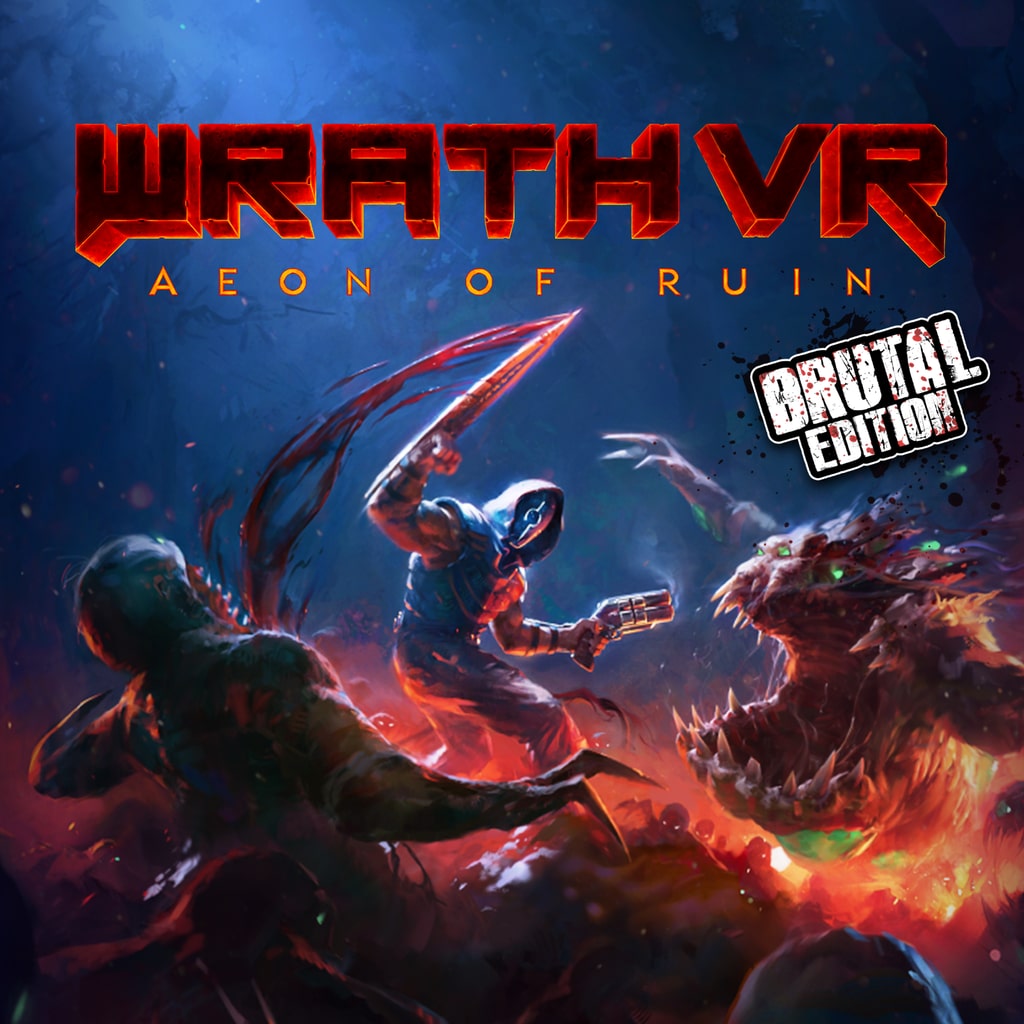
Released on April 9, 2026, WRATH: Aeon of Ruin VR – Brutal Edition is a bold reinvention of the modern boomer shooter. Developed by Team Beef in collaboration with Flat2VR Studios and published by 3D Realms, it is not a simple VR port—it is a ground-up reimagining built specifically for virtual reality platforms, including PlayStation VR2, Meta Quest, and PCVR.
The original WRATH: Aeon of Ruin was already a love letter to the relentless ‘90s shooters, drawing clear inspiration from titles such as Quake and Hexen. With the Brutal Edition, that design philosophy is pushed even further, transforming the experience into something far more physical, immediate, and, as the name suggests, unapologetically violent.
This is a game that doesn’t just want you to play it—it wants you to inhabit it.
Core Concept – Boomer Shooter Meets Full VR Immersion
At its core, WRATH: Aeon of Ruin VR retains the DNA of its flat-screen counterpart: fast-paced combat, labyrinthine level design, and a heavy emphasis on player skill. Yet the transition to VR fundamentally reshapes how these elements are experienced.
You are the Outlander, a spectral hunter bound to cleanse a decaying world of corruption. The narrative remains deliberately minimal, serving more as atmospheric framing than as a central focus. Instead, the emphasis is squarely on combat and exploration—two pillars that benefit enormously from the shift to VR.
Weapons are no longer abstract tools selected via button presses; they are physical objects you wield, aim, and reload manually. Enemies are no longer distant targets; they are looming threats that demand spatial awareness and quick reflexes.
The result is a game that feels less like a reinterpretation and more like a natural evolution of the genre.
Combat – Physical, Fast, and Ferocious
Combat in Brutal Edition is where the game truly excels. Every system is designed to maximise immersion and intensity.
Dual-Wielding and Weapon Handling
The introduction of dual-wielding transforms encounters into chaotic, adrenaline-fuelled skirmishes. You can fire two weapons simultaneously, mix ranged and melee options, or switch to two-handed grips for greater precision and alternate fire modes.
Reloading is handled through physical gestures—quick flicks of the wrist that, once mastered, become second nature. This mechanic adds a tactile rhythm to combat, keeping players engaged even in brief moments of downtime.
Blade Dash and Movement
Movement is equally dynamic. The blade dash system lets players surge forward in bursts of speed, closing gaps or escaping danger in an instant. Combined with high-velocity sliding, it creates a fluid locomotion system that preserves the momentum of classic shooters while adapting it to VR.
Importantly, these mechanics are not optional gimmicks—they are essential tools for survival. Enemies are aggressive, environments are dense, and standing still is rarely an option.
Artifacts and Interaction
Artifacts, a staple of the original game, have been reimagined as physical objects. You can hold, throw, and manually activate them, adding another layer of interaction to combat. This design choice reinforces the game’s commitment to immersion, ensuring every action feels deliberate.
Level Design – Classic Complexity, Modern Presence
The level design remains faithful to old-school principles: sprawling environments filled with secrets, branching paths, and hidden rewards. Crypts, ruins, temples, and cursed wilderness areas each offer a distinct visual identity while maintaining a cohesive tone.
In VR, these spaces take on a new dimension—literally. Verticality becomes more pronounced, environmental hazards feel more immediate, and exploration carries a stronger sense of tension.
Secrets are especially satisfying to uncover. The physicality of VR encourages players to look around, peer into corners, and experiment with movement in ways flat-screen gameplay rarely achieves.
However, the complexity of these levels can occasionally clash with VR’s inherent demands. Navigating intricate layouts while managing combat and motion can be overwhelming, particularly for players less accustomed to VR movement systems.
PS VR2 Features – A Showcase for the Hardware
On PlayStation VR2, Brutal Edition makes excellent use of the platform’s capabilities.
- Eye-tracked foveated rendering delivers sharp visuals where they matter most, maintaining performance without sacrificing clarity.
- Haptic feedback, in both the controllers and the headset, adds a layer of physical sensation to combat—every shot, impact, and explosion carries weight.
- Adaptive triggers simulate weapon resistance, giving each firearm a distinct feel.
These features combine to deliver a deeply immersive experience, elevating the game beyond what standard displays can achieve.
The Soul Tether System – Risk and Reward
One of the more distinctive mechanics carried over from the original game is the Soul Tether system. Instead of unlimited checkpoints, players must use consumable items to save their progress.
In VR, this system becomes even more impactful. The tension of pushing deeper into a level without a safety net is heightened by the physical intensity of the gameplay. Do you press on, risking significant progress, or play it safe and use a valuable resource?
It’s a divisive feature, but one that aligns well with the game’s old-school sensibilities.
Visuals and Audio – Grit, Gore, and Atmosphere
Visually, WRATH: Aeon of Ruin VR preserves its dark, gothic aesthetic while enhancing it for VR. Environments are steeped in shadow and decay, with a colour palette that emphasises bleakness and corruption.
The “Brutal Edition” lives up to its name, with exaggerated effects—blood splatters, particle effects, and enemy reactions are all amplified, creating a visceral sense of impact.
Audio design is equally strong. Weapons sound powerful and distinct, enemy cues are clear and threatening, and the ambient soundtrack reinforces the game’s oppressive atmosphere.
Together, these elements create a cohesive sensory experience that fully supports the game’s tone.
Comfort and Accessibility
As with many high-intensity VR titles, comfort can be a concern. The game offers a range of options—such as adjustable movement settings and a hand-based HUD—to accommodate different player preferences.
However, the fast-paced gameplay is best suited to players with a strong tolerance for VR motion. The combination of rapid movement, verticality, and combat intensity can be disorienting for newcomers.
Replayability and Longevity
Replayability is bolstered by the game’s level design and combat systems. Hidden secrets, multiple approaches to encounters, and the inherent challenge of mastering the mechanics encourage repeated playthroughs.
The Soul Tether system also adds unpredictability, as each run can unfold differently depending on player choices.
While the core content may not be vast, the depth of the gameplay ensures there is plenty to revisit.
Final Verdict
WRATH: Aeon of Ruin VR – Brutal Edition is a triumphant example of how to adapt a classic genre for virtual reality. It respects the foundations of the boomer shooter while fully embracing VR’s possibilities, resulting in an experience that is both nostalgic and refreshingly immediate.
Its strengths lie in its physical combat systems, immersive design, and excellent use of VR hardware. However, its intensity and demanding mechanics may limit its appeal to a more dedicated audience.
For those willing to dive in, it offers one of the most visceral and engaging VR shooters available today.