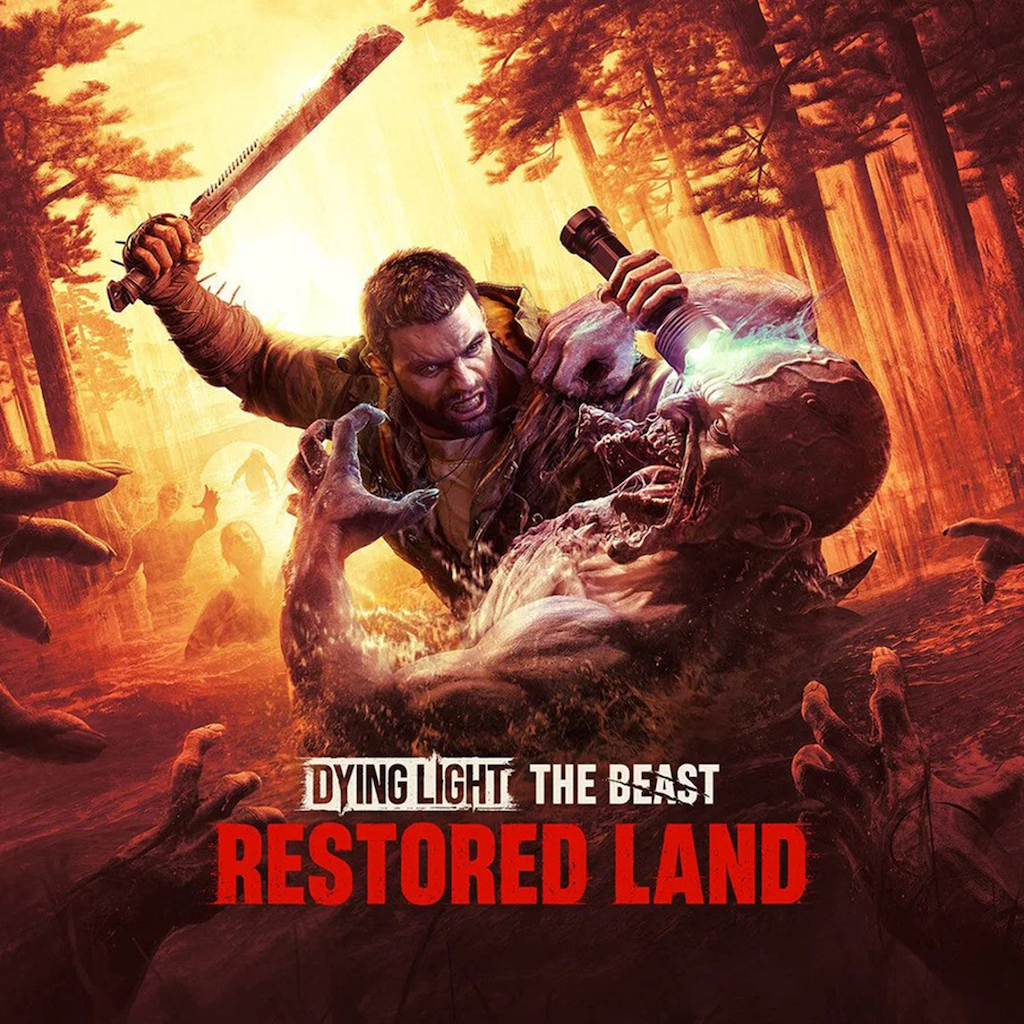
Few modern survival horror franchises have managed to maintain both mechanical identity and post-launch development quite like Techland’s Dying Light series. From its parkour-driven traversal to its relentless day-night tension cycle, the series has always excelled in movement under pressure. With Dying Light: The Beast – Restored Land Definitive Edition, Techland does not simply repackage its 2025 standalone entry; it aims for something more ambitious: a systemic reimagining of how survival, territory, and persistence interact in a world already overrun by the dead.
Released as a major 1.6 overhaul and definitive bundle, this edition redefines Dying Light: The Beast not as a finite survival campaign but as a process of reclamation. In doing so, it introduces one of the most captivating systems the franchise has seen to date: a world that can actually be restored.
A World That Refuses to Stay Dead
At the centre of this edition is the new “Restored Land” mode. On paper, it sounds deceptively simple: zombies and loot do not respawn. Clear an area, and it remains clear. Survivors can eventually move in, infrastructure returns, and the map slowly transforms from a hostile wasteland into something resembling a functioning post-apocalyptic society.
In practice, this fundamentally changes the emotional rhythm of the whole game. Traditional survival games rely on repetition—clearing zones, farming resources, and watching systems reset. Restored Land rejects that loop entirely. Every cleared building feels permanent. Every secured street carries weight. Every victory is a subtraction from chaos that cannot be undone.
It is, in essence, a game about irreversible progress.
And that changes everything.
From Survival Horror to Territorial Reconstruction
The original Dying Light: The Beast already focused heavily on atmospheric survival, but this edition shifts the emphasis from moment-to-moment fear to long-term territorial control.
Instead of asking “can you survive this encounter?”, Restored Land asks “can you reclaim this city?”
Castor Woods becomes less of a hunting ground and more of a layered strategic space. Clearing districts is no longer just about loot or experience – it’s about shaping the world state. As safe zones expand, survivor activity increases, routes become more stable, and previously dangerous areas evolve into functional corridors of travel.
This creates a surprisingly emotional feedback loop. Watching the map physically transform over time is one of the most satisfying systems in the entire franchise. What begins as isolation gradually becomes civilisation.
However, this permanence also introduces a different kind of tension: consequence anxiety. Mistakes matter more when nothing resets. A poorly planned clearing can permanently lock you out of valuable resources. A failed push into a high-tier zone may stall progression for hours.
Permadeath and Pressure Design
For players seeking the highest intensity, the optional “One Life” permadeath mode pushes the system even further. Death is irreversible. No resets, no recovery, no second chances.
Combined with the permanent world state, this creates one of the most intense survival experiences in recent memory. Every encounter becomes significant. Every traversal decision has long-term consequences. Even environmental hazards feel more dangerous when there is no safety net.
This mode will not suit everyone. It requires patience, caution, and a readiness to accept failure as part of the story. But for those who embrace it, it turns Dying Light: The Beast into something closer to a personal survival chronicle than a standard game loop.
Combat, Parkour, and the Weight of Momentum
Core gameplay remains rooted in the series’ signature systems: first-person melee combat and fluid parkour traversal. These mechanics are still outstanding, especially when navigating dense urban landscapes where momentum is crucial.
Combat keeps its weighty, physical sensation. Weapons wear down, enemies can overwhelm, and positioning is more important than raw force. The introduction of new weapon packs such as Fire Lotus and Discharge broadens build options, though they do not significantly change the core rhythm.
Meanwhile, parkour continues to be the franchise’s greatest strength. Scaling buildings, leaping across damaged infrastructure, and escaping hordes still feel fluid and responsive. The “restoration” layer enhances this by gradually converting previously hazardous routes into safe, dependable pathways—altering not just how you move, but what movement signifies over time.
Roadkill Rallies: Controlled Chaos
One of the more surprising additions is the “Roadkill Rallies” mode, which introduces vehicle-based combat challenges featuring the armored “Roadkiller” truck.
This mode heavily leans into arcade-style action, contrasting sharply with the deliberate pace of Restored Land. Here, survival becomes spectacle. You plough through infected hordes, complete timed objectives, and engage in high-speed destruction across open zones.
It’s a tonal departure, but a welcome one. After hours of slow territorial reclamation, Roadkill Rallies offers cathartic release. It doesn’t aim for realism or tension—it aims for impact.
That said, its longevity is limited. While enjoyable in bursts, it lacks the systemic depth of the main mode.
The Definitive Bundle Effect
As a package, the Definitive Edition is comprehensive. It includes the base game, all previous updates such as Nightmare Mode, New Game+, ray tracing improvements, and several DLC packs like Action Hero Essentials and Hunter Essentials.
Although this amount of content is impressive, it also reveals one of the game’s wider issues: fragmentation. There are now multiple overlapping systems, modes, and progression pathways, not all of which integrate seamlessly.
New players might feel overwhelmed by the sheer number of options before grasping the core loop.
Atmosphere and Visual Cohesion
Visually, Restored Land benefits greatly from recent enhancements. Lighting is essential in setting the mood, especially during night scenes where visibility is low and tension is high.
The contrast between reclaimed areas and untouched wastelands is particularly striking. Safe zones feel warmer and more human. Uncultivated zones remain cold, oppressive, and hostile.
Sound design remains one of the franchise’s strongest features. Distant screams, environmental creaks, and subtle survivor noises create a layered soundscape that suggests a world gradually coming back to life.
A New Philosophy of Survival
What ultimately defines Dying Light: The Beast – Restored Land Definitive Edition is its shift in philosophy. This is no longer merely a survival game about enduring the apocalypse—it is a game about undoing it, piece by piece.
That transition from endurance to reconstruction is what makes it so compelling. It redefines success not as mere survival, but as transformation. You are not just staying alive; you are working to make the world liveable again.
And that is a far more ambitious goal.
Final Verdict
Dying Light: The Beast – Restored Land Definitive Edition is one of the most compelling developments the series has tried. Its “Restored Land” system changes the franchise’s core loop into something lasting and meaningful, where each cleared area permanently reshapes the environment.
Although its wide range of content can be daunting and some side modes lack depth, its main vision is strong and confidently realised. The sense of progression—of transforming chaos into civilisation—is genuinely powerful and provides the experience with a distinctive emotional journey.
It remains unmistakably a Dying Light game: tense, physical, and based on movement. But it also feels more deliberate, more strategic, and more permanent than anything the series has attempted before.