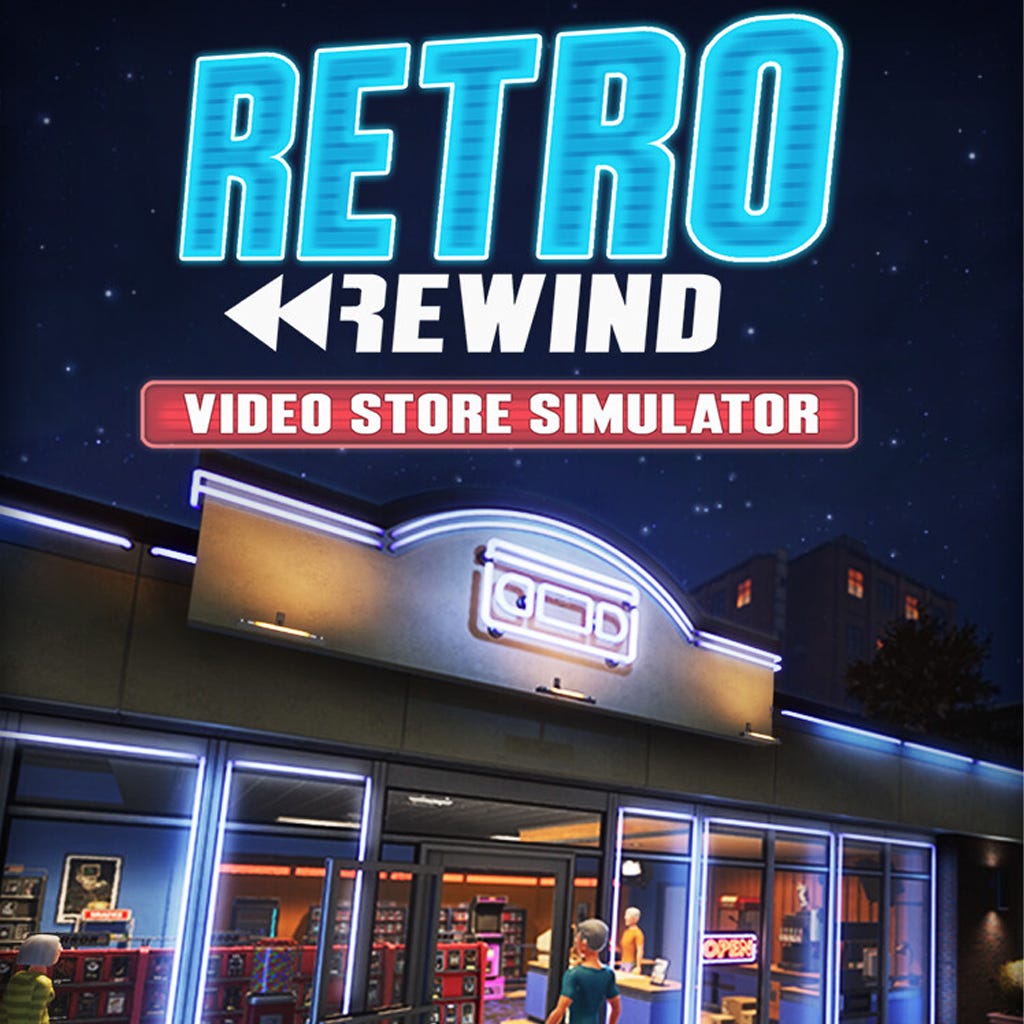
Retro Rewind – Video Store Simulator is built around a simple yet instantly captivating fantasy: managing your own 1990s video rental shop. It’s a premise full of nostalgia, recalling a time when browsing physical shelves was more important than navigating menus, and choosing a Friday night film meant wandering through aisles filled with worn VHS cases and neon-lit cardboard displays.
From the moment you open the doors of your small, slightly dusty shop, the game fully embraces its theme. This isn’t just a business management simulation viewed from above—it’s a first-person, hands-on experience where every task feels tangible. You stock shelves manually, handle returns at the counter, clean spills from the floor, and even prepare snacks for customers eager to rent their next favourite tape.
It’s this practical approach that immediately sets Retro Rewind apart from more abstract management games. You’re not just building a business—you’re truly inhabiting a space.
The Daily Rhythm of a Video Store
The main gameplay cycle focuses on running your store each day. Customers walk in, browse, ask for suggestions, rent films, return overdue tapes, and sometimes complain about late fees. Throughout all of this, you’re constantly on the move—organising shelves, restocking stock, tidying up, and making sure the shop stays welcoming and functional.
There’s a surprisingly satisfying rhythm to it all. At first, the store feels chaotic and underdeveloped, and your role is mainly reactive. You’re constantly dealing with small issues—literally and figuratively. A spilled drink here, a missing tape there, a frustrated customer at the counter. But as you take control of the systems, that chaos gradually shifts into a steady, manageable flow.
The game shines during those early and middle hours, where every improvement feels real. Adding new shelves, reorganising genres, or upgrading your counter genuinely boosts your efficiency. There’s a real sense of progress linked to physical space, making growth feel important.
However, this sense of development eventually stalls. While new tasks and systems are introduced, they rarely change the core loop in a meaningful way. You keep doing the same main actions—just scaled up.
VHS Culture and Inventory Management
One of Retro Rewind’s strongest features is its VHS catalogue system. The game includes thousands of unique tapes, each with distinct titles, genres, and hand-drawn cover art that evoke the charm of real-world 80s and 90s home video culture.
This isn’t just flavour—it’s central to gameplay. Ordering stock through an old-school desktop interface feels deliberately slow and methodical, highlighting the era’s technological limitations. You browse catalogues, place orders, and wait for deliveries, creating a natural rhythm of anticipation and supply management.
The addition of the “Tape Dealer” system introduces a darker edge. This shady supplier offers bootleg and unofficial tapes—sometimes cult favourites, sometimes clearly questionable knock-offs. These items can be highly profitable but come with risks: customer dissatisfaction, reputation penalties, or unpredictable demand.
It’s a clever system that adds a subtle moral and economic tension to what might otherwise be a straightforward retail simulation. Do you prioritise profit, or maintain legitimacy?
Customer Interaction and Store Personality
Customers in Retro Rewind are more than passive NPCs—they actively influence your daily decisions. They seek recommendations, complain about late fees, browse specific genres, and sometimes linger just to chat about films.
These interactions bring the store to life. There’s a cosy, community-oriented atmosphere, especially when you start to recognise regulars and learn their preferences. Suggesting the right film or resolving a complaint smoothly creates small but satisfying moments of roleplay-like engagement.
That said, dialogue variety is somewhat limited. Over time, customer interactions can begin to repeat, and although the systems stay functional, they lose some of their initial charm once familiarity develops.
Customisation and Store Progression
The ability to customise and expand your store is another key pillar of the experience. You can redesign layouts, choose wall colours, place posters and memorabilia, and gradually transform a small rental shop into a sprawling entertainment hub.
This progression feels visually rewarding. The store evolves from a cramped, slightly chaotic space into a polished, neon-accented business that reflects your decisions. Layout optimisation also becomes a light strategic layer—deciding where to place shelves or counters affects customer flow and efficiency.
However, like many systems in Retro Rewind, customisation is more expressive than mechanically deep. While it’s satisfying to design your ideal store, the impact of these choices on gameplay remains relatively limited.
Atmosphere: Where the Game Truly Excels
If there is one area where Retro Rewind consistently excels, it is atmosphere. The game captures the visual and emotional essence of the 90s video rental era with remarkable detail.
Neon lighting, CRT glow, VHS case artwork, and synth-heavy background music all combine to forge a warm, nostalgic environment. Even routine tasks feel more immersive thanks to the sensory design. The hum of the store, the click of VHS cases, and the chatter of customers browsing aisles all help create a strong sense of place.
There is a quiet magic in how effectively the game conveys its setting. It doesn’t just portray a video store — it re-creates the feeling of being in one.
Repetition and Long-Term Depth
Despite its strengths, Retro Rewind does struggle with repetition over time. The core loop—stock, clean, rent, manage—remains largely unchanged throughout the experience. While the scale increases, the underlying mechanics do not evolve significantly.
New systems are introduced gradually, but they rarely alter how you engage with the game in meaningful ways. As a result, long play sessions can start to feel predictable, even if they remain comforting.
Additionally, while the game offers a wide range of VHS content and visual variety, its management systems lack the deeper complexity found in more simulation-heavy titles. Pricing strategies, staff management, and long-term business planning are relatively straightforward.
Final Verdict
Retro Rewind – Video Store Simulator is a warm, nostalgic, and highly atmospheric simulation that excels when it emphasizes the tactile pleasure of managing a physical store. It authentically captures the charm of the VHS era and provides a relaxing, hands-on gameplay loop that is easy to lose yourself in.
However, its long-term appeal is limited by repetitive gameplay and a lack of more profound systemic development. While the experience remains enjoyable, it gradually shifts from an engaging management simulation to a comfortable routine.