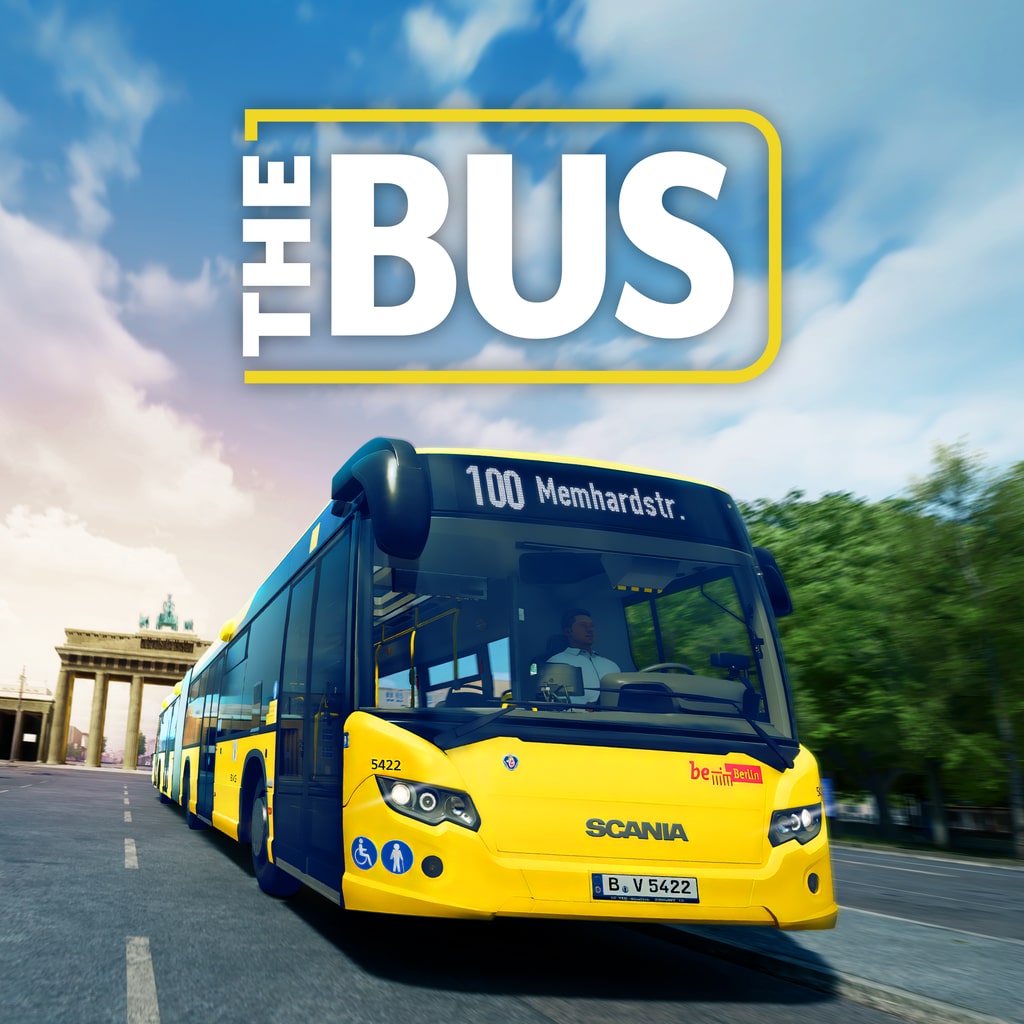
Simulation games often depend on their sense of place. Mechanics can be complex, systems intricate, but without a convincing world to inhabit, the illusion quickly fades. The Bus recognises this better than most. After five years in Early Access, its full 1.0 release—and long-awaited arrival on consoles—positions it not just as another transport sim, but as a love letter to one of Europe’s most recognisable cities.
And in that regard, it succeeds—sometimes brilliantly, sometimes imperfectly, but always with a clear sense of purpose.
Berlin, Rebuilt
The defining feature of The Bus is its 1:1 recreation of Berlin. This isn’t a stylised interpretation or a condensed map—it’s a painstakingly detailed simulation of the city, scaled to real-world proportions.
Driving from Alexanderplatz to Brandenburg Gate isn’t just a route—it’s a journey. Landmarks appear where they should, streets unfold with realistic spacing, and the city feels alive in a way that few simulation games manage.
This authenticity is the game’s greatest strength. It creates a sense of immersion that goes beyond mechanics. You’re not just completing routes—you’re navigating a real place, with all the complexity that entails.
Traffic behaves unpredictably, pedestrians move with purpose, and the rhythm of the city shifts depending on the time of day. Morning routes feel different from late-night runs, and weather conditions can dramatically alter the experience.
It’s a world that demands attention—and rewards it.
The Act of Driving
At its core, The Bus concerns the act of driving and treats this responsibility seriously.
Operating one of the officially licensed buses—from manufacturers such as Mercedes-Benz, MAN, and Scania—is a detailed process. You’re not just steering and accelerating; you’re managing doors, selling tickets, adhering to schedules, and responding to the flow of traffic.
The simulation leans towards realism but offers flexibility through different control modes. “Realistic” mode provides the full experience, while “Arcade” and custom settings allow players to adapt the complexity to their preferences.
This adaptability is especially important for console players who may be new to the genre. It ensures that The Bus remains accessible without sacrificing depth.
A System of Systems
Beyond merely driving, the game incorporates additional systems that enlarge its scope.
Freeplay mode provides a more relaxed experience, allowing you to select routes and vehicles without pressure. Meanwhile, economy mode introduces management elements—building a bus company, hiring staff, maintaining vehicles, and managing finances.
These systems increase replayability, giving players reasons to engage with the game beyond individual routes. However, they are not as thoroughly developed as the core driving mechanics. While functional, they feel more like extensions rather than fully realised features.
Nonetheless, their inclusion broadens the game’s appeal by offering different ways to interact with it.
Console Experience: A Strong, If Slightly Limited Port
The transition to consoles is mostly successful. Built on Unreal Engine 5, The Bus looks notably better compared to its Early Access version. Lighting, reflections, and environmental details all benefit from the upgrade, making Berlin feel more lively and realistic.
On PlayStation 5, DualSense support adds a subtle but effective layer of immersion. Adaptive triggers mimic the resistance of heavy bus pedals, providing a tactile sensation for acceleration and braking that enhances the driving experience.
Performance is generally steady, though not perfect. In quiet areas, frame rates stay consistent, but busier intersections—especially with high AI traffic and standing passengers—can cause occasional dips. These moments don’t ruin the experience, but they remind you of the game’s complexity.
The main drawback on consoles is the lack of multiplayer and modding support. On PC, these features are central to the game’s community, allowing for more content and shared experiences.
While their absence here is understandable from a technical viewpoint, it makes the console version feel somewhat less expansive.
The Rhythm of Routine
One of the most intriguing aspects of The Bus is how it embraces routine.
Driving the same routes, stopping at familiar locations, and repeating tasks might sound monotonous—but within the context of the game, it becomes almost meditative. There’s a rhythm to it, a sense of flow that develops over time.
You start to anticipate traffic patterns, recognise landmarks, and internalise the nuances of each route. It’s a slow, deliberate process, but one that can be deeply satisfying.
Of course, this won’t appeal to everyone. Players seeking constant variety or high-intensity gameplay may find the experience too subdued. But for those who appreciate the quieter side of simulation, it offers something genuinely unique.
Where It Falters
Despite its strengths, The Bus isn’t without issues.
Technical performance, while generally solid, can be inconsistent in more demanding scenarios. Frame rate dips and occasional visual glitches slightly detract from the otherwise immersive experience.
The absence of multiplayer and modding on consoles is another notable drawback. These features add significant depth on PC, and their absence here limits long-term engagement.
There’s also a learning curve to overcome. While the game offers different control modes, its systems can still feel overwhelming for newcomers. Tutorials exist, but they don’t always fully prepare players for the complexity of real-world driving simulation.
Finally, although the recreation of Berlin is impressive, the gameplay loop itself can become repetitive over extended sessions. The game relies heavily on player investment in the simulation, rather than constantly introducing new mechanics or challenges.
Final Verdict
The Bus is a deeply immersive simulation that prioritises authenticity over accessibility. Its 1:1 recreation of Berlin is a remarkable achievement, creating a sense of place that few games can match.
The core driving mechanics are detailed and rewarding, supported by a range of systems that add depth without overwhelming the experience. The console version, although missing some features, offers a strong and visually impressive port that makes the game more accessible to a wider audience.
However, it’s not a game for everyone. Its deliberate pacing, technical quirks, and reliance on routine may limit its appeal for those outside the simulation niche.
For players willing to embrace its rhythm, however, The Bus offers something rare—a chance to inhabit a world, not just play in it.