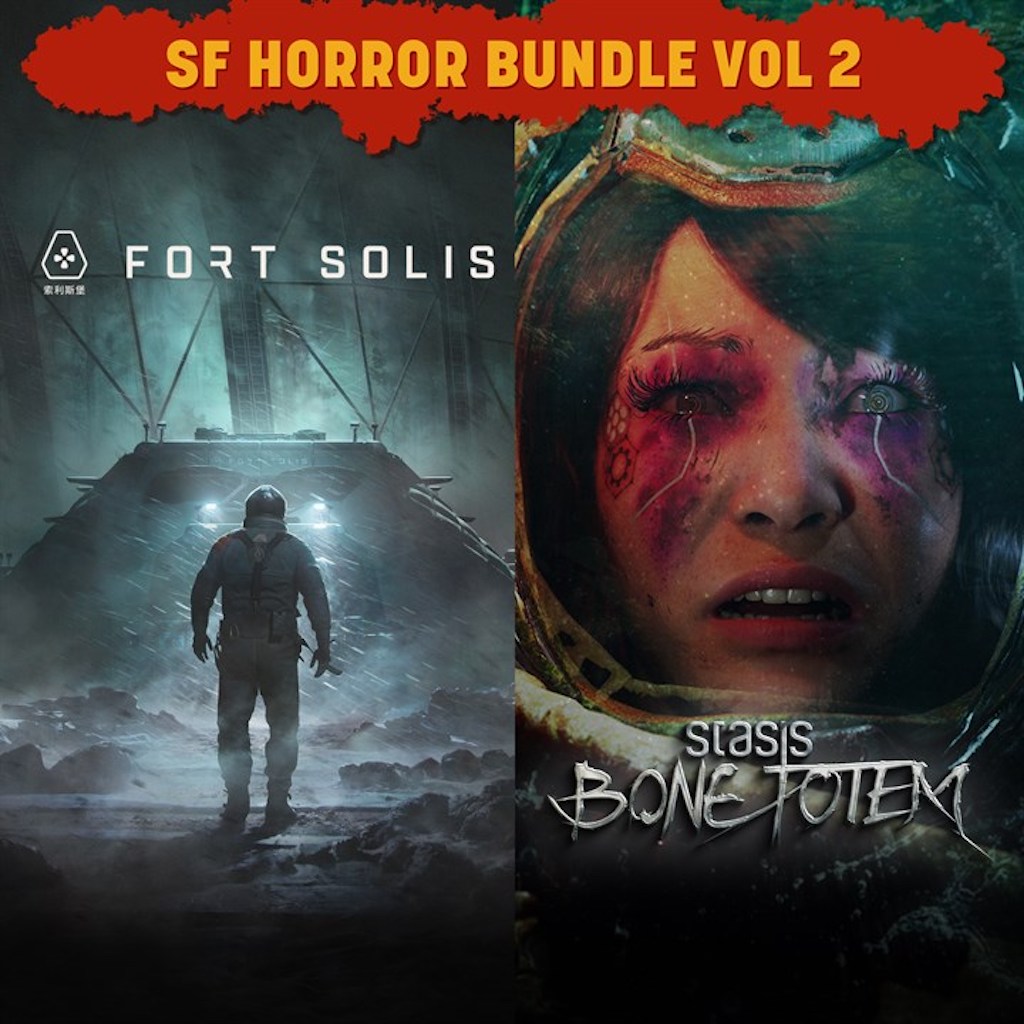
Science fiction and horror share a long, productive marriage: the former asks us what lies beyond known boundaries, while the latter reminds us that some questions don’t have comforting answers. SF Horror Bundle, bringing together Fort Solis and STASIS: Bone Totem, offers a distilled experience of this intersection — two distinct narratives that channel dread through atmospheric tension, narrative fragmentation, and mechanical restraint. On the surface, these titles are separate entities; in combination, they present a compelling double-feature for players seeking thoughtful, character-driven horror rooted in slow-burn unease rather than jump scares.
This bundled package appeals less to adrenaline junkies and more to players who savour psychological depth, environmental storytelling, and the slow unraveling of cosmic or existential terror. Each game tackles horror from a different angle — one through claustrophobic narrative immersion, the other through tactical exploration and unsettling worldbuilding — and together they form a satisfying anthology that highlights the diversity within sci-fi horror.
Fort Solis: Isolation on the Edge of Forever
Premise and Narrative Execution
Fort Solis opens with a recognizable survival horror trope — you awaken to find a remote outpost devoid of expected activity — but it quickly pivots into a character study smeared with dread. Set on a desolate Martian facility, the game follows an engineer drawn into unraveling what went drastically wrong. Unlike many horror titles that rely on monstrous entities or supernatural devices, Fort Solis builds its fear on implication, atmosphere, and the discomfiting sense that something irrevocably terrible has occurred here.
Narrative structure is a standout strength. The story reveals itself through audio logs, scattered notes, converging CCTV feeds, and environmental clues, making exploration an intellectual exercise as much as a survival imperative. This asymmetry of information — what you know versus what you suspect — maintains tension throughout the experience. The payoff isn’t cheap horror theatrics, but rather a slow crescendo of understanding that emphasises psychological weight over visceral spectacle.
Atmosphere and Worldbuilding
Martian terrain and industrial interiors are visualised with meticulous attention. Rusted metal walkways, emergency lighting flicker, and empty corridors form a tapestry of desolation that feels oppressive without being visually chaotic. Sound design is lean and purposeful: mechanical hums, distant clangs, and static-ridden radio chatter fill spaces with anticipation rather than certainty.
The facility’s design fosters spatial memory and meaningful exploration. Players learn to recognise architectural patterns, audio cues signal distant occurrences, and environmental storytelling gives each room context beyond its surface function. This creates a palpable sense of place — Fort Solis feels like a location with a history, not merely a series of jump scare setpieces.
Pacing and Engagement
While Fort Solis excels at building mood, its pacing is deliberately slow. Players seeking constant tension or action may find stretches between major revelations challenging to sustain. However, this pacing is a core design choice: it mirrors the emotional reality of isolation and uncertainty. Moments of quiet are not dull; they are breaths between psychological beats, moments to reflect, interpret, and anticipate.
Combat is minimal — almost absent — which aligns with the game’s focus on exploration and narrative immersion. Most threats are environmental or atmospheric, not flesh-and-blood adversaries, which makes every indication of danger through sound or sight feel meaningful.
Strengths and Limitations
Strengths:
- Deeply immersive narrative with strong environmental storytelling.
- Exceptional atmosphere and world cohesion.
- Psychological tension that rewards careful observation.
Limitations:
- Slow pacing may frustrate players craving sustained intensity.
- Traditional horror mechanics (combat, chase sequences) are sparse.
STASIS: Bone Totem – Strategic Dread in a Fragmented Reality
Premise and Mechanics
STASIS: Bone Totem contrasts with Fort Solis’s introspective dread by steering horror through puzzling exploration and tactical engagement. Rather than the slow march of psychological unease, Bone Totem places players in a world that blends cosmic touch with visceral oddity. Its narrative is revealed through broken fragments — dream-logic sequences, shifting realities, and environments that mutate with plot progression — making discovery the engine of horror.
This game pairs more traditional adventure mechanics with survival and resource management. Puzzles are frequently integrated into world traversal and encounter resolution, encouraging players to use environmental clues and item combinations strategically. Combat exists, but it shares more DNA with early survival horror — resource scarcity and vulnerability steer encounters toward smart management rather than brute force.
Visual and Audio Identity
Graphically, Bone Totem evokes a dread that is both organic and uncanny. Biomes shift from sterile interiors to grotesque dreamscapes, with lighting and sound amplifying the sense that reality itself is unstable. Sound cues — whispers, distant echoes, environmental distortion — reinforce thematic unease without resorting to gratuitous shock tactics.
Enemy designs are unsettling in ways that reward interpretation over spectacle. They feel other, not merely aggressive, and their presence in the world matters narratively and mechanically. Audio design reinforces this, with creature cues signalling danger in ways that encourage anticipation rather than reflexive panic.
Narrative and Thematic Arc
Bone Totem’s narrative is nonlinear and fragmented, which amplifies its thematic focus on memory, identity, and distortion. Players piece together the story through environmental clues and interactive sequences that recontextualise earlier moments. This structure demands engagement; players who skim past context or shortcuts will miss coherence that others might glean only through careful attention.
While this approach enriches the world for players who embrace it, it can be challenging for those expecting traditional exposition or character-driven beats. The game trusts its audience to infer, hypothesise, and synthesise narrative threads — a design choice that rewards patience but may feel opaque to some.
Strengths and Limitations
Strengths:
- Unique blend of horror, puzzle, and survival elements.
- Strong atmospheric worldbuilding that evokes dread through design, not shock.
- Mechanics that prioritise strategic engagement and resource management.
Limitations:
- Narrative requires attention and interpretation; less accessible for casual players.
- Some sequences can feel disjointed without careful contextual reading.
Bundle Synergy: Two Takes on Sci-Fi Horror
What makes the SF Horror Bundle more than a simple packaging of two titles is how the games complement each other. Fort Solis immerses players in slow, creeping atmospheric dread; STASIS: Bone Totem immerses players in fractured reality and strategic tension. The tonal contrast — psychological introspection versus tactical unease — broadens the horror palette, delivering both visceral thought and methodical engagement.
Together, the titles showcase the scope of sci-fi horror beyond big-budget spectacle. They remind players that fear can be psychological, intellectual, narrative-driven, or emergent from systems rather than merely thrust at the screen.
Final Verdict
The SF Horror Bundle is a well-curated horror experience that rewards thoughtful engagement, world observation, and patience. Both Fort Solis and STASIS: Bone Totem lean into their strengths: immersive environments, narrative depth, and atmospheric design. While they don’t cater to every horror taste — particularly action-heavy preferences — they excel as intellectual and emotional experiences where dread and discovery are intertwined.