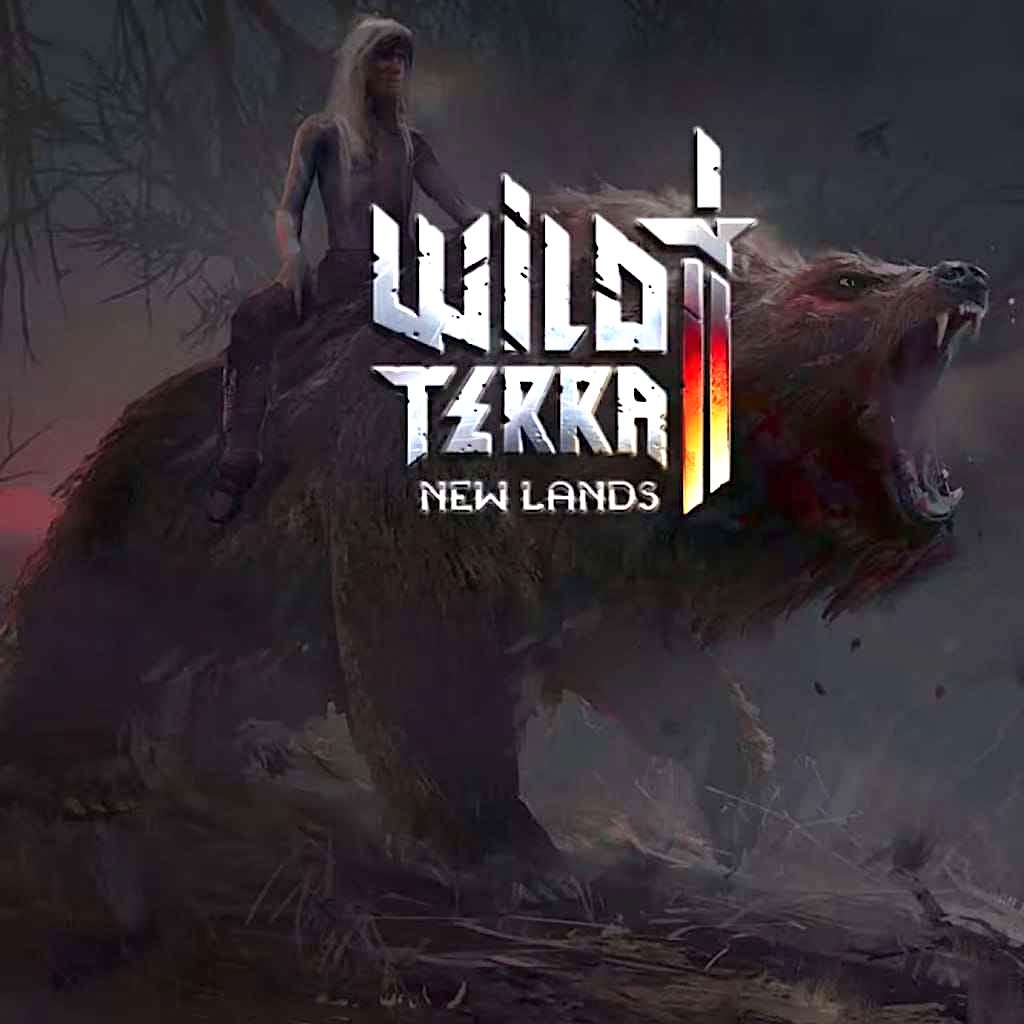
Few games in the survival sandbox genre manage to strike a balance between emergent freedom, persistent world progression, and community-oriented play as deftly as Wild Terra 2 – Novice Helpers. Developed by Juvty Worlds, this title expands on its predecessor’s foundational MMORPG-meets-survival formula with a blend of deep crafting systems, strategic territorial control, and player-driven economy — all wrapped in an old-school aesthetic that privileges thoughtful engagement over instant gratification.
With the Novice Helpers expansion, Wild Terra 2 not only welcomes newcomers more gracefully but also enriches the endgame experience for veterans. After more than 100 hours traversing its sprawling lands — from harsh winter forests to parched savannahs — and engaging in solo crafting as well as guild-oriented warfare, it’s clear that this game’s greatest strength lies in how it turns play into lived experience. That said, it isn’t without pacing quirks and occasional tedium — but for players drawn to deep sandbox ecosystems, this is one of the more compelling iterations of the genre on PC.
World and Setting: A Persistent Land of Possibility
Wild Terra 2 – Novice Helpers unfolds in a medieval-fantasy world that manages to feel alive even in its minimalistic presentation. There are no high-fidelity cinematic cutscenes or sprawling narrative arcs; instead, Wild Terra 2 tells its story through the land itself — through resource nodes, regional biomes, adversarial mobs, and the human players who interact with its systems.
The world is vast and topographically varied: dense forests yield lumber and game, rocky badlands harbor precious ores, marshlands hide rare herbs, and snow-clad zones test survival mechanics to their limits. Weather and seasonal cycles affect travel, resource availability, and even player strategy; planning a winter campaign without adequate warm clothing is a recipe for early defeat.
Visuals lean toward functional rather than flashy. The aesthetic prioritises clarity over spectacle: trees are identifiable at a distance, foliage doesn’t obscure strategic lines of sight, and terrain gradients communicate climbability effectively. While it may not win awards for graphical fidelity, the art direction reinforces strategic readability — a welcome quality in games where spatial understanding and environmental planning matter.
This “functional aesthetic” extends into audio design as well. Ambient cues — birds in forests, distant thunder over plains, fire crackle in camps — create atmosphere without overwhelming the senses. Combat sounds are clear and distinct, which is essential in an experience where spatial awareness has tactical implications.
Core Systems and Mechanics: Depth Through Complexity
At its heart, Wild Terra 2 is a game of systems rather than scripted stories. Combat, crafting, settlement management, and exploration all interact in a web of mechanical dependency that rewards both planning and adaptation.
Survival and Crafting
Survival begins with the basics: food, shelter, water, clothing. Early progression teaches players to harvest edible plants, hunt small game, and craft rudimentary tools. The Novice Helpers expansion adds streamlined guidance here — NPC mentors, optional tracking tips, and contextual help prompts that make early survival less harrowing without removing challenge.
Crafting is deep and layered. Players extract raw materials — wood, stone, ore — and refine them through stoves, furnaces, looms, and anvils. Recipes are abundant, and progression feels organic: a set of crude stone tools leads to iron implements, which unlock complex weapons and armours. Rather than feeling like a linear tech tree, crafting feels situational, influenced by available resources, geography, and strategic need.
Resource scarcity is real and impactful. Certain ores or rare herbs only spawn in distant biomes, forcing players to travel or trade. This naturally encourages interdependence between individuals and guilds: you cannot do everything alone, and the game’s design rewards social engagement without forcing it.
Combat and Progression
Combat is neither trivial nor relentless. Melee engagements demand timing, positioning, stamina management, and tactical awareness of terrain. Archery and crossbow play are satisfying and require mindful aim rather than auto-lockon mechanics. Enemy mobs — wolves, bandits, undead — exhibit distinct behaviours that reward observation and strategy.
Player vs Player (PvP) is a layer above and beyond AI struggle. Territory contests, raid defence, and guild politics introduce emergent narratives that feel genuinely player-driven. Wars aren’t prompted through scripted triggers but arise naturally when territory, resource access, or strategic positioning become contested.
Progression is not a simple “grind to level cap.” Instead, your progression is reflected in gear, knowledge, settlement strength, and strategic alliances. This is one of Wild Terra 2’s most defining qualities: progress is tangible and visible rather than abstractly numerical.
Novice Helpers Expansion: Bridging New and Old
The Novice Helpers expansion is a thoughtful evolution of Wild Terra 2’s onboarding and retention design. Historically, the game’s steep early learning curve was a barrier for some players. Here, NPC guides and contextual tutorials make early mechanics less opaque while preserving systemic depth.
These helpers don’t handhold you to victory. Rather, they operate as guides — suggesting areas to explore, offering basic recipes, and providing strategic tips without overriding player agency. This strikes a smart balance: newcomers feel supported, veterans do not feel patronised.
Additionally, the expansion introduces scalable challenges tailored to player experience level. Low-level threats and early quests remain accessible, while higher-tier content dynamically scales, rewarding teamwork and tactical preparation. This flexibility makes the Novice Helpers update one of the most impactful additions in the game’s evolution.
Community and Social Systems: Emergent Stories
One of the strongest pillars of Wild Terra 2 is its player ecosystem. Unlike narrative-heavy RPGs that deliver stories via cutscenes and scripted beats, Wild Terra 2 encourages players to craft their own narratives through cooperation, competition, and settlement politics.
Guilds become semi-autonomous micro-societies. Some players band together for mutual defence and resource sharing, while others specialise in crafting rare items, leading to rich trade networks. Territory control manifests in strategic outposts and fortresses that must be defended, supplying motivation for organised PvP.
Economies emerge organically. Players trade resources, crafted weapons, rare herbs, and transportation mounts. These interdependencies create meaningful social incentives for cooperation rather than forcing players into repetitive grind loops.
It isn’t perfect: server population density affects world economy and conflict intensity. Quieter servers can feel deserted, while busier realms can escalate conflicts beyond what solo players can manage. However, the Novice Helpers expansion mitigates this by strengthening solo viability without diminishing group incentives.
Critiques and Limitations
No title is without flaws, and Wild Terra 2 – Novice Helpers is no exception. Its biggest challenge — and charm — is its pace. The game rewards patience and careful planning, but its early grind can feel daunting compared to more guided survival titles. Even with contextual help, players unaccustomed to survival complexity may feel overwhelmed before the systems fully “click.”
The aesthetic, though functional, lacks visual polish compared to high-budget triple-A survival entries. This is not a criticism of ambition but of presentation: some terrain and character models feel dated, and animations can be stiff. These are aesthetic concerns rather than mechanical blockers, but they do affect first impressions.
Finally, the lack of a robust narrative scaffold means that players who prioritise story over systems may find themselves less engaged.
Final Verdict
Wild Terra 2 – Novice Helpers is a standout survival-sandbox MMO that rewards curiosity, perseverance, and tactical thought. Its systems are deep rather than superficial, its economy is meaningful rather than arbitrary, and its emergent play — whether through guild politics, PvP conflict, or solitary crafting mastery — feels genuinely player-driven.
The Novice Helpers expansion elevates the experience by smoothing the transition from newcomer to seasoned player without sacrificing strategic depth. This is a game that asks for patience but rewards mastery, and in an era where quick wins often trump deep systems, that deserves appreciation.