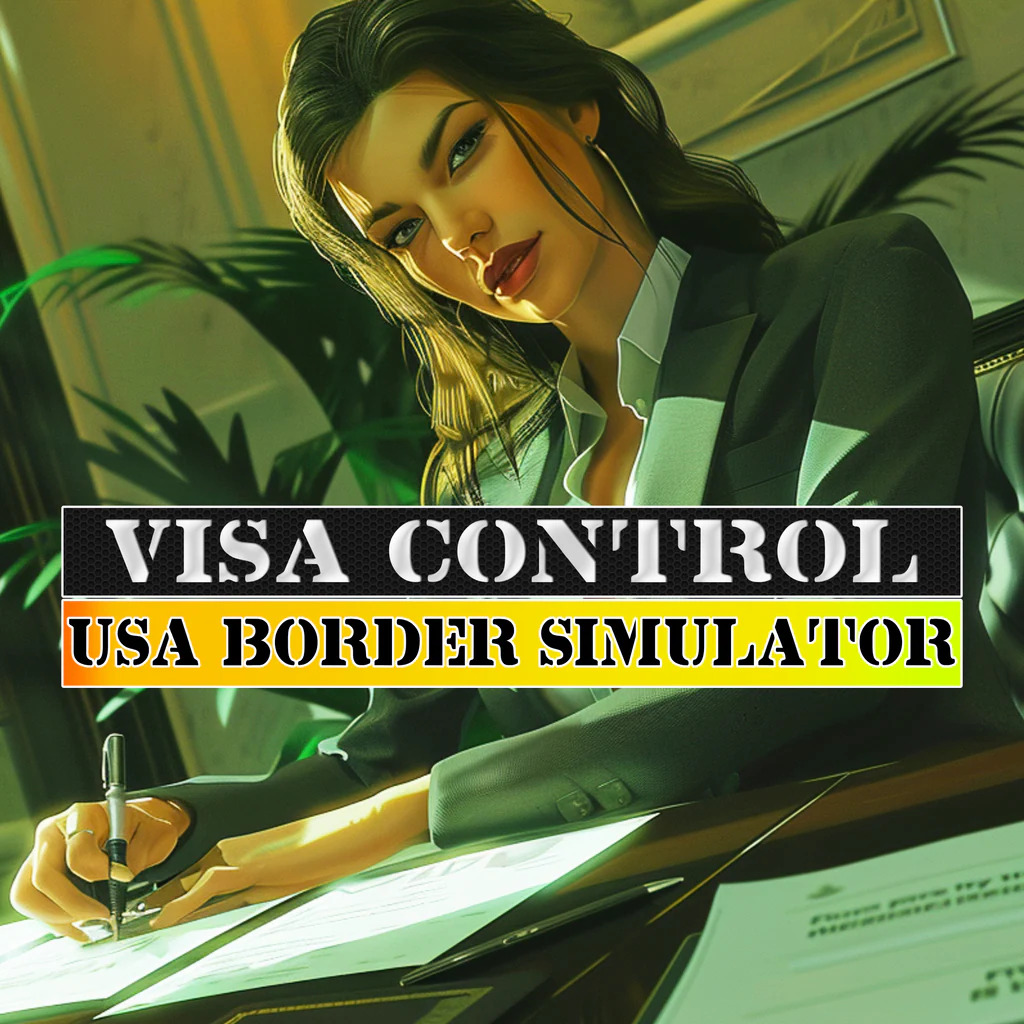
Immigration checkpoints are among the few places where every decision carries weight, scrutiny, and consequence. Visa Control: USA Border Simulator places players in precisely this high-stakes environment, challenging them to balance accuracy, efficiency, and empathy while processing an endless stream of applicants. Developed by Chetrusca Softworks SRL, this title is part of the growing “bureaucracy sim” trend that gained traction in late 2024, and it’s a worthy entry that pushes the genre forward with a mix of realism, tension, and meticulous gameplay.
The Core Loop: Inspection and Decision
At its heart, Visa Control is about decisions. Every day, you sit at your inspection desk and face a diverse range of applicants, each presenting documents that must be scrutinized carefully. Passports, visas, entry permits, and supporting documentation arrive in a realistic 3D interface, and it’s your job to identify inconsistencies, expired dates, and potential fraud. One wrong decision—approving an applicant who doesn’t meet requirements or rejecting a legitimate traveler—negatively affects your daily rating and can lead to penalties. The stakes feel high, and the game ensures that players are constantly alert.
Unlike simpler “bureaucracy sims,” the challenge isn’t just spotting obvious errors. As the game progresses, applicants introduce more nuanced issues: forged stamps, slightly altered documents, mismatched names, and conflicting visa types. Some even present moral dilemmas, such as refugees or travelers with urgent humanitarian needs. The game doesn’t just reward mechanical precision; it encourages players to consider the human context behind each case.
Realism and Immersion
One of the most striking aspects of Visa Control is its presentation. The game employs highly detailed 3D graphics to recreate the sterile but tense atmosphere of a border checkpoint. From the folding of documents to the subtle movements of applicants—fidgeting, nervous ticks, or hurried gestures—every detail reinforces the feeling that you are in a real, high-pressure environment. Sound design complements this realism: the constant murmur of queues, the clacking of keyboards, the faint PA announcements, and the occasional frustrated sigh of an applicant all contribute to a living, breathing checkpoint.
The interface cleverly blends functionality with immersion. A series of drawers, trays, and screens allow you to compare visas, passports, and supplementary documents. Highlighting mismatched details or expired stamps is intuitive, yet it requires careful attention. The game encourages methodical workflow; rushing leads to mistakes, while excessive caution can slow your throughput and reduce your daily performance score.
Progression and Replayability
Progression in Visa Control is based on performance ratings, certifications, and increasingly complex scenarios. Your efficiency, accuracy, and consistency each day contribute to an overall score that unlocks new challenges and higher-security checkpoints. Later stages introduce advanced fraud detection, multi-document verification, and applicants with subtle tricks designed to test even veteran players.
To maintain variety, the game also randomizes applicant profiles, documentation types, and edge cases. No two days feel exactly alike, keeping the tension fresh even after dozens of hours of play. Optional “high-pressure” modes further increase difficulty by imposing stricter time limits and more simultaneous applicants, giving players a thrilling, adrenaline-charged simulation experience.
Challenge Meets Strategy
While the game might appear straightforward, success in Visa Control requires strategy as much as sharp eyes. Players must balance speed and accuracy, manage mental stamina, and prioritize cases. For example, humanitarian cases may require extra scrutiny but could yield performance bonuses if processed correctly. Handling queues efficiently is also crucial—delays can snowball, forcing you to make snap decisions and increasing the chance of error.
The learning curve is carefully calibrated. Early shifts introduce basic document types and obvious inconsistencies, while later stages layer in subtle details that demand memorization and pattern recognition. The game also rewards process optimization: organizing your workspace, double-checking entries, and learning the peculiarities of different visa types all contribute to smoother daily performance.
Strengths
- Immersive Simulation: From 3D visuals to sound design, every element contributes to a sense of realism.
- High Replay Value: Randomized applicants, documents, and scenarios ensure no two shifts are the same.
- Strategic Depth: Beyond simple inspection, the game encourages workflow optimization, prioritization, and situational awareness.
- Accessibility: Controls and interface are intuitive, allowing players to focus on decision-making rather than fighting the UI.
- Moral Dilemmas: The game subtly encourages ethical decision-making, adding depth beyond mechanical checks.
Areas for Improvement
While impressive, Visa Control isn’t without minor shortcomings. The pace can feel punishing in later stages, especially when juggling multiple complex applicants at once. Some visual cues could be more distinct, and newcomers may initially find the sheer variety of documents overwhelming. Additionally, the game leans heavily on realism, which might be slow-paced for players seeking more action-oriented gameplay. These issues are small relative to the overall quality but worth noting.
Conclusion
Visa Control: USA Border Simulator is a thoughtful, meticulous, and surprisingly engaging simulation that takes the “bureaucracy sim” genre to a new level. It’s not flashy or explosive, but it offers a deeply satisfying loop of decision-making, strategy, and attention to detail. By simulating the daily pressures of an immigration officer, the game creates tension, encourages critical thinking, and rewards careful observation.
For players who enjoy management, strategy, and realistic simulations, Visa Control offers hours of immersive gameplay. It’s a testament to the power of thoughtful design that a game about paperwork, verification, and moral judgment can be both intense and compelling. Whether you’re ensuring proper visa validation, managing queues, or making split-second moral decisions, the game consistently challenges you to be precise, vigilant, and methodical.
Pros & Cons
Pros:
- Immersive 3D visuals and sound design
- High replayability with randomized applicants
- Strategic decision-making and workflow optimization
- Ethical and moral choice integration
Cons:
- Can be slow-paced or punishing in later stages
- Visual cues sometimes subtle for complex documents
- Overwhelming for newcomers without prior simulation experience
Final Score
Visa Control: USA Border Simulator succeeds in blending realism, strategy, and replayability. It rewards patience, sharp observation, and careful planning, providing a challenging and immersive experience that both enthusiasts of simulation games and fans of “bureaucracy sims” will appreciate. While it may not appeal to those seeking high-octane action, for anyone fascinated by meticulous, real-world systems, it is a must-play.