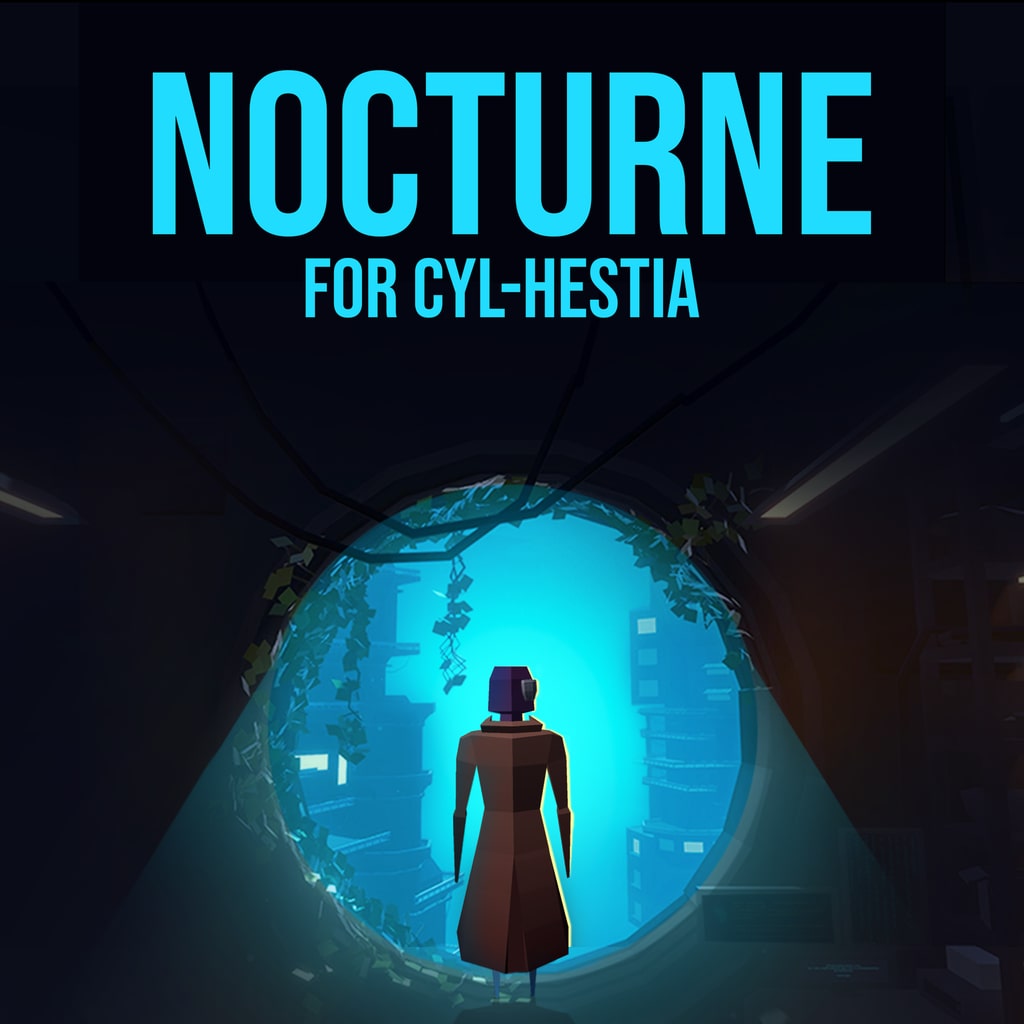
There is something quietly haunting about Nocturne for Cyl-Hestia. It is not a horror game, nor is it particularly action-driven, yet it carries an oppressive weight that lingers long after the credits roll. The streets of Cyl-Hestia seem to be holding their breath. Citizens speak in fragments. Memories are currency. History itself has become controlled, curated, and rewritten.
This is a game built on ideas first and mechanics second. While that approach occasionally leaves rough edges exposed, it also gives Nocturne for Cyl-Hestia a distinct identity. In an era crowded with combat systems and checklist design, it chooses investigation, atmosphere, and quiet rebellion. It is all the better for it.
Story & Setting
You play as Silas, a memorialist working for The Voice, an independent newspaper operating beneath the watchful gaze of an authoritarian regime. Cyl-Hestia is powered by Cerulyn, an ethereal blue flame whose mysterious properties sustain the city while feeding its hierarchy of control. The authorities manipulate collective memory, erasing inconvenient truths and reshaping history to preserve power.
Silas fights back not with weapons, but with remembrance. That premise alone gives the game a fascinating hook, but what surprised me was how earnestly it commits to it. This is not a detective adventure wearing philosophical clothing. Memory is the gameplay. Memory is progression. Memory is resistance.
The city itself becomes one of the game’s greatest strengths. Cyl-Hestia feels layered with forgotten pain and hidden truths. Neon reflections shimmer on rain-soaked streets while sacred towers loom over crowded lower districts, drowning in surveillance and fear. Every environment tells its own quiet story, often without a single line of dialogue.
More importantly, the world feels believable despite its surrealism. Citizens behave like people trapped beneath decades of manipulation, unsure of what they truly remember. That emotional uncertainty gives the setting an almost dreamlike sadness that lingers long after you stop playing.
Gameplay & Investigation
Exploration centres on gathering Memory Records from citizens across the city. These fragmented testimonies range from casual recollections to damaged confessions, each contributing small pieces to larger mysteries buried beneath official narratives. Individually, they can seem vague or incomplete. Together, they become revelations. Reconstructing Remembrances and Mnemosyne Visions forms the backbone of the experience.
The investigation systems reward patience and observation rather than brute-force problem-solving. Instead of highlighting clues in bright colours or pushing players towards obvious conclusions, Nocturne for Cyl-Hestia trusts you to interpret the information yourself. There is genuine satisfaction when disconnected memories suddenly align and expose a hidden truth the regime worked hard to erase. That slower pace will not work for everyone.
The opening hours, especially, demand patience. Silas spends considerable time interviewing citizens, exploring districts, and slowly piecing together patterns before the larger narrative truly reveals itself. Players expecting constant twists or fast-paced progression may struggle early on. Still, the measured pacing suits the game’s tone beautifully. Investigation feels meaningful because information is earned rather than handed over. Every recovered memory carries weight because you understand what it cost somebody to preserve it.
Sound Hacking & Puzzle Design
One of the game’s most interesting mechanics is its sound-hacking system. Silas uses analogue punch cards and audio-based programming tools to interact with forgotten technology tied to Cerulyn. These sequences involve decrypting records, opening sealed pathways, and manipulating ancient systems buried beneath the city. Conceptually, it is brilliant.
The retro-futuristic presentation gives these moments enormous personality. Watching old machinery sputter back to life through crackling sound frequencies feels strangely immersive. The tactile nature of punch-card programming also reinforces the world’s blend of mysticism and decaying technology. The puzzle quality itself varies somewhat.
Some solutions feel genuinely clever and encourage creative thinking. Others drift too close to trial and error, slowing the pace unnecessarily. Fortunately, even weaker puzzles remain visually engaging thanks to the game’s incredible atmosphere and sound design. There are moments when simply hearing distant mechanical echoes in abandoned corridors becomes more memorable than the puzzle itself.
Atmosphere & Presentation
Atmosphere is where Nocturne for Cyl-Hestia truly excels. The visual direction blends noir-inspired lighting with retro science-fiction aesthetics and subtle mystical imagery. Cerulyn’s blue glow casts an eerie warmth over the city, while surveillance drones and propaganda displays constantly remind you that somebody is always watching. It feels oppressive without becoming exhausting.
The soundtrack also deserves enormous praise. Music is used sparingly, often allowing ambient soundscapes to dominate scenes. Industrial hum, distant machinery, rainfall, and ghostly echoes create a constant sense of unease. When music finally swells during major revelations, the emotional impact lands beautifully.
Performance remains largely stable throughout the experience. Loading times are short, and exploration feels smooth. Character animations can occasionally appear stiff during conversations, particularly in emotionally charged scenes, but the strength of the writing usually compensates for those visual shortcomings.
Narrative Choice & Consequence
Perhaps the game’s most ambitious feature is its evolving city system. Every article published through The Voice permanently alters the world around you. Exposing corruption increases surveillance. Military checkpoints appear in previously safe districts. Citizens begin to treat Silas differently as public opinion shifts. Truth becomes dangerous.
This mechanic gives player decisions genuine narrative consequences rather than superficial branching dialogue. Publishing information feels powerful because you witness direct societal reactions unfolding across the city. Some citizens grow hopeful. Others become fearful. Certain allies even question whether exposing the truth is worth the chaos it creates. That moral uncertainty gives the story real emotional depth.
The writing consistently explores themes of memory, identity, propaganda, and historical revisionism without becoming preachy. Conversations often feel intimate and reflective, allowing characters to discuss deeply personal fears alongside broader political ideas.
Not every character receives equal depth, however. Some supporting figures feel more symbolic than fully realised individuals. Silas himself is intentionally restrained, acting more as an observer than a charismatic lead. Personally, I found that quietness fitting for the role, though players wanting a louder or more expressive protagonist may struggle to connect with him emotionally.
Final Verdict
Nocturne for Cyl-Hestia is a thoughtful, atmospheric mystery that prioritises intelligence, patience, and emotional reflection over spectacle. Its memory-reconstruction systems, evolving world design, and haunting presentation create a genuinely distinctive experience that stands apart from traditional narrative adventures.
While uneven puzzle pacing and occasionally distant characterisation keep it from greatness, the game’s ambition and emotional weight leave a lasting impression. This is the kind of science fiction that trusts players to sit with difficult ideas rather than rushing towards explosions or easy answers. In a medium obsessed with noise, Nocturne for Cyl-Hestia succeeds through quiet conviction.