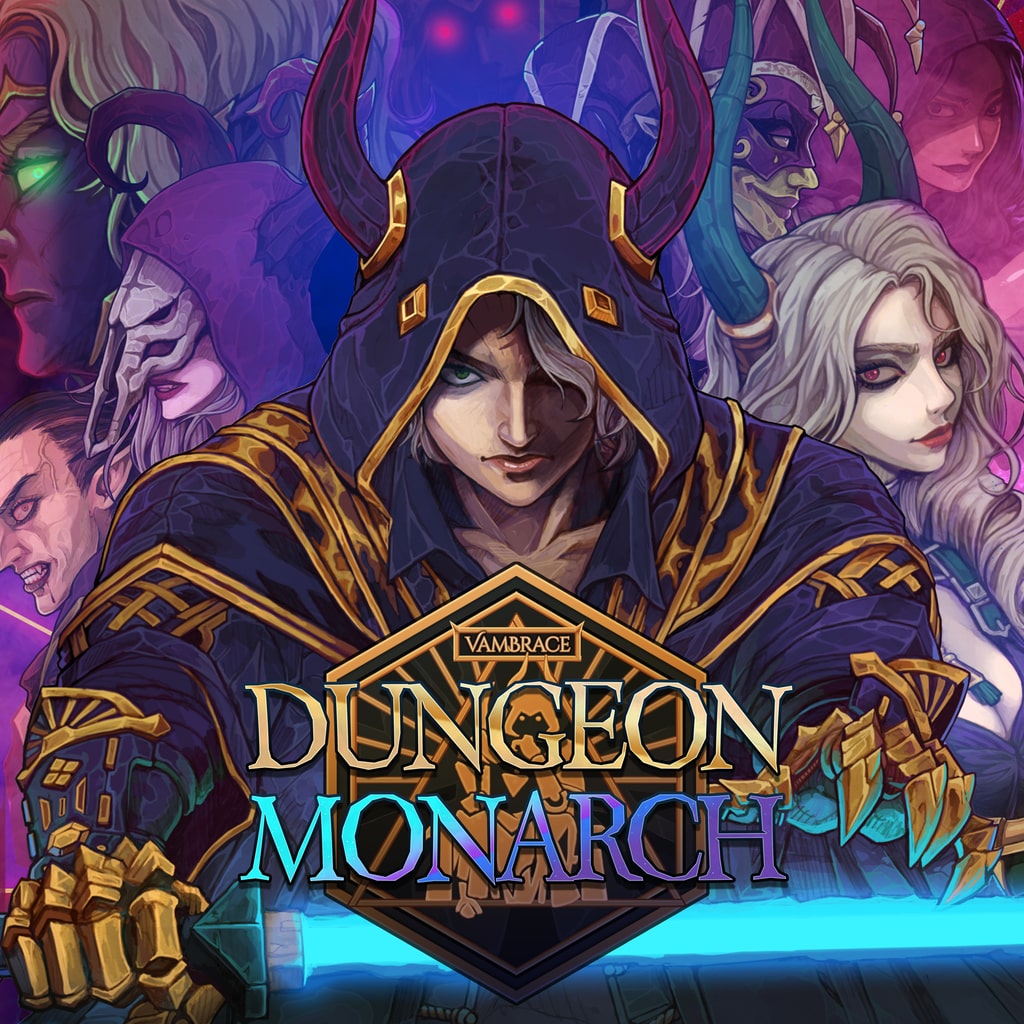
Vambrace: Dungeon Monarch is an intriguing hybrid—a game that blends roguelike progression, tactical survival, and kingdom management with heavy narrative trappings. Designed to evoke a sense of grim, subterranean exploration alongside burdensome leadership decisions, it straddles genres without fully settling into any one of them. In its best moments, Vambrace feels like an immersive, atmospheric venture into subterranean dread; in its weaker stretches, it feels overburdened by systems that neither cohere nor reward sustained play.
Dungeon Monarch wears its influences clearly: echoes of dark fantasy classics, survival management games, and narrative-driven RPGs. The ambition is evident. Whether the execution matches that ambition is a more complicated question.
Premise and Setting: A Kingdom Below the Cracks
The world of Vambrace is rich with lore but delivered in a tone that leans toward the somber and portentous. You take on the role of a fledgling monarch charged with guiding a fledgling subterranean realm—one threatened by environmental decay, monstrous incursions, and the psychological strain of perpetual darkness.
This setting is atmospheric more than emphatic. The world is filled with forgotten histories, cryptic characters, and ominous events, but much of it is conveyed through dense text and low-contrast visuals that can struggle to justify their tone. The lore rewards meticulous reading, but narrative momentum frequently stalls beneath exposition rather than advancing through player choice or interactive engagement.
When the setting clicks, it can be compelling. There are moments of genuine world-building that make you care about your domain’s fate. Too often, however, this depth feels like an aspiration rather than an actuality.
Ruling vs. Surviving: Dual Systems in Conflict
Dungeon Monarch is, at its heart, a game of dual responsibilities: governance and expedition.
As ruler, you must make managerial decisions that affect resources, morale, and the physical stability of your domain. Citizens require food, shelter, health care, and security. Policies have consequences. Ignoring one need tends to amplify another. This structure has potential for meaningful leadership challenge, but in practice it often feels like juggling timers rather than making strategic decisions. Resource scarcity is a persistent stressor, but not necessarily an engaging one.
The expedition layer—sending parties into dungeons to gather resources, recruit allies, or confront threats—is designed to balance this burden. These excursions deploy party members with distinct abilities into procedural environments. Combat and exploration here mix turn-based tactics with risk management. Success grants materials and recruits; failure feeds back into the kingdom’s instability.
This duality is compelling in concept. However, the interaction between modes is loose: expeditions feel distinct from governance, and the consequences linking the two are often opaque or delayed. The result is a rhythm that oscillates between disconnected loops, rather than a synthesis of strategy and narrative.
Combat and Exploration: Roguelike Roads
Combat in Vambrace is turn-based and tactical. Positioning, skills, and resource usage matter. The danger comes not from overwhelming complexity, but from attrition and poor planning. Each expedition is a survival exercise more than a contest of skill expression.
Enemies are varied enough to require adaptation, but encounters lack the spark of tightly designed tactical puzzles. Many battles resolve through attrition rather than ingenuity. When the party’s balance works, fights can feel efficient; when it falters, frustrations arise not from clever opposition but from design bluntness.
Exploration within dungeons is procedurally assembled, and while this adds variety it also introduces uneven pacing. Some runs generate intriguing choke points and resource dilemmas; others feel repetitive or random. The loop of risk and reward is present, but not consistently engaging.
Leadership and Decision-Making
In principle, kingdom management should be a standout feature. Vambrace’s leadership systems are designed to force trade-offs: invest in food production or fortifications? Respond to citizen requests or prepare for the next expedition? These dilemmas are thematically sound and echo the tone of a beleaguered subterranean sovereign.
In practice, however, choices rarely branch meaningfully. They often lead to predictable outcomes, and the consequences can feel arbitrary rather than emergent. The game hints at political intrigue, shifting allegiances, and moral complexity, but rarely sustains those threads in a way that feels consequential.
The leadership layer is further complicated by a UI that conveys information densely but not always intuitively. Important indicators can be obscured, and critical feedback on decisions can lag, making it harder to learn from mistakes or adjust strategy effectively.
Visual and Audio Design: Atmosphere at a Cost
Visually, Dungeon Monarch commits to a subdued, gothic aesthetic. The palette is dominated by low light, muted tones, and heavy shadows. This reinforces the oppressive subterranean theme, but it also risks visual fatigue. Environments often blur into one another, and character models lack distinctive detail. The result is an atmosphere that often feels static rather than dynamic.
Animations are serviceable but not expressive. UI elements are weighted toward text and indicators, reinforcing a simulation feel rather than an immersive drama.
Audio design leans into ambience. Sparse music, environmental rumble, and procedural sound cues help establish mood, but there are few standout musical moments to punctuate narrative beats or mechanical shifts.
Pacing and Engagement
Dungeon Monarch is a slow-cooked experience. Systems unfold gradually, and progression can feel incremental. The Complete Edition bundles additional content and balance adjustments, but the core rhythm remains the same: rule, scrape survival, send expeditions, repeat.
For players who enjoy meticulous resource management and patient survival gameplay, this pacing might be welcome. For others seeking a more immediate payoff or clearer sense of narrative progression, the slow tempo may feel like tedium rather than tension.
One persistent issue is that peaks—moments of tension or revelation—are not spaced in a way that sustains engagement. The game can spend long stretches processing micro-decisions that feel important only in hindsight, punctuated by occasional spikes that are dramatic but insufficiently foreshadowed or resolved.
Final Verdict
Vambrace: Dungeon Monarch is a game with thoughtful ambition and thematic focus. It attempts to fuse survival, management, and tactical combat into a consolidated whole with a distinctive tone. When the systems align, the experience can be atmospheric and contemplative, rewarding careful thought and commitment.
However, those alignments are inconsistent. The separation between kingdom management and dungeon exploration dilutes their interplay. Combat and exploration lack the mechanical refinement to sustain long-term interest. Narrative identity is present, but often obscured beneath systemic drudgery rather than enhanced by it.
Dungeon Monarch is best approached by players prepared for slow, systemic play and long-term investment. It rewards patience, but it rarely astonishes. Its greatest success lies in its cohesive thematic vision: ruling from the depths is meant to feel difficult, murky, and burdened by consequence. As a simulation of leadership under pressure, it occasionally resonates. As a game built for sustained engagement, it often struggles to justify its breadth.