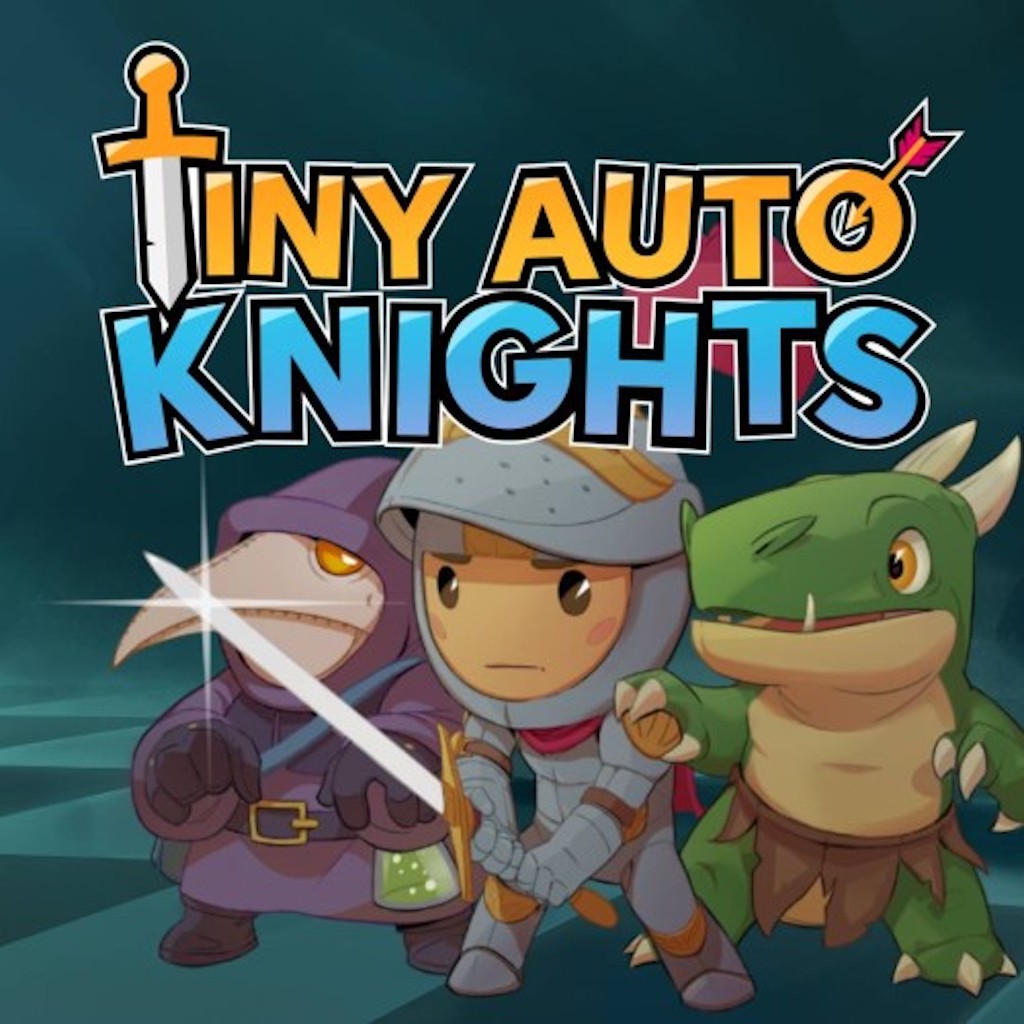
There is a quiet confidence running through Tiny Auto Knights that becomes apparent almost immediately. It is not a game that tries to overwhelm with spectacle or urgency. Instead, it slows the auto-battler genre down to something more deliberate, more reflective, and surprisingly meditative.
Developed and published by Mumpitz Games, this November 2025 release reworks competitive autobattling into an asynchronous PvP experience built around a compact 3×3 grid. There is no real-time combat pressure, no frantic decision making under a ticking clock. Instead, you build your team, refine your formation, and release it into a system that plays out independently.
What returns is a strategy experience built almost entirely on preparation and consequence. You are not reacting to opponents. You are anticipating them, then waiting to see whether your assumptions hold. That shift in structure defines everything about how the game feels.
Strategy in a Smaller Space
The 3×3 grid is the entire battlefield, and it carries far more strategic weight than its simplicity suggests. Every placement matters. Every empty tile represents a decision not made.
Heroes are positioned with intention, and synergy is the core language of the game. You are constantly balancing immediate strength against long term interaction, deciding whether a unit earns its place through individual power or contribution to a larger structure.
Early progression encourages experimentation. You try combinations, test interactions, and gradually build an understanding of how systems overlap. But as you advance, efficiency begins to take over. Stronger builds are not just possible, they become expected. This gradual tightening of possibilities shifts the experience from discovery into refinement.
Asynchronous Combat and Delayed Tension
The asynchronous PvP structure fundamentally reshapes the emotional rhythm of play. Once your team is deployed, you are removed from the moment-to-moment action entirely. Battles resolve on their own, often while you are not actively engaged with the game. When you return, the outcome is already decided.
This creates a very specific kind of tension. There is no reaction window, no opportunity to adjust mid fight. Instead, you are left analysing results after the fact, treating victories as confirmation and defeats as structural puzzles.
That distance from combat removes urgency but introduces reflection. You are constantly evaluating whether your logic held up when tested outside your control. It makes each outcome feel less like performance and more like evaluation.
Synergy, Scaling, and Controlled Growth
The hero system is where most of the depth resides. Units are defined by roles and synergy types that interact in predictable but meaningful ways. Building a strong team is less about individual strength and more about how each piece contributes to a wider configuration.
Relics introduce additional variation, offering passive effects that can reinforce or slightly alter builds. However, they tend to support established strategies rather than disrupt them entirely.
As a result, progression feels less like expansion and more like refinement. You are not unlocking radically new approaches so much as improving your execution of existing ones. That focus gives the game a strong sense of direction, even if it limits surprise at higher levels.
At a certain point, the strategic space begins to narrow. Optimised builds emerge naturally, and once they do, experimentation becomes less attractive than efficiency. This is where long term variety can start to compress, as dominant strategies gradually define the shape of higher level play. Even so, the underlying clarity of the system keeps it readable and engaging, even when it becomes more rigid.
A Calm but Addictive Loop
Despite its restrained structure, Tiny Auto Knights builds a compelling rhythm. Matches are short, results are immediate, and iteration is effortless.
There is always another build to try, another synergy to refine, another variation worth testing. Even losses tend to feel instructive rather than discouraging.
This framing is crucial to its appeal. The game does not punish experimentation. It encourages it, even when outcomes are imperfect. The loop becomes quietly addictive not because of intensity, but because of accessibility.
Presentation That Prioritises Clarity
Visually, the game is deliberately minimal. Unit readability is prioritised over detail, ensuring that positioning and composition are always immediately understandable.
This clarity is essential in a system where outcomes are determined before combat even begins. If you cannot read the board quickly, you cannot evaluate your strategy effectively.
Audio and presentation remain understated throughout. Sound effects provide feedback without distraction, and music supports the experience without demanding attention. Everything is designed to keep focus on decision making.
Final Verdict
Tiny Auto Knights is a strategy game built on reduction. By removing real-time pressure and compressing the battlefield into a 3×3 grid, it creates a space where every decision carries weight before combat even begins.
Its greatest strength lies in clarity. Systems are easy to grasp, outcomes are easy to interpret, and matches are quick to repeat. Its weakness lies in long term variety, where emerging meta builds can begin to narrow strategic diversity over time.
Even so, it delivers a focused and thoughtful take on the auto-battler genre. It is not about chaos or reaction. It is about preparation, structure, and the quiet satisfaction of seeing your plan unfold exactly as intended.