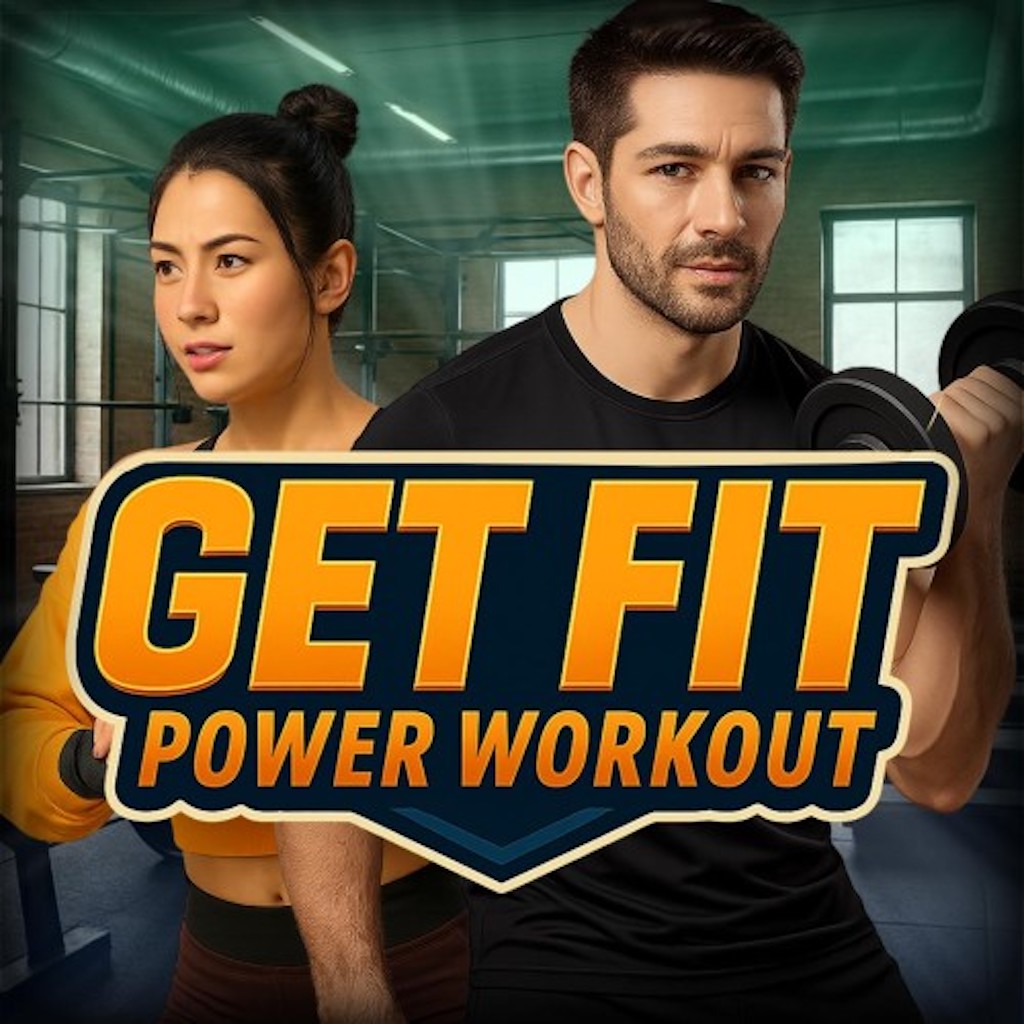
There is a quiet honesty to GET FIT – Power Workout that separates it from most fitness software on the market. It does not try to turn exercise into fantasy, nor does it wrap it in layers of gamified spectacle. Instead, it presents itself as a straightforward training tool, built around structure, repetition, and consistency.
Developed by TB Games and published by EpiXR Games, this April 2026 release positions itself firmly within the GET FIT series as a no-frills entry focused on at-home exercise routines. It leans heavily into guided workouts, motion tracking, and personalised training schedules rather than narrative framing or arcade style progression systems.
Where other fitness games might lean into adventure or abstraction, Power Workout strips everything back to the basics. You choose a routine, follow a trainer persona, and complete structured sets designed to be accessible with minimal equipment. The design philosophy is clear from the outset. This is not entertainment first. It is utility first. That decision shapes everything that follows.
A Workout Experience Built on Clarity
The structure of GET FIT – Power Workout is intentionally simple. Sessions are divided into clear categories targeting strength, mobility, or general conditioning. Each exercise is demonstrated on screen, with motion tracking providing feedback on form and completion.
There is no narrative progression or unlockable world to move through. Instead, progress is measured through consistency. Streak tracking, incremental routine unlocks, and basic achievement markers form the backbone of motivation.
This stripped back approach is both its biggest strength and its most limiting factor. For players intimidated by more complex fitness systems, the clarity here is immediately welcoming. There is no confusion about what you are supposed to do or how to do it.
However, that same simplicity means long term engagement depends entirely on personal discipline rather than external motivation systems.
Guidance Without Overbearing Presence
Trainer personas play an important role in shaping the tone of each session. Rather than functioning as characters in a gamified experience, they act more like instructional voices with slightly different motivational styles.
Some are calm and measured, focusing on technique and breathing. Others adopt a more energetic tone, encouraging pace and consistency. None of them push into excessive enthusiasm or forced personality, which helps maintain focus during workouts.
This restraint is important. Many fitness applications fail by overwhelming users with performative encouragement. Here, motivation is treated as steady reinforcement rather than emotional performance. It keeps the experience grounded, even during longer sessions.
Motion Tracking That Prioritises Accessibility
The motion tracking system is functional rather than precise. It recognises general movement patterns and provides feedback on completion and form, but it is not designed to replicate professional training equipment.
That limitation is not necessarily a flaw. Instead, it reflects the game’s broader philosophy of accessibility. The system is forgiving enough to keep users engaged without penalising minor inaccuracies, which helps reduce frustration for beginners.
More advanced users may find the feedback too broad, but for the intended audience, it strikes a practical balance between guidance and leniency.
Repetition as Structure, Not Punishment
Like any fitness system, repetition is unavoidable. Exercises recur frequently, and routines are built around familiar patterns that evolve slowly over time.
Rather than attempting to disguise repetition, Power Workout embraces it as part of habit building. The goal is not variety for its own sake, but consistency of movement. This design choice reinforces the idea that progress comes from repetition rather than novelty.
Over time, this can feel predictable. However, it also makes the system easier to adopt as a daily routine, which appears to be the core intention behind the design.
Presentation That Stays Out of the Way
Visually, the game prioritises clarity above all else. The interface is clean, with minimal distraction during active sessions. Exercise demonstrations are easy to follow, and prompts are kept unobtrusive.
Audio design follows the same principle. Background music is subdued, and trainer voices remain the primary source of guidance. Nothing competes for attention unnecessarily, which helps maintain focus during physical activity.
There is a noticeable absence of spectacle here, but that aligns with the game’s purpose. It is designed to facilitate movement, not distract from it.
Motivation and Long Term Engagement
The central question surrounding GET FIT – Power Workout is not whether it functions, but whether it sustains engagement over time.
The answer depends heavily on the player. The systems are designed to encourage routine rather than excitement. Streak tracking and gradual unlocks provide light reinforcement, but there is no narrative hook or dramatic progression to maintain long term interest.
For players already motivated to exercise, this structure works well. For those relying on external engagement systems, the experience may feel repetitive after extended use. This is a tool built around discipline rather than entertainment loops.
Final Verdict
GET FIT – Power Workout is not attempting to redefine fitness games. It is not interested in narrative framing, gamified progression, or immersive spectacle. Instead, it focuses entirely on being a functional and accessible exercise companion.
Its strengths lie in clarity, structure, and ease of use. Workouts are easy to follow, motion tracking is forgiving, and the overall system is designed to reduce barriers to entry. Its limitations are equally clear, particularly in its reliance on repetition and lack of long term motivational variety.
Still, there is value in a system that simply helps you move without complication. It understands its purpose and does not overextend beyond it. For users seeking a straightforward at home fitness tool, it delivers exactly what it promises.