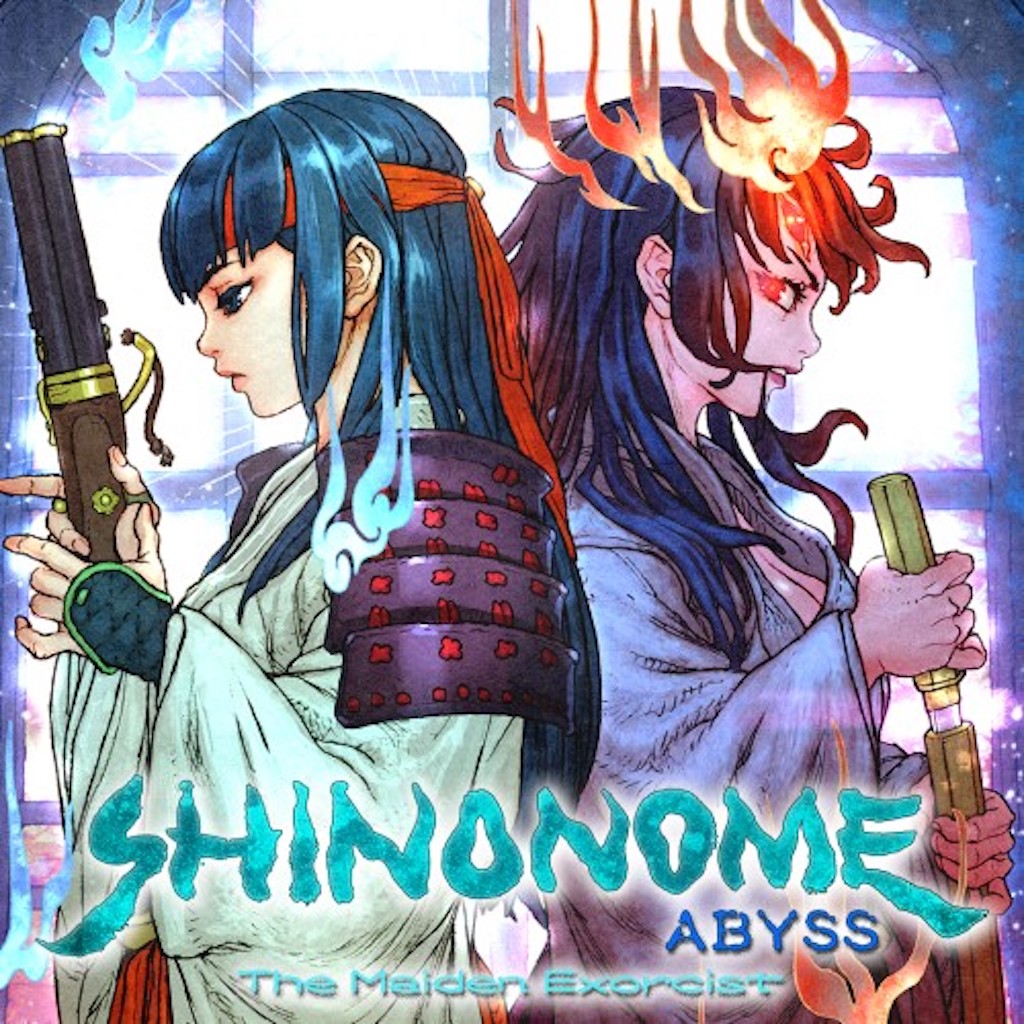
There’s something immediately striking about SHINONOME ABYSS: The Maiden Exorcist. In an era where horror games often rely on loud jump scares or cinematic spectacle, developer WODAN takes a far more restrained—and arguably more unsettling—approach. Sound, or more precisely the absence of it, becomes your greatest ally and your most frightening enemy.
With creative direction from Kenichi Iwao—best known for his work on Resident Evil—and character designs by Tatsuya Yoshikawa, expectations are naturally high. What emerges is a uniquely structured horror-action hybrid that leans heavily into psychological tension, tactical thinking, and repetition-driven mastery.
It doesn’t always hit every note perfectly, but when it works, SHINONOME ABYSS is quietly brilliant.
A Shrine Maiden Lost in the Abyss
You play as Yono, a shrine maiden searching for her missing brother—an Onmyouji who vanished while investigating supernatural disturbances. This premise establishes the tone, but don’t expect a heavily cinematic narrative. Like many roguelite-related experiences, the story unfolds gradually through environmental clues, brief encounters, and repeat runs.
The titular “Abyss” takes the form of ever-shifting haunted mansions filled with Mononoke—vengeful spirits rooted in Japanese folklore. These aren’t just enemies to defeat; they’re forces to outthink, avoid, and manipulate.
Yono herself is an interesting protagonist, particularly due to her dual-state mechanic. When pushed to the brink, she undergoes a transformation that grants her increased power. It’s a compelling risk-reward system—do you play cautiously, or flirt with danger to unleash something stronger?
Narratively, however, the game remains understated to a fault. While the atmosphere is rich, character development is minimal, and players seeking a deeply emotional or plot-heavy experience may come away underwhelmed.
Listening is Survival
The core mechanic of SHINONOME ABYSS is its sound-based gameplay. Before entering a room, you can listen carefully to determine what awaits—such as the number of enemies, their types, and possibly how they will behave.
It’s a clever idea that turns every doorway into a tense moment. You’re not rushing blindly into encounters; you’re analysing, predicting, and preparing.
Once inside, combat shifts from direct confrontation to manipulation. Yono depends on traps—both placed and environmental. Broken floors, hidden hazards, and even fireplaces become tools in your arsenal. Luring enemies into these traps requires patience and precision, creating a methodical pace that distinguishes it from more action-oriented horror titles.
This design fosters a rewarding cycle of observation, planning, and execution. When you manage to outsmart a room full of Mononoke without taking damage, it feels genuinely earned in a way few games achieve.
However, this system can also seem limiting. Players expecting fast-paced combat might find the deliberate tempo frustrating, especially in the early stages before they fully understand the mechanics.
Three Modes, Three Flavours of Fear
The game provides three unique modes, each designed for different playstyles.
- Harai – Fixed maps with puzzle-like challenges
- Misogi – Randomised, more accessible runs
- Gyou – Hardcore survival with brutal difficulty
This structure provides SHINONOME ABYSS with an unexpected level of longevity. Harai mode is perfect for learning the mechanics, offering curated challenges that resemble tactical puzzles. Misogi introduces unpredictability, while Gyou removes safety nets altogether, demanding near-perfect execution.
Among the three, Gyou is where the game’s systems truly excel—yet it also reveals its flaws. Difficulty spikes can feel punishing, and a single mistake can undo considerable progress. For some players, this will be exhilarating; for others, tiring.
Atmosphere Over Spectacle
Visually, SHINONOME ABYSS adopts a moody, subdued aesthetic. The mansions are dimly lit, with flickering shadows and subtle environmental details that reward careful observation.
Character designs, courtesy of Yoshikawa, stand out. Yono’s design balances tradition and modernity, while the Mononoke range from eerie to grotesque without feeling overdesigned.
What truly enhances the experience, however, is the sound design. Every creak, whisper, and distant movement carries meaning. The game demands attentive listening—not just casual hearing. Playing with headphones isn’t just recommended; it’s essential.
The downside is that the environments can start to feel repetitive over time. While the layouts change, the visual themes don’t evolve as much as one might hope, leading to a sense of familiarity that slightly dulls the horror.
A Learning Curve That Cuts Both Ways
SHINONOME ABYSS is not a game that guides you step-by-step. Tutorials are sparse, and much of the learning comes through failure.
For players who enjoy mastering systems through repetition, this is part of the appeal. Each run teaches you something new—how a certain enemy behaves, how to better position traps, how to manage risk.
However, for others, the lack of guidance can be a hurdle. Early frustration is almost certain, and the game doesn’t always do enough to introduce players to its more complex mechanics.
Performance and Platform Differences
On Nintendo Switch, the game runs smoothly in both docked and handheld modes, although the darker visuals can be slightly more difficult to interpret on smaller screens. The PC version offers sharper visuals and more consistent lighting, but the core experience remains the same across both platforms.
Load times are minimal, which is essential for a game built around repeated runs. There’s little technical friction, enabling players to quickly rejoin after failure—a necessity given the game’s difficulty.
Where It Falters
Despite its innovative mechanics, SHINONOME ABYSS has some flaws. The repetition of environments, limited narrative depth, and occasionally punishing difficulty can become tiresome over long play sessions.
Furthermore, the reliance on audio—while a strength—can also be a drawback in less-than-ideal play environments. Background noise or poor audio setups can significantly affect gameplay, making it less accessible than it could be.
Final Verdict
SHINONOME ABYSS: The Maiden Exorcist is a daring, atmospheric experiment that focuses on tension and strategy rather than spectacle. It’s not suitable for everyone—its slow pace, steep learning curve, and reliance on audio will inevitably divide players.
However, for those willing to engage with its systems, it provides a uniquely immersive horror experience that feels both fresh and profoundly unsettling.
While it may not reach the heights of its spiritual predecessors, it establishes a distinctive identity within a crowded genre.