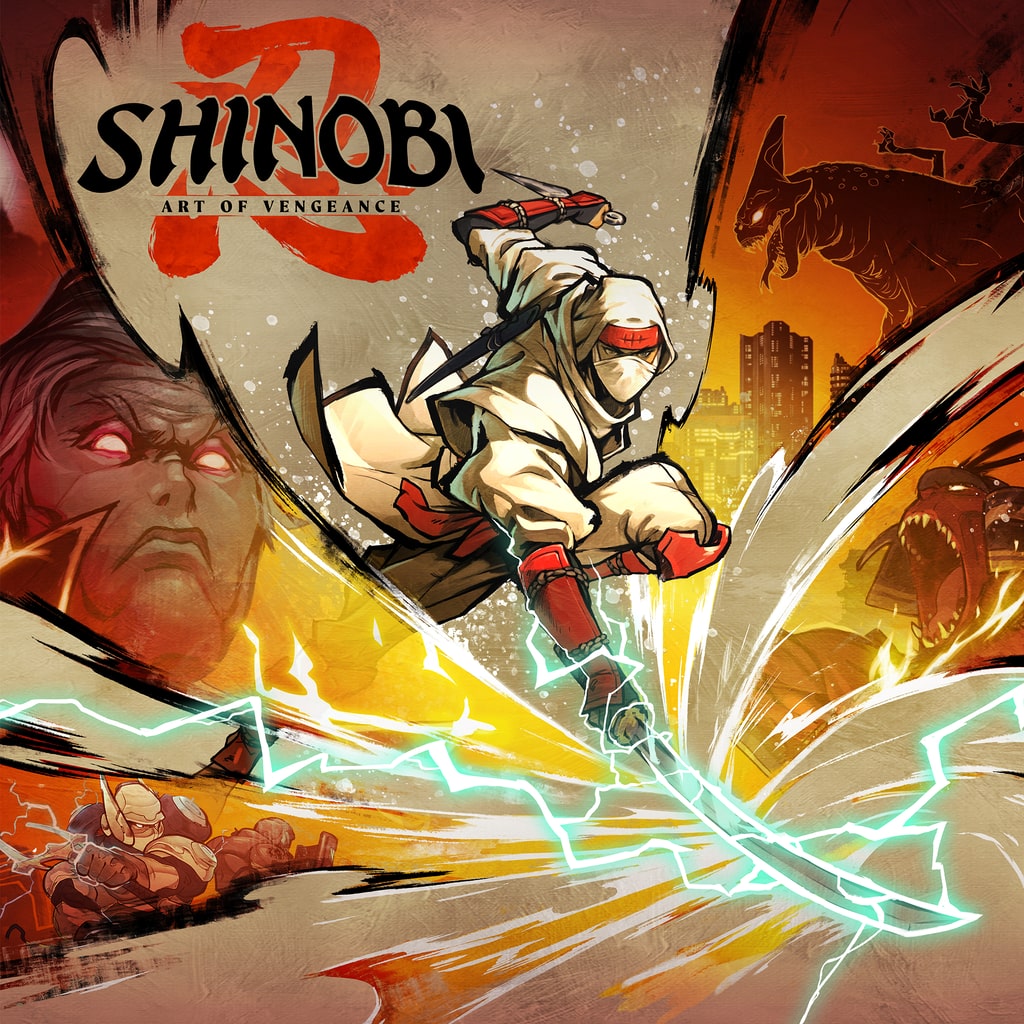
Some games feel like they have been waiting patiently for the right moment to return. SHINOBI is one of them. For a series that helped define the ruthless side of 2D action gaming, bringing Joe Musashi back in 2025 could have easily been an exercise in nostalgia, a quick trip back to the arcade before everybody moved on to something else. Instead, SHINOBI: Art of Vengeance takes everything that made the old games so memorable, throws a bucket of modern polish over it, and somehow manages to make being a ninja feel every bit as cool as it did when we were kids.
Created in collaboration with Lizardcube, the studio behind Streets of Rage 4, Art of Vengeance is a beautifully hand-drawn action platformer that understands the importance of momentum. Joe is rarely standing still, and neither is the game. You dash, slash, leap, juggle enemies, throw projectiles, and tear through beautifully designed environments with the sort of confidence that only comes when a developer has put an enormous amount of thought into making every movement feel right. It is fast, responsive, and occasionally downright brutal, but underneath all that ninja mayhem is a remarkably elegant combat system that rewards players for actually learning how to use it.
Welcome Home, Joe
Joe Musashi has returned from a previous adventure only to find that home is no longer home. His village has been reduced to ashes, and his clan has been turned to stone, leaving Joe with very little to come back to and one very obvious reason to pick up his sword again. It is a wonderfully straightforward revenge story, and that simplicity works because Art of Vengeance never buries its action beneath unnecessary exposition.
There is something almost timeless about the setup. Your home has been destroyed, your people have been taken from you, and there is an enemy responsible. So what do you do? You sharpen the sword, prepare the shurikens, and go looking for trouble. Joe’s journey might be driven by vengeance, but the world around him gives it enough personality to make every stage feel like part of a larger adventure rather than simply another collection of enemies waiting to be sliced apart.
A Hand Drawn Masterpiece
The first thing that hits you about Art of Vengeance is how gorgeous it looks. Lizardcube has created a visual style that feels both modern and rooted in the traditions of classic Japanese animation and 2D action games, with expressive character animation and beautifully illustrated environments that give every location its own identity. Some of the scenery has an almost painted quality, and the contrast between Joe’s fluid movements and the detailed backgrounds makes the whole thing feel like a living piece of artwork.
The important thing is that the visuals are not simply there to make screenshots look pretty. The animation contributes directly to the feel of combat, making attacks easy to read while giving Joe a tremendous sense of physicality. Enemies react convincingly to being struck, projectiles fly through the air with purpose, and every successful sequence of attacks has a satisfying rhythm. It is the sort of game where you can spend as much time admiring what is happening on screen as you do trying not to get hit by it.
The Art Of The Ninja
At the heart of the experience is combat, and this is where Art of Vengeance really earns its stripes. Joe has a wonderfully varied selection of moves that let him deal with enemies in several ways, and the game encourages you to keep moving rather than simply standing in front of opponents and hammering the attack button. Juggling enemies in the air, chaining attacks together and switching between techniques create a combat system that is immediately accessible yet has considerably more depth than you might initially expect.
The juggling system is particularly satisfying. Launch an enemy into the air and you can follow them upwards, continuing the assault before sending them crashing back towards the ground. There is a lovely sense of rhythm to this, especially when several enemies are involved and you start bouncing between targets. It makes Joe feel less like a character walking through a level and more like a weapon that happens to have a human being attached to it.
Keep Moving Or Pay The Price
The brilliance of the combat becomes even clearer when you realise how much the game expects you to react on the move. Enemies attack from different directions, projectiles need to be dealt with, and the environment itself can demand precise timing. Standing still is rarely the answer, particularly as the difficulty rises and enemies appear in larger groups.
This gives Art of Vengeance a wonderful flow. A good player can make Joe look almost effortless, dashing between opponents, launching enemies into the air, and weaving through attacks before striking back. A less experienced player, meanwhile, can still enjoy the game while gradually learning those techniques. That balance between accessibility and mastery is one of the game’s strongest qualities.
More Than Just A Straight Line
Although Art of Vengeance follows a stage-based structure, there is plenty of reason to look beyond the obvious route. Multiple paths and areas that can be discovered or unlocked encourage exploration, so rushing towards the end of a level is not always the best approach. Sometimes the most interesting reward is hidden behind a route that initially seems deliberately designed to spark curiosity.
This also gives the game a degree of replayability without relying on roguelite mechanics. You are not repeatedly starting from scratch and hoping for a better collection of random upgrades. Instead, the individual stages are designed as proper environments that reward observation and skill. Going back through an earlier area with a better understanding of Joe’s abilities can reveal things you completely missed the first time around.
The Bosses Mean Business
Every good ninja adventure needs bosses, and Art of Vengeance certainly understands the assignment. These larger encounters provide some of the game’s most memorable moments, forcing you to apply everything you have learned under considerably more pressure. They are not simply oversized enemies with enormous health bars, either, with attacks and patterns that demand attention.
Boss battles also provide a welcome change of pace from regular combat. There is something wonderfully old-school about entering an arena, seeing a huge enemy appear and immediately thinking, “Right, how on earth am I going to beat that?” The answer is usually a mixture of patience, timing and knowing when to stop being greedy with your attacks, which makes finally bringing a boss down feel genuinely satisfying.
Shurikens, Projectiles And Plenty Of Pain
Joe’s abilities extend beyond simply hitting things with his sword. Projectile management becomes an important part of combat, giving you another way to control groups of enemies and deal with threats that would otherwise be awkward to reach. Learning when to use these abilities, rather than simply throwing everything you have at the nearest enemy, adds another layer of decision-making.
This is where the game starts rewarding players who want to master it rather than simply finish it. You can absolutely enjoy Art of Vengeance by playing naturally and reacting to what is happening around you, but the deeper systems are there for those willing to experiment. Once everything starts clicking, you begin to understand why the combat has such a satisfying reputation.
Platforming With Teeth
Combat might be the star of the show, but the platforming deserves plenty of credit too. Precise movement, air dashes and carefully timed jumps turn the environments into more than decorative backdrops, and some sections demand considerably more concentration than you might expect from an action game. There is real satisfaction in making a difficult sequence look easy after failing it several times.
The platforming also works because Joe feels so responsive. When a jump goes wrong, it generally feels like your mistake rather than the game’s fault, which is exactly what you want from this type of experience. You learn the timing, try again and eventually sail through the section that previously had you swearing at the television.
A Soundtrack Worth Fighting To
The audio is another area where Art of Vengeance punches well above its weight. The soundtrack brings together the talents of Tee Lopes and legendary composer Yuzo Koshiro, a pairing that will appeal to fans of classic and modern game music. The result is a soundtrack that captures both sides of the game’s personality, blending modern energy with the unmistakable spirit of old-school SEGA action.
Music matters enormously in a game like this because combat has a rhythm of its own. When the soundtrack kicks in as enemies fill the screen, it adds another layer of excitement to the action. It is the kind of music that lingers long after you have stopped playing, which is always a good sign.
A Ninja Game With A Modern Soul
What makes SHINOBI: Art of Vengeance so impressive is that it does not simply copy the past. It respects the old SHINOBI games without being trapped by them, taking the core idea of Joe Musashi as an unstoppable ninja and building a modern action platformer around it. The hand-drawn presentation, responsive movement, extensive combat system and branching paths make it feel like a game firmly in the present.
There are occasional moments when the sheer amount happening on screen can be a little overwhelming, and some of the most intense combat sequences can put a fair amount of pressure on the presentation. These are relatively minor blemishes, though, because the overall experience remains remarkably smooth and responsive. More importantly, the game never loses sight of what matters most: moving forward, fighting brilliantly designed enemies and feeling like an absolute ninja while doing it.
Final Verdict
SHINOBI: Art of Vengeance is exactly the sort of revival classic franchises deserve. Rather than dragging Joe Musashi into the modern era simply to put a familiar name on a new game, Lizardcube has clearly understood what made SHINOBI special and built upon those foundations with enormous care. The result is fast, beautiful, challenging and packed with enough combat depth to keep you experimenting long after you have learned the basics.
The hand-drawn artwork is superb, the animation gives every attack real weight, and the soundtrack is an absolute treat for anyone who appreciates great game music. More importantly, the combat feels fantastic, with juggling, air dashes, projectiles and rapid movement combining into a system that is easy to pick up but increasingly rewarding to master. Add branching paths, memorable bosses and genuinely demanding platforming, and you have a game that manages to feel both like a celebration of SHINOBI’s history and a thoroughly modern action adventure.
There is an unmistakable sense of confidence running through Art of Vengeance. It knows exactly what kind of game it wants to be, and thankfully it never strays from that goal. Joe Musashi is back, his village needs avenging, and there are an awful lot of enemies about to discover that they have made a rather serious mistake.