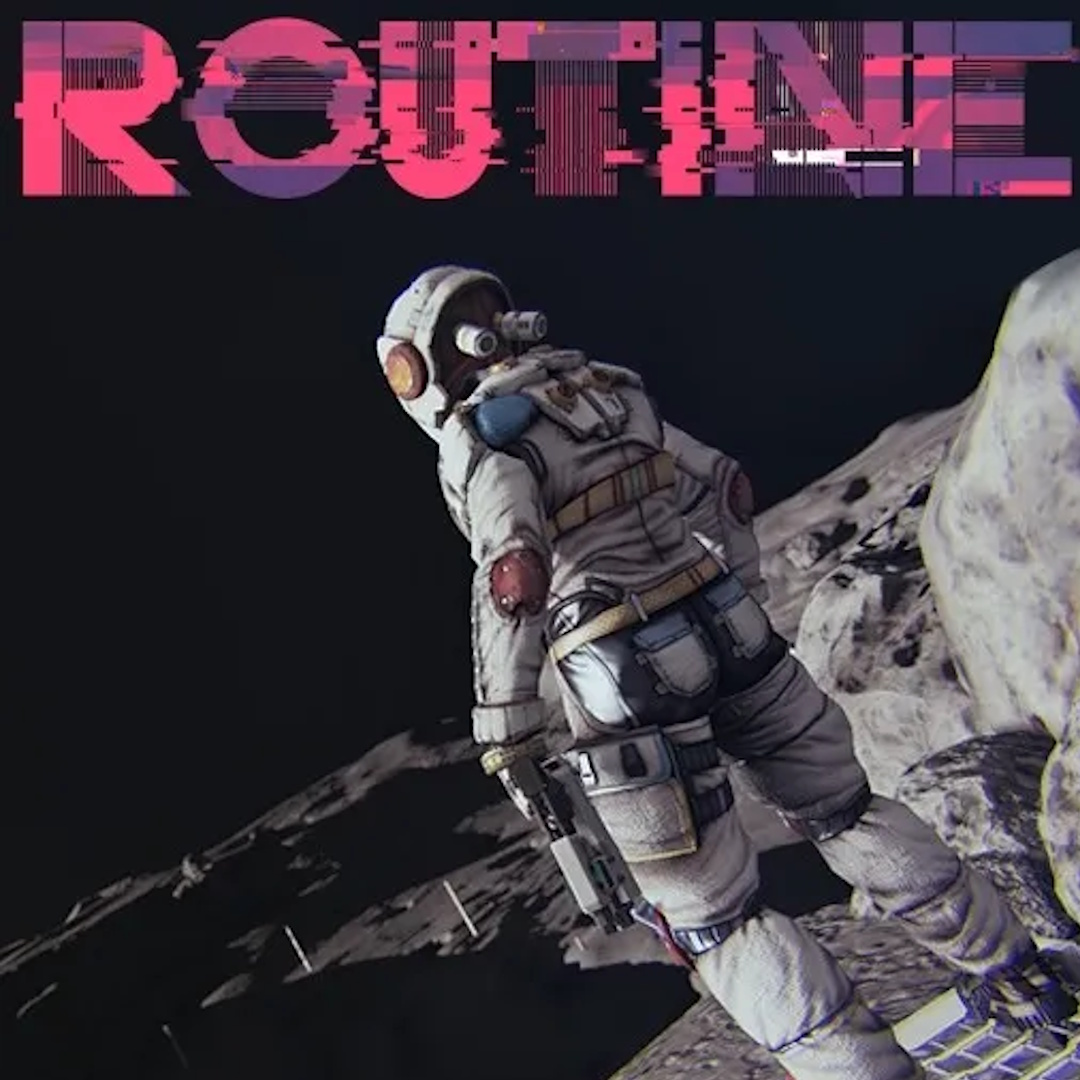
ROUTINE has existed in that strange twilight realm of gaming for over a decade—announced, delayed, re-announced, rebooted, and whispered about for years as one of PC gaming’s long-lost sci-fi horror promises. Now that it has finally emerged on Steam, the real question is whether the game itself can match the mythos that’s built around it. The answer is both exciting and complicated: ROUTINE is a haunting, atmospheric triumph in environmental tension, sometimes undermined by uneven pacing and a narrower gameplay vocabulary than expected. But in its best moments, it delivers some of the most nerve-shredding sci-fi survival horror you’ll play this year.
At its core, ROUTINE is an exploration-driven, first-person horror experience set on an abandoned lunar base drenched in 1980s-retro-futuristic design. Think CRT monitors, humming neon panels, analogue buttons, and a world where everything feels like it was assembled in the future imagined by Alien, Blade Runner, and Space Odyssey fans in 1983. This aesthetic has always been the game’s greatest hook, and in its final form, it’s nothing short of mesmerising. Every corridor feels tactile. Every flickering light looks like it’s powered by a machine designed before the concept of safety standards. The art direction is immaculate, and it’s the main reason exploring the base is so compelling—even when terror makes you want to turn back.
Unlike many modern horror games, ROUTINE doesn’t rely on constant jump scares or loud orchestral stabs. Instead, it builds dread through silence, architecture, and the persistent feeling that something is always watching. The lunar base is sprawling yet intimate, full of interlocking rooms, airlocks, ducts, labs, and living quarters that tell their own story. The developers show a real understanding of environmental storytelling; the world feels lived-in, abandoned, and still inexplicably alive. The analog machinery hums, the lights flicker irregularly, and sometimes a shadow moves just slightly where it shouldn’t. ROUTINE excels at making your imagination do the heavy lifting.
This restraint compliments the game’s mechanical focus on stealth and vulnerability. You’re not a soldier, and ROUTINE never pretends you are. You’re an ordinary person navigating a hostile facility filled with patrolling robotic threats—cold, emotionless machines designed with a terrifying level of uncanny familiarity. They don’t sprint or scream. They simply move, search, and kill with surgical efficiency. This understated predator design makes them more unsettling than many of horror’s usual monsters. When one turns its head toward you, with that distinct electronic whirr, it’s a genuinely chilling moment.
Gameplay revolves around quietly traversing the base, scavenging for clues, tools, and limited resources, all while avoiding or distracting these mechanical terrors. Your main gadget is the Cosmonaut Assistance Tool (C.A.T.), a multi-function device that offers scanning, limited hacking, and interaction capabilities. It’s not a weapon—not really—but it gives you just enough agency to feel like you have options without undermining the constant sense of fragility. You sneak. You peek around corners. You hold your breath. You move because staying still rarely feels safe for long.
This cat-and-mouse loop is tense and rewarding, especially early in the game when every noise feels like a mistake. The design leans hard into fear through powerlessness, and for the most part it succeeds. Fans of Alien: Isolation will feel comfortable, though ROUTINE is more compact and focused, with shorter but more concentrated bursts of danger.
Where ROUTINE sometimes struggles is in pacing. The game’s dedication to slow, atmospheric build-up is admirable, but it occasionally leads to stretches where players may wish for a more varied gameplay beat or clearer narrative propulsion. The story is intentionally cryptic, delivered through environmental clues, audio logs, and subtle world-building rather than exposition dumps. This approach will thrill some players and frustrate others, especially given how long the game lingered in development. Those expecting a dense, lore-heavy narrative unfolding in a traditional fashion may feel underfed, while players who thrive on ambiguity will appreciate the minimalist delivery.
Another point of contention lies in the AI behaviour. While often impressive, there are moments where robotic enemies seem either too sharp—spotting you from awkward positions—or too easily outmanoeuvred. Thankfully, these instances are infrequent, but they do disrupt the otherwise cohesive tension. Similarly, because combat isn’t really an option, dying occasionally feels more like a sudden punishment than a natural consequence of experimentation. The game’s save system is fair, but the repeated backtracking after an unexpected failure may irk some players.
That being said, ROUTINE shines brightest when all its elements lock together: the oppressive atmosphere, the slow-burn stealth, the analogue-era tech humming in your ears, and the creeping dread of a shadow turning out not to be a shadow at all. Few games capture the aesthetic and mood of retro sci-fi horror with this level of conviction. The attention to detail in lighting, texture work, and sound design is outstanding. The audio—especially the deep mechanical groans, echoing footsteps, and distant electronic chirps—elevates the entire experience.
Performance is also solid on modern hardware. The game loads quickly, runs smoothly, and maintains its visual fidelity without noticeable stuttering. The developers clearly spent their many years of reworking ensuring the game not only looks good but runs cleanly.
Ultimately, ROUTINE is a fascinating intersection of myth and reality: a long-gestating project that finally arrives as a tightly crafted, atmospheric horror experience that feels both old-school and forward-thinking. It doesn’t reinvent the genre, and it doesn’t need to. What it does is deliver a gripping sci-fi survival horror journey that thrives on subtlety, tension, and world-class environmental design.
For players who crave narrative hand-holding or combat-heavy horror, ROUTINE may feel too quiet, too opaque, or too methodical. But for those who relish dread built from ambience rather than jump scares—and who appreciate a beautifully realised vision of retro-future space horror—this is an experience worth sinking into.
ROUTINE isn’t perfect, but it’s a masterclass in atmosphere and slow-building terror, proving that sometimes the long wait really is worth it.