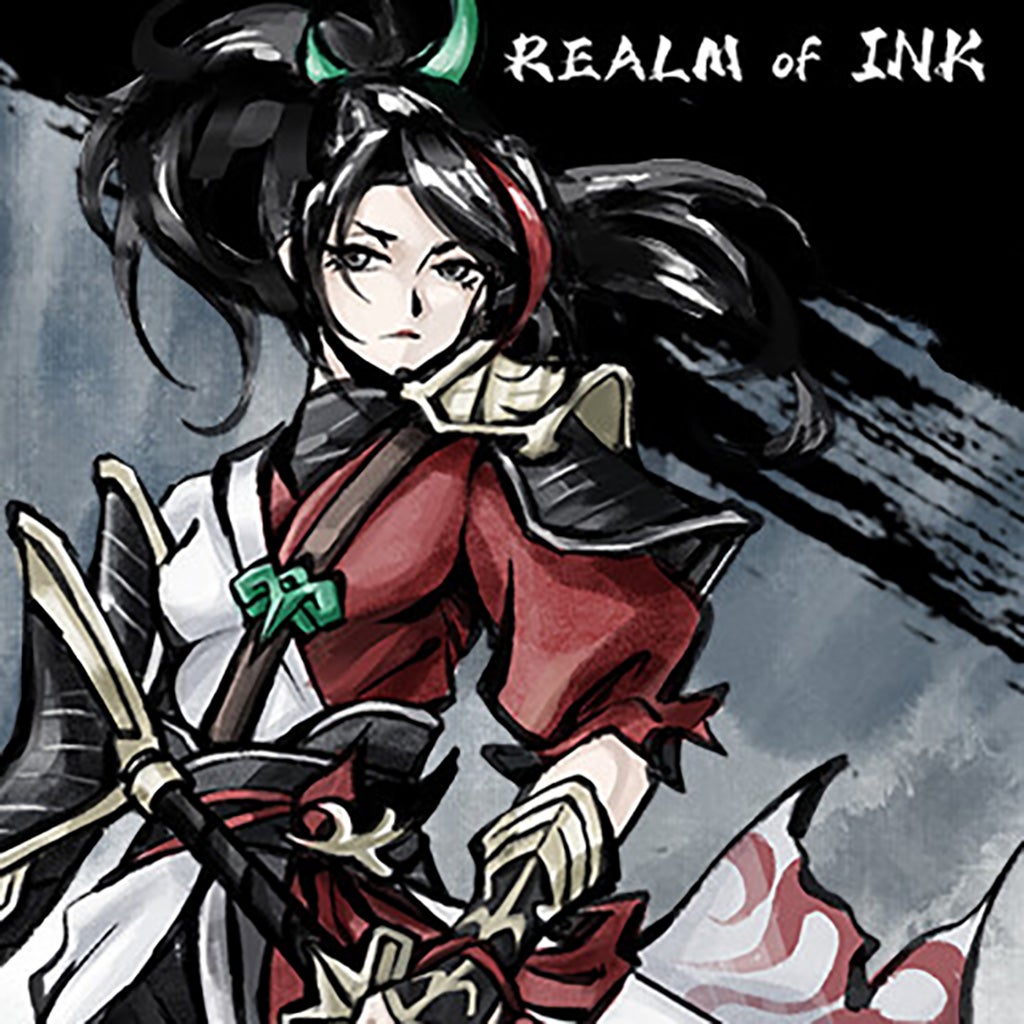
Roguelites live and die by repetition. Ask players to walk the same roads often enough, and eventually the combat loop, progression systems, and sense of discovery either click into place or collapse under their own weight. Realm of Ink understands this challenge from the outset. Every death matters. Every run reshapes possibility. Every return to the manuscript feels less like failure and more like turning another page in an unfinished legend. It is also one of the most visually beautiful roguelites in recent memory.
Drawing heavily on traditional Chinese ink-wash painting and Eastern mythology, Realm of Ink creates a world that feels hand-painted into existence. Forests flow like brush strokes. Enemies seem lifted from ancient scrolls. Even combat leaves splashes of elegance across the battlefield. Thankfully, the substance beneath that beauty is just as compelling.
Story & Setting
You begin as Red, a swordswoman pursuing a Fox Demon through a shifting world born of ink and memory. What begins as a straightforward fantasy revenge tale quickly becomes stranger and more introspective. Red discovers that her life, memories, and destiny are not truly hers. They are written. Literally.
The world exists within a living manuscript, where fate repeats endlessly through death and rebirth. Red’s journey gradually shifts from defeating monsters to escaping the script itself. It is a surprisingly thoughtful premise for a roguelite.
Narrative progression unfolds naturally across repeated runs, unlocking conversations, world lore, and character moments that deepen understanding of the setting and its inhabitants. Guardians reveal hidden histories. Spirits expose forgotten truths. Companions grow more familiar. The writing never overwhelms the action, but it gives the loop emotional purpose.
Gameplay & Combat
This is where Realm of Ink truly shines. Combat feels fast, fluid, and wonderfully responsive. Red slices through enemies with elegant precision while dashing across arenas that constantly encourage movement and aggression. There is weight behind every strike and rhythm within every encounter. It feels graceful without becoming floaty.
The variety is staggering. Across the adventure, players unlock nine forms and weapon styles, each significantly altering combat flow. Some builds prioritise close-range aggression, while others lean into elemental effects, ranged control, or status manipulation. Experimentation becomes addictive.
One run might revolve around burning enemies while summoning explosive companions. The next might become a poison-focused build supported by curse effects and defensive summons. Another might transform into a screen-clearing elemental storm that barely resembles your previous playstyle. The flexibility here is exceptional.
What impressed me most is how naturally the systems feed into each other. Weapons influence Ink Gems. Ink Gems alter companions. Companions evolve through synergy. Perks reshape everything again. The game constantly asks: “What if you tried something different?” And usually, the answer is rewarding.
Ink Gems & Build Variety
The Ink Gem system is at the heart of progression. More than forty gems allow players to create wildly different combinations through effects such as Tiger Ink, Venom Ink, Curse Ink, Burning Ink, Dragon Ink, and others. These are not simple stat boosts. They fundamentally alter how combat plays out.
Some create chain reactions. Others spread elemental effects or automatically trigger support attacks. Pairing specific gems together unlocks powerful synergies that can completely redefine a run. There is immense satisfaction in watching a build evolve from awkward beginnings into an unstoppable force.
Importantly, the game avoids overwhelming players despite its complexity. Systems unlock gradually, and experimentation is encouraged rather than mandatory. You are constantly discovering new possibilities without drowning in menus. It strikes an impressive balance between accessibility and depth.
Ink Pets & Progression
The Ink Pets deserve special mention because they could easily have been a cosmetic gimmick. Instead, they become genuine companions. These adorable creatures fight alongside Red and evolve based on active Ink Gem combinations. Different builds unlock entirely new forms, each with unique abilities and behaviours.
Watching companions evolve alongside your playstyle adds personality to progression. They also provide practical combat value. Some evolutions focus on support, while others become aggressive damage dealers. Some offer crowd control or defensive options. This gives every run another layer of experimentation.
Beyond that lies an enormous progression ecosystem containing over two hundred perks, unlocks, and upgrades. Roguelites often risk bloating their progression systems, but Realm of Ink mostly avoids that trap by ensuring new unlocks feel meaningful. There is almost always another goal waiting.
World Design & Atmosphere
The four major regions each have distinct identities and visual styles. Verdant forests inspired by Buddhist imagery give way to ancient mausoleums and mythological ruins steeped in mystery. Enemy design remains consistently strong throughout, drawing heavily on Chinese folklore. Fox Demons, Mirror Sprites, Peony Fairies and other creatures lend the world personality.
The bosses especially stand out. Each guardian carries narrative significance alongside unique combat patterns and visual flair. These encounters feel like dramatic punctuation within the larger journey rather than simple difficulty spikes. Atmosphere plays a major role here.
The soundtrack leans into traditional instrumentation while maintaining emotional weight in both exploration and combat. Quiet moments feel reflective. Battles feel urgent. Together with the ink-wash visuals, the presentation becomes genuinely mesmerising.
Performance & Longevity
Performance remains solid throughout. Combat stays smooth even when effects flood the screen and enemy density rises. Given how chaotic certain builds can be, that stability matters enormously. Replay value is also immense.
Unlocking forms, discovering synergies, experimenting with pets, tackling Endless Challenge rooms, and pushing into higher difficulty tiers ensure the game rarely runs out of things to offer. The recent crossover content adds even more incentive.
Including Oread as a playable character brings fresh mechanics and further expands build diversity. It feels like meaningful content rather than promotional filler. That said, Realm of Ink is not entirely flawless.
Some progression pacing can feel uneven in the early hours. Certain runs depend heavily on luck before the build ecosystem fully opens. Narrative momentum occasionally slows when repetition overtakes revelation. These issues never derail the experience, but they do occasionally interrupt its rhythm.
Final Verdict
Realm of Ink enters a crowded roguelite space and somehow finds room to breathe through artistry, mechanical depth, and emotional identity. Its combat is exhilarating, its progression systems reward creativity, and its world possesses genuine beauty. More importantly, it understands the genre’s soul. Death is not punishment here. It is transformation.
Every failed run becomes another brushstroke across an unfinished painting. Every return brings new possibility. Every victory feels earned because the game constantly invites reinvention. Realm of Ink may be built from paper, brush, and rebirth, but its impact lingers long after the final page turns.