There is something wonderfully satisfying about a good detective puzzle. Give me a crime scene, a handful of suspicious characters and one seemingly insignificant detail that everyone else has overlooked, and I am immediately interested. Perfect Crime Case Files understands that appeal and strips the detective genre back to one of its most accessible ingredients: looking closely. Rather than burying its mysteries beneath complicated systems and lengthy investigations, it asks a much simpler question: can you spot the one thing that matters?
That simplicity is both the game’s greatest strength and the reason it will not be for everyone. Perfect Crime Case Files is essentially a visual observation challenge dressed as a murder mystery. You examine an illustration, study the evidence it presents and identify the single area that answers the question. There are no convoluted rules to learn and no elaborate detective qualifications required. You simply need a sharp pair of eyes, a little patience and the confidence to trust your instincts.
A Detective’s Eye
The premise immediately sets the tone. You are presented with a crime scene that, at first glance, seems to contain everything you would expect in a mysterious case. The challenge is recognising that somewhere within that carefully constructed picture is one small detail that matters. It might be easy to spot, or it might require you to take another look and reconsider what you thought you had already seen.
That creates a surprisingly pleasant rhythm. You look across the image, move your attention from one area to another, and slowly begin to eliminate possibilities. Then, almost inevitably, you notice something that suddenly seems glaringly obvious. That little moment of recognition is the real reward, and Perfect Crime Case Files gets a lot of mileage out of it.
There is no shame in taking your time, either. This is not a game about racing against a clock or frantically clicking every suspicious object on screen. It wants you to observe, think, and make a decision. That makes it an ideal little game for dipping into when you have ten minutes to spare, although the simplicity can become less compelling if you are looking for a deeper detective simulation.
The Art of Observation
The gameplay is wonderfully straightforward. Each case presents an illustration and a question, with the player expected to locate the specific area that provides the answer. You can use either button or touch controls, making the experience particularly accessible depending on the platform you are playing on.
What I like most is that the game does not try to overcomplicate its central mechanic. There is something refreshing about a puzzle game that knows exactly what it wants you to do. You are not forced to memorise a huge collection of commands or spend half an hour learning an elaborate interface before getting to the good stuff. Perfect Crime Case Files puts the picture in front of you and effectively says, “Look carefully.”
That makes the difficulty surprisingly dependent on the player’s own observational habits. Some scenes will probably produce an immediate “there it is” reaction, while others will have you scanning the same area several times. The latter are arguably the most satisfying because finding the answer after overlooking it initially gives the player that little burst of satisfaction these games live for.
There is also something inherently relaxing about this style of puzzle. Even though the subject matter suggests murder, danger and mystery, the actual gameplay is calm and deliberate. You are not being chased through a crime scene while an alarm clock counts down. You are simply sitting with an image and trying to understand what it is telling you.
Murder Without the Mayhem
The detective presentation gives the game an appealing identity, though it is important to understand what Perfect Crime Case Files actually is. Despite the supplied description suggesting a more elaborate cold-case investigation involving forensic analysis, suspect interviews and evidence boards, the core experience is much more focused. The game is fundamentally a picture puzzle centred on finding the correct location within an illustration.
That is not necessarily a criticism. In fact, I think the restraint works in its favour. There are plenty of detective games that want to make you feel like a seasoned investigator by throwing mountains of information at you. Perfect Crime Case Files instead concentrates on the most basic detective skill of all: noticing what other people have missed.
The noir flavour surrounding that idea gives it some character. The concept of a veteran detective examining suspicious scenes feels appropriate, even if the mechanics remain deliberately casual. It creates a pleasant sense that every picture is a tiny case file waiting to be cracked rather than just another generic spot-the-difference puzzle.
That distinction matters because presentation can make a surprisingly big difference to this genre. If you are simply asked to find a random object in a random picture, the experience can feel disposable. Give that same task the language and atmosphere of a crime investigation, and suddenly your brain starts treating the image as evidence.
A Classic Noir Mood
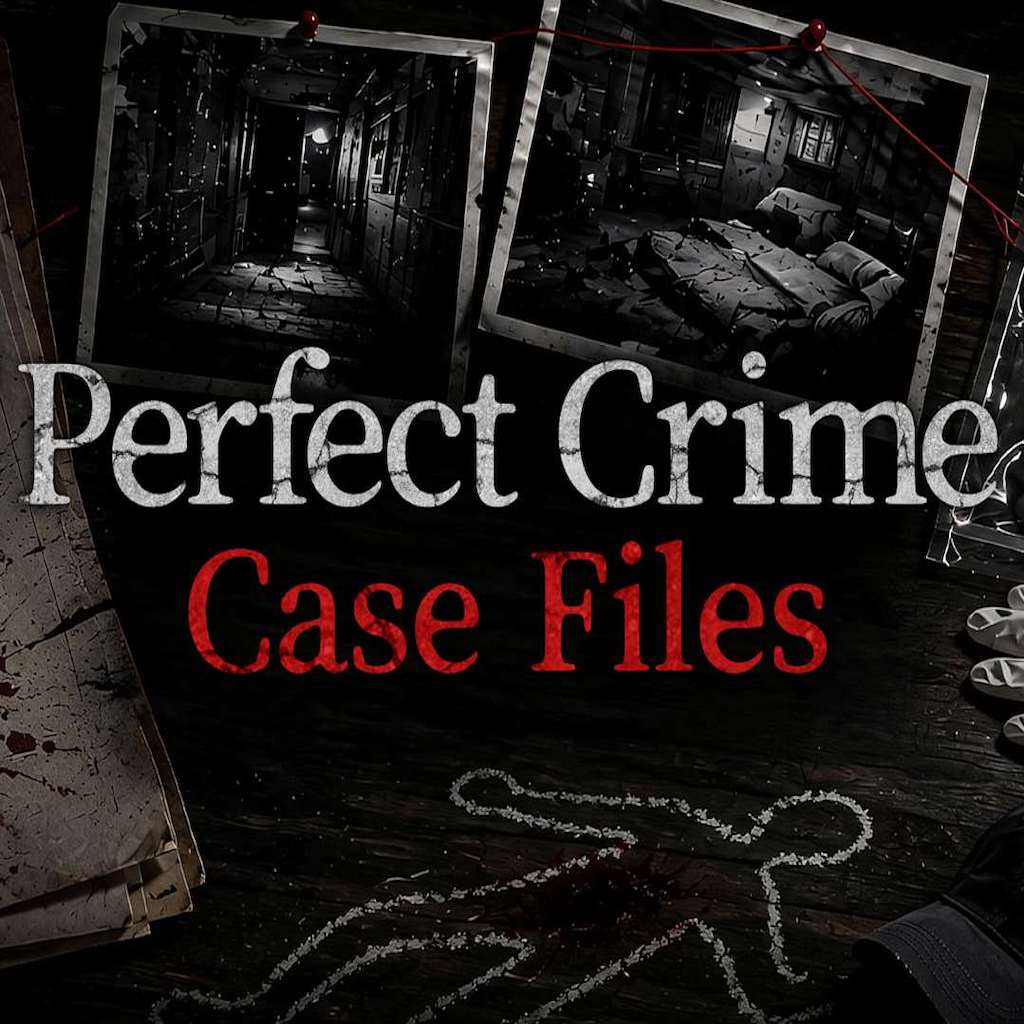
The visual style plays an important role in selling the idea. Perfect Crime Case Files leans into a gritty noir aesthetic, with sepia tones, dramatic shadows and detailed, hand-drawn crime scenes. It is the sort of presentation that immediately suggests rain-soaked streets, cigarette smoke and a detective staring suspiciously across a cluttered desk.
The atmosphere is supported by a smoky, jazz-inspired soundtrack, with muted trumpet and upright bass adding a suitably old-fashioned detective flavour. Small environmental touches, such as rainfall, typing and match strikes, help reinforce the feeling that you are investigating something far more elaborate than a simple visual puzzle.
Of course, there is a slight disconnect between the seriousness of the presentation and the simplicity of the gameplay. The game looks as though it wants to tell a hard-boiled murder story, while mechanically it is perfectly happy to let you spend a few minutes looking for one particular detail in a picture. Somehow, though, that contrast becomes part of the charm.
It does not take itself so seriously that the experience becomes intimidating. Instead, it gives a casual puzzle game a little extra personality. That is exactly what this sort of title needs.
Easy to Learn, Surprisingly Satisfying
Accessibility is another area where Perfect Crime Case Files succeeds. There is practically no barrier to entry, as the rules can be understood almost instantly. Study the scene, understand the question, find the answer, and select it. That is the entire foundation, and it works equally well for someone who plays puzzle games regularly and for someone simply looking for a relaxed diversion.
The simplicity also makes it suitable for short sessions. You do not need to remember complicated plot details or previous upgrades when returning after a few days away. Each case can stand on its own as a compact challenge.
That said, players who expect a substantial detective adventure may find the experience a little lightweight. There is a difference between a game that uses detective imagery and one that genuinely simulates detective work. Perfect Crime Case Files sits firmly in the former camp. It is about observation rather than investigation, and knowing that before you begin will make the experience considerably more enjoyable.
For what it sets out to do, however, it is difficult to complain too much. Sometimes a game does not need to be a hundred-hour epic with multiple endings and an encyclopaedia of mechanics. Sometimes finding one tiny clue is enough.
Those Little “Aha!” Moments
The real pleasure here comes from the moments when your brain suddenly clicks into place. You can spend several seconds staring at the answer without recognising it, only for your eyes to finally register what they have been seeing all along. It is a tiny victory, but these small victories are precisely what make observation puzzles so addictive.
There is also something satisfying about learning to look differently. After playing for a while, you naturally become more systematic. Instead of staring at the whole image, you begin to break it into sections and check each one carefully. You start thinking like the game wants you to.
That is where Perfect Crime Case Files earns its place as more than just a time filler. It encourages attention and concentration without turning either into a chore. You can play casually, but there is enough satisfaction in improving your observational ability to keep you coming back.
Final Verdict
Perfect Crime Case Files is a charming little visual puzzle that understands the value of simplicity. It does not need complicated mechanics to deliver satisfying challenges, because its entire experience is built around one timeless idea: something is hiding in plain sight, and it is your job to find it. The noir presentation gives the concept a welcome identity, while the accessible controls make it easy to pick up, whether you prefer buttons or touch.
It is perhaps best approached as a casual, detective-themed observation game rather than a fully fledged crime investigation. Those expecting forensic laboratories, lengthy interrogations and sprawling case boards may be disappointed by the narrower scope. For everyone else, there is plenty to enjoy in the simple pleasure of examining a scene, trusting your instincts and finally discovering the detail that was staring you in the face.
Most importantly, Perfect Crime Case Files remembers why these puzzles are fun. It gives you just enough information to get your detective brain working, then gets out of the way and lets you solve the problem yourself. When you finally select the right spot and realise you have cracked another case, that little flash of satisfaction is all the reward you really need.